Key Takeaways
- Even the best rated gutter guards need inspection and occasional attention every fall.
- Micro mesh guards perform better than foam or brush inserts in heavy leaf conditions, but no system is fully maintenance-free.
- The real cost comparison between guards and manual cleaning depends on tree coverage, home size, and how long you plan to stay in your house.
- Autumn is the highest-risk season for gutter overflow and water damage in the Rochester area.
- A hybrid approach, guards plus one professional inspection per fall, often delivers the best protection and the lowest long-term cost.
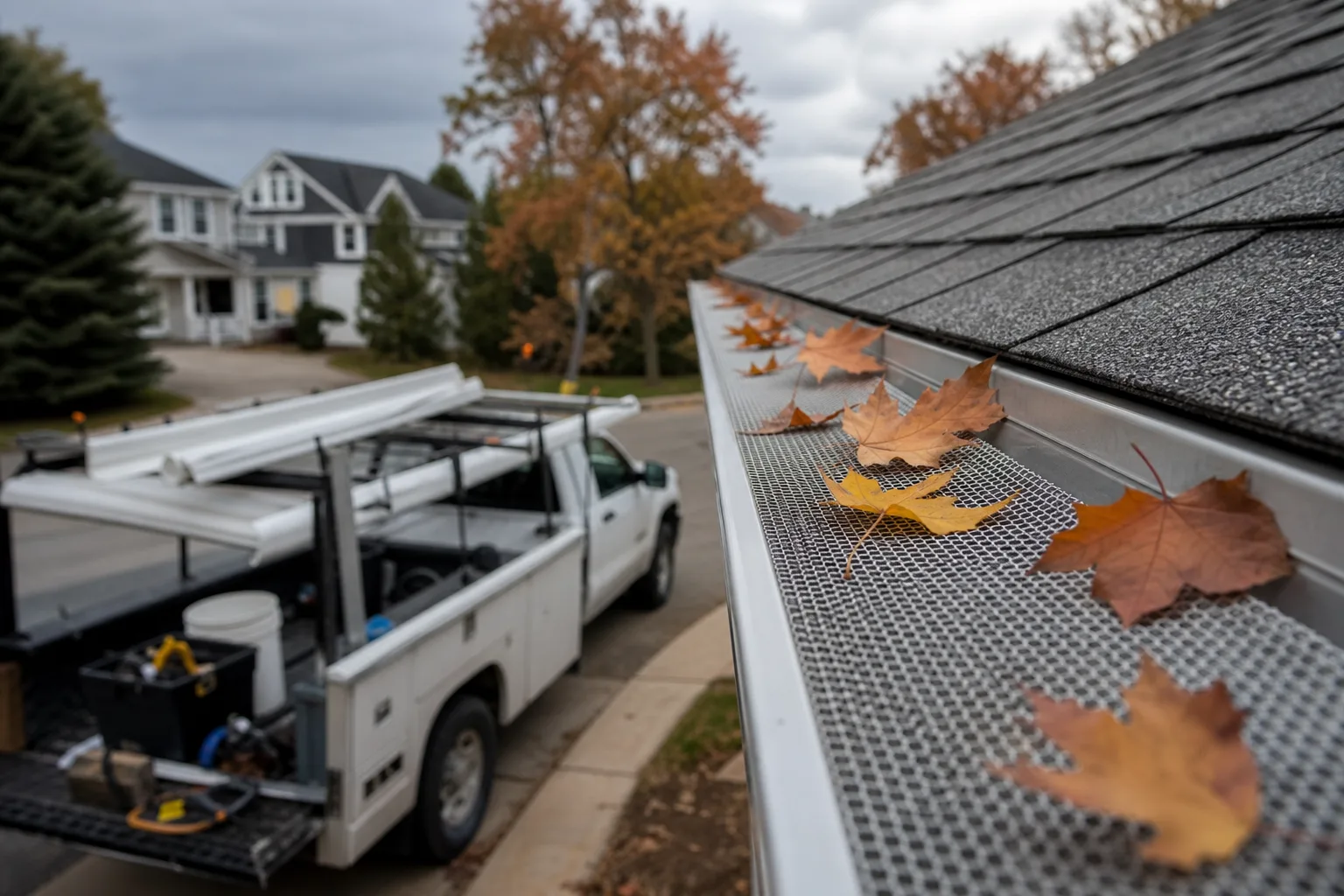
Gutter guards reduce how often you're up on a ladder. But "reduce" and "eliminate" are very different things, especially once the maples and oaks in your neighborhood start dropping.
The Reality of Gutter Guards: What the Marketing Won't Tell You
Gutter guards significantly reduce debris entry and cleaning frequency, but no guard system, regardless of rating or price, eliminates the need for occasional inspection and clearing, especially during peak fall leaf drop.
Most guard manufacturers lead with phrases like "never clean your gutters again." That's a compelling pitch, and for some homeowners with minimal tree coverage, it comes close to true. For most houses in Monroe County surrounded by mature hardwoods, it's an overstatement worth understanding before you spend money.
Why 'Maintenance-Free' Is Misleading
The promise of a maintenance-free system assumes average debris loads, consistent rainfall, and gutter pitch that drains efficiently on its own. Rochester's fall season rarely cooperates with all three at once. A heavy wet leaf drop followed by a cold snap can mat debris across any guard surface faster than rain clears it.
Maintenance-free in the industry typically means you won't need to reach inside your gutters to scoop out decomposed leaf mush. That's real value. It doesn't mean you never look at your gutters again.
Common Failure Points in Top-Rated Gutter Guard Systems
Even well-reviewed systems have weak points. Guards can pull away from the fascia if not installed correctly, leaving gaps that funnel debris inside. Surface-tension designs depend on water adhesion, and that physics breaks down when roof shingles discharge heavy granule buildup.
Screws and clips corrode over time. Foam and brush inserts trap seed pods and pine needles rather than shedding them. Knowing where your specific system is most likely to fail helps you check the right spots each fall.
Autumn Debris Load and Guard Performance
Fall is the single hardest test a gutter guard faces all year. The combination of large wet leaves, small maple samaras, seed pods, and shingle grit creates a debris mix that no single guard design handles equally well. Systems that perform beautifully in summer often show their limits by late October in Webster and Rochester, when leaf volume peaks.
Best Rated Gutter Guards in 2026: System Comparison
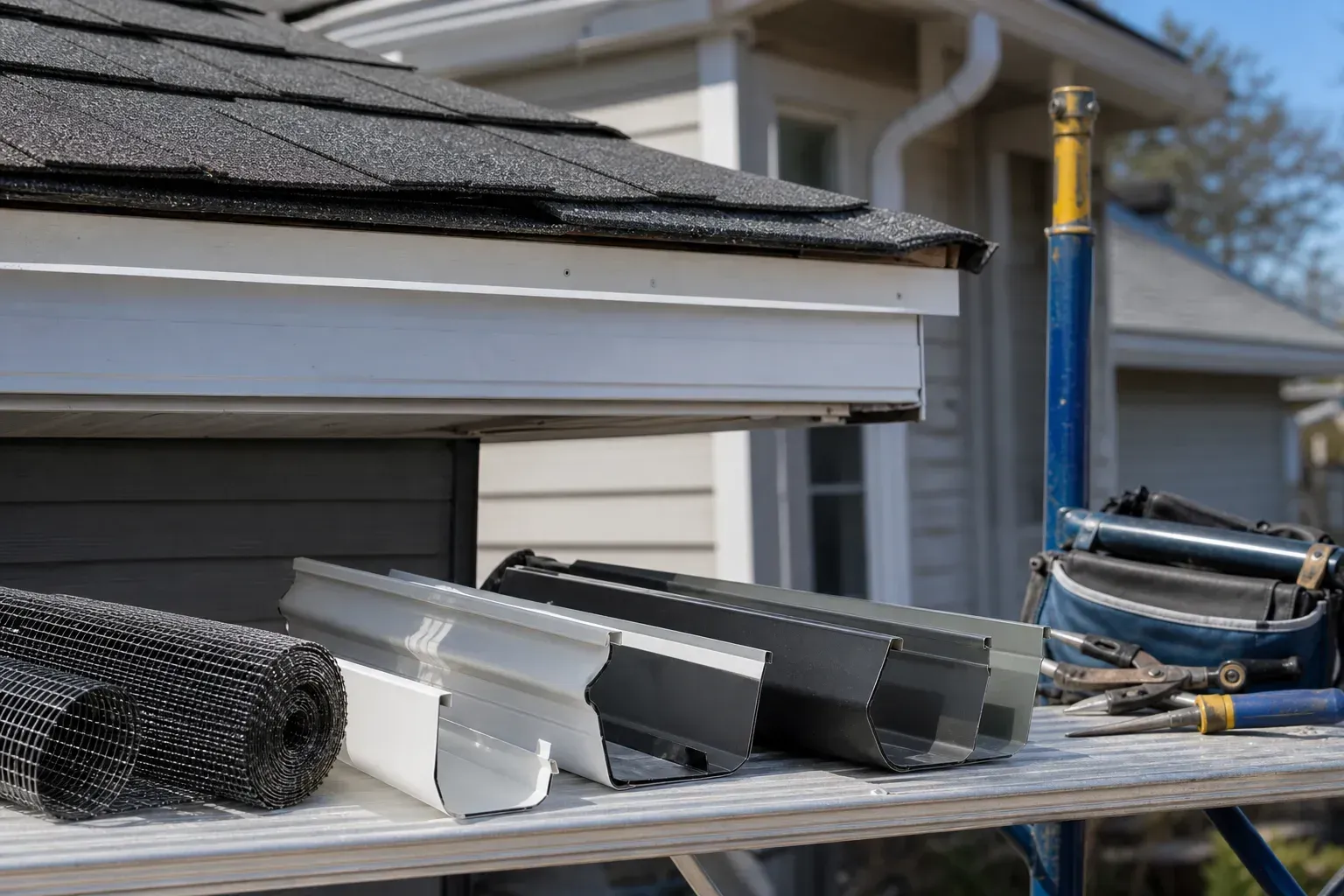
Choosing the right system for your home starts with understanding how each type handles fall conditions. Here's a straightforward comparison of the major guard categories:
| Guard Type | Best For | Fall Leaf Performance | Maintenance Need |
|---|---|---|---|
| Micro mesh (aluminum/steel) | Homes with heavy tree coverage | Excellent, sheds most debris | Low: annual inspection |
| Screen/expanded metal | Moderate tree coverage | Good for large leaves, struggles with small debris | Low to moderate |
| Solid cover / surface tension | Moderate rainfall, gentle pitch | Good in light debris; can overflow in heavy fall drop | Moderate |
| Brush inserts | Light debris, low-pitch gutters | Poor, traps needles and seeds | High |
| Foam inserts | Temporary or budget use | Poor in fall, compresses and holds debris | High |
Mesh and Screen Guards
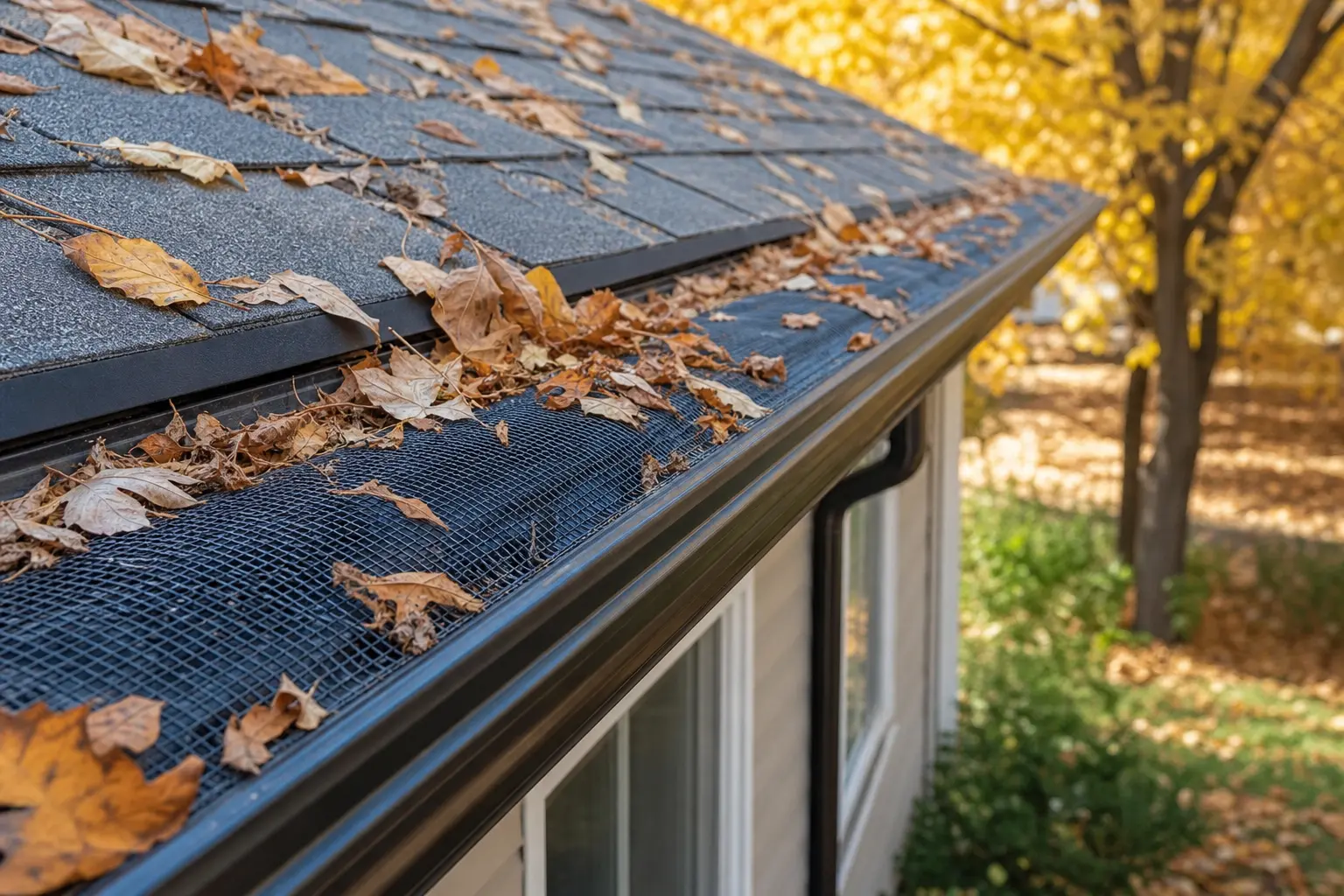
Micro mesh gutter guards are the most widely recommended option for homes with significant tree coverage, and for good reason. The fine stainless steel or aluminum mesh keeps out small debris like maple seeds and roof grit while letting water pass through efficiently. If you're researching best rated micro mesh gutter guards, this category consistently earns the highest marks from independent reviewers for long-term performance.
Screen guards use a larger hole pattern and cost less upfront. They handle big leaves well but let small debris through, so they reduce cleaning frequency rather than nearly eliminating it.
Solid Cover and Surface-Tension Guards
These designs curve water around a solid nose and into the gutter channel using surface tension. They look clean and work well in moderate conditions. The limitation in a Rochester autumn is volume: when leaves pile up on the curved surface faster than rain pushes them off, water overshoots the channel and pours straight off your roofline.
Brush and Foam Inserts
These are the easiest systems to install yourself and the hardest to keep clean. Brush inserts look like oversized pipe cleaners sitting inside your gutter channel. Foam versions are cut-to-fit sponge sections.
Both trap seeds, pine needles, and shingle grit over time, which eventually creates a different kind of clog inside the gutter rather than outside it. These are best treated as short-term solutions.
Why You Still Need to Check Your Gutters in Fall
Even the best rated gutter guards consumer reports and independent reviewers recommend require a fall check in high-debris climates like the Rochester area. Guards prevent most clogs, they don't prevent physics.
Guard Clogging and Overflow During Peak Leaf Season
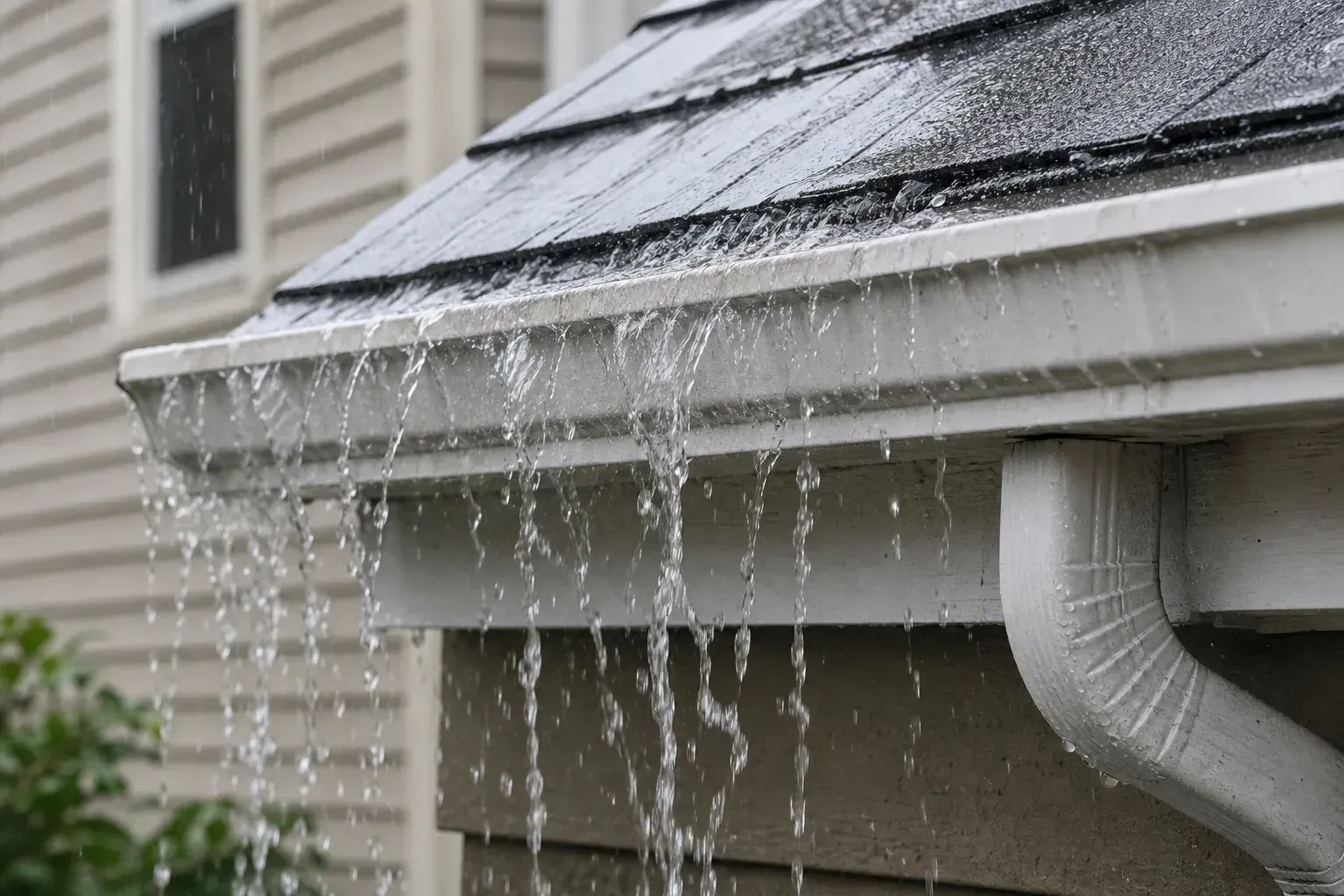
When leaves accumulate on top of a guard faster than rain washes them away, the effective opening of the mesh or screen narrows. Water finds the path of least resistance, which may be over the front lip of your gutter rather than through it. That overflow lands at your foundation, exactly the problem gutters exist to prevent.
Peak leaf drop in the Rochester area typically runs from mid-October through early November. That's your highest-risk window and the time when a quick inspection matters most.
Debris Accumulation Above and Around Guards
Leaves that land on your roof wash down to the gutter edge but don't always clear the guard cleanly. They pile up along the roofline, stay damp, and begin to decompose. That organic matter is heavier than dry leaves and can hold enough moisture to mat down and block water flow even without entering the gutter channel.
Checking the roof-to-gutter transition is part of a complete fall inspection.
Water Damage Risk from Improperly Functioning Guards
Overflowing gutters during fall rainstorms are one of the most common causes of foundation water damage in Monroe County homes. Water that misses the downspout cycle pools against your foundation, works into basement walls, and causes freeze-thaw damage once winter arrives. A seasonal maintenance perspective from All American Gutter Protection notes that late fall, right before the ground freezes, is the critical window to ensure gutters and guards are functioning correctly.
If you're in Greece, Gates, or anywhere in the Rochester suburbs, proper downspout installation and regular fall checks work together to keep water moving away from your home through the wet season.
Gutter Guards vs. Manual Cleaning: The Real Cost Breakdown
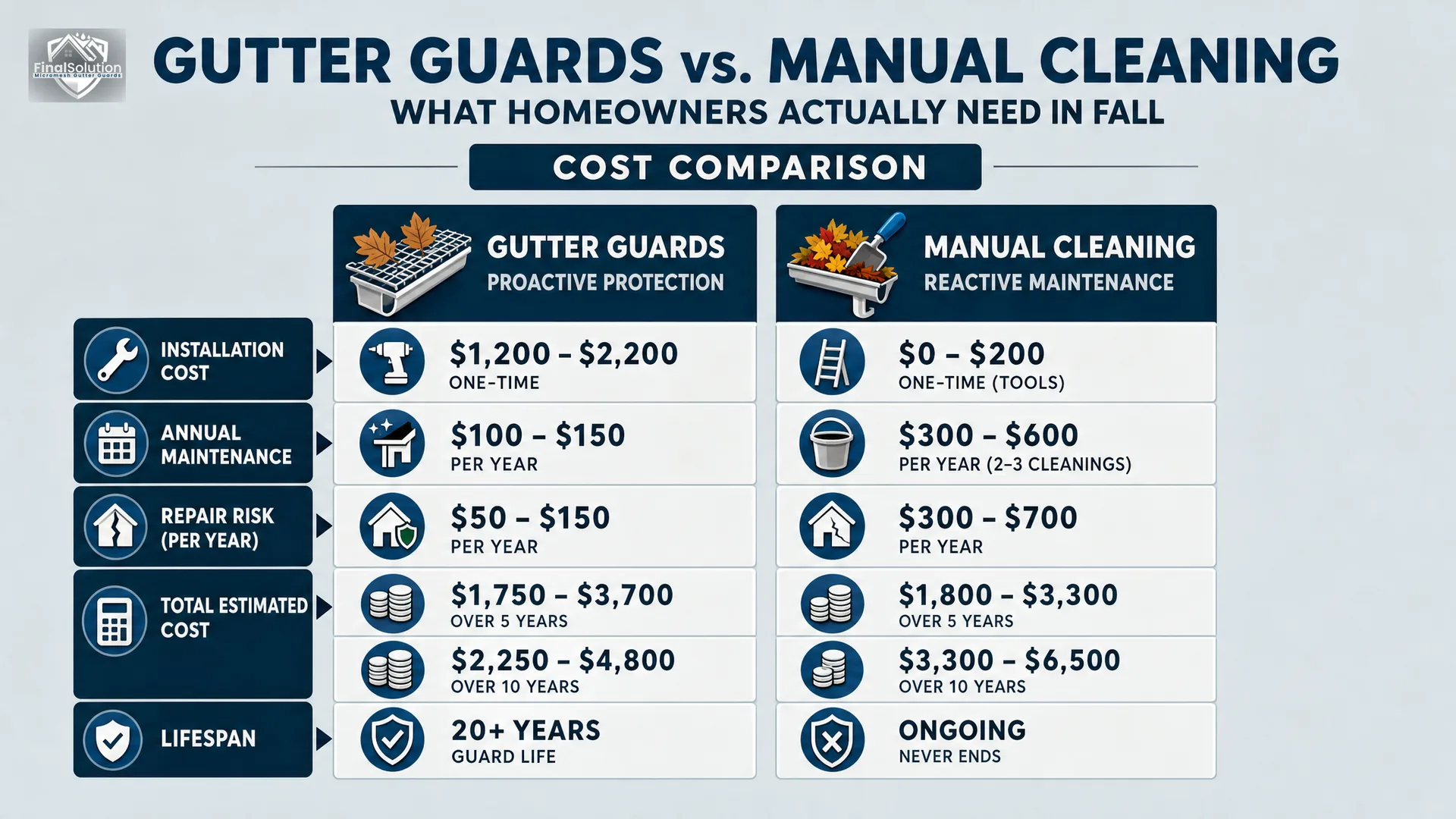
The honest cost comparison isn't just installation price versus cleaning price. It's a multi-year picture that includes labor, materials, and what happens if either approach fails.
Installation and Material Costs
Professional gutter guard installation for a typical single-story home in the Rochester area varies considerably by guard type. Micro mesh systems sit at the higher end due to material quality and installation precision required. Screen systems cost less upfront.
Manual gutter cleaning for a standard home runs roughly $100 to $250 per visit from a professional service, depending on home height, length of gutter run, and how heavily the gutters have clogged.
Maintenance Labor Over 5 and 10 Years
| Approach | Year 1 Cost (approx.) | 5-Year Total (approx.) | 10-Year Total (approx.) |
|---|---|---|---|
| Professional cleaning only (2x/year) | $200-$500 | $1,000-$2,500 | $2,000-$5,000 |
| Micro mesh guards + annual inspection | $800-$2,000 installed | $1,100-$2,500 | $1,400-$3,000 |
| Screen guards + annual cleaning | $400-$1,000 installed | $900-$2,000 | $1,400-$4,000 |
| Brush/foam inserts + 2x cleaning | $100-$300 installed | $1,100-$2,800 | $2,100-$5,500 |
These are illustrative ranges, not fixed quotes. Your actual numbers depend on home size, tree coverage, and local labor rates.
Repair and Replacement Expenses
Guards that aren't maintained can cause problems that cost more than the guards themselves. A blocked gutter that overflows repeatedly can damage fascia boards, soffit, and in severe cases, contribute to foundation issues. If your current gutters are older or showing wear, pairing guard installation with a full gutter replacement often makes more financial sense than installing guards on gutters that will need replacing in a few years anyway.
Your Autumn Gutter Maintenance Action Plan
A structured approach to fall gutter care keeps you out of trouble without taking up your whole weekend.
Pre-Leaf-Season Guard Inspection Checklist
Run through this list in late September, before peak leaf drop hits:
- Walk the perimeter of your home and look up atthe gutter line for visible sags, separations, or sections pulling away from the fascia.
- Check that all downspout outlets are clear and water flows freely through them.
- Look for debris buildup at gutter corners and end caps, where accumulation tends to start.
- Confirm guard panels are seated flat with no lifted edges or missing fasteners.
- Inspect the roof surface just above the gutters for heavy granule deposits or shingle debris.
If anything looks off during this visual check, address it before the leaves start falling in volume. A small problem in September becomes a blocked gutter by mid-October.
How Often to Clean or Clear Guards in Fall
For homes with moderate tree coverage, one thorough clearing after peak leaf drop is usually enough. Heavy tree coverage, particularly large oaks and maples that hold leaves late into the season, may warrant a mid-season check as well.
Micro mesh systems typically need only a rinse with a garden hose after leaves have settled. Screen guards may need a light brush-off. Brush and foam inserts should be removed and cleaned by hand, which is part of why their long-term maintenance cost adds up.
The Dubya Roofing and Gutters comparison notes that even well-installed guard systems benefit from professional attention at least once a year in areas with significant seasonal tree coverage, a point worth taking seriously in any Monroe County neighborhood lined with mature hardwoods.
When to Call a Professional vs. DIY
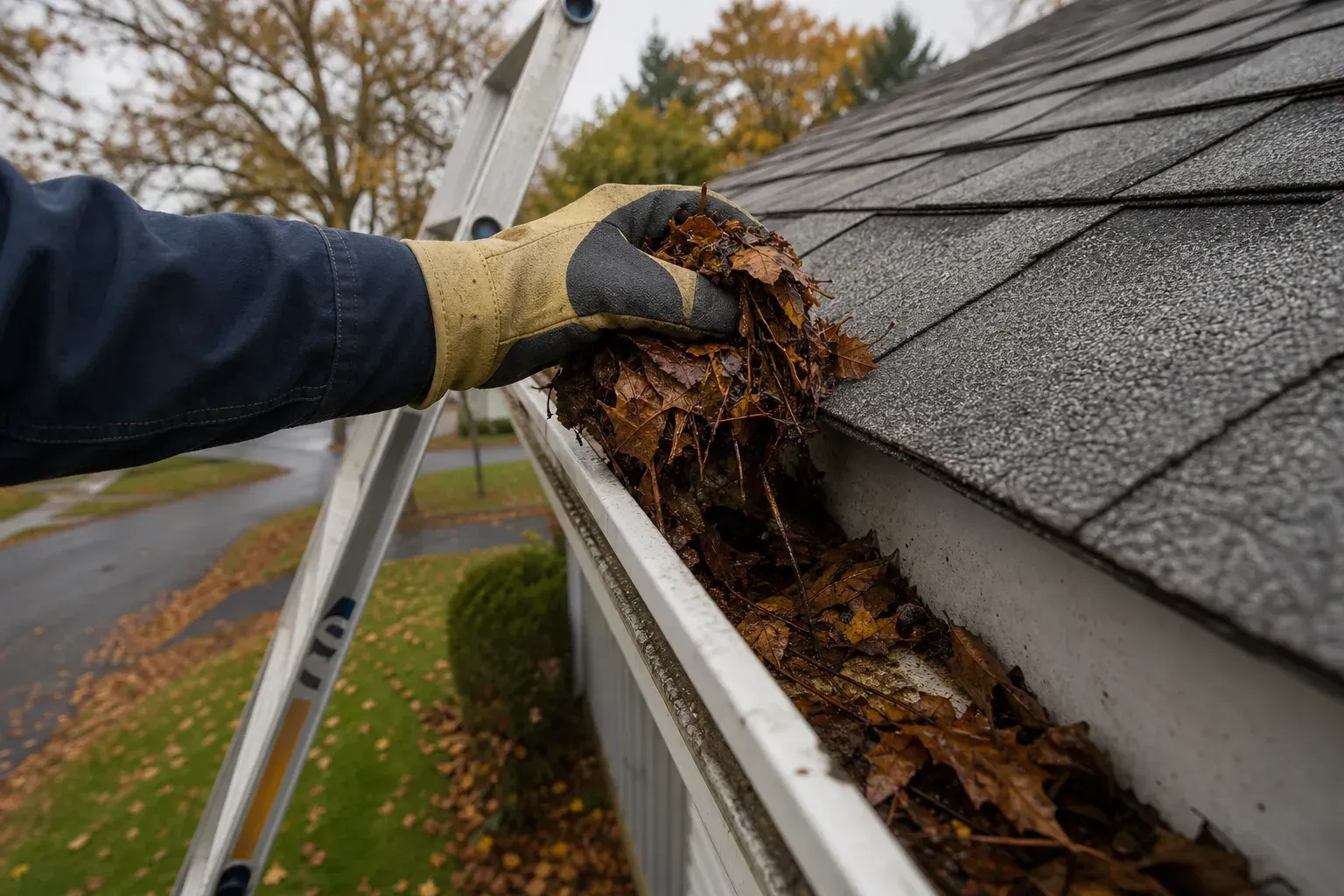
DIY is reasonable for single-story homes where you can safely set a ladder and have a clear view of the gutter channel. If you notice water staining on fascia boards, peeling paint on soffit, or soil erosion at your foundation, those are signs the system isn't draining correctly and a professional should assess it.
Two-story homes, steep rooflines, and any situation involving guard removal and reinstallation are better handled by a trained contractor. For homeowners across Rochester, Webster, and nearby communities, the team at Final Solution Gutter Guards ROC handles fall inspections and guard maintenance without you needing to get on a ladder at all.
Making the Right Choice: Gutter Guards or Traditional Cleaning?
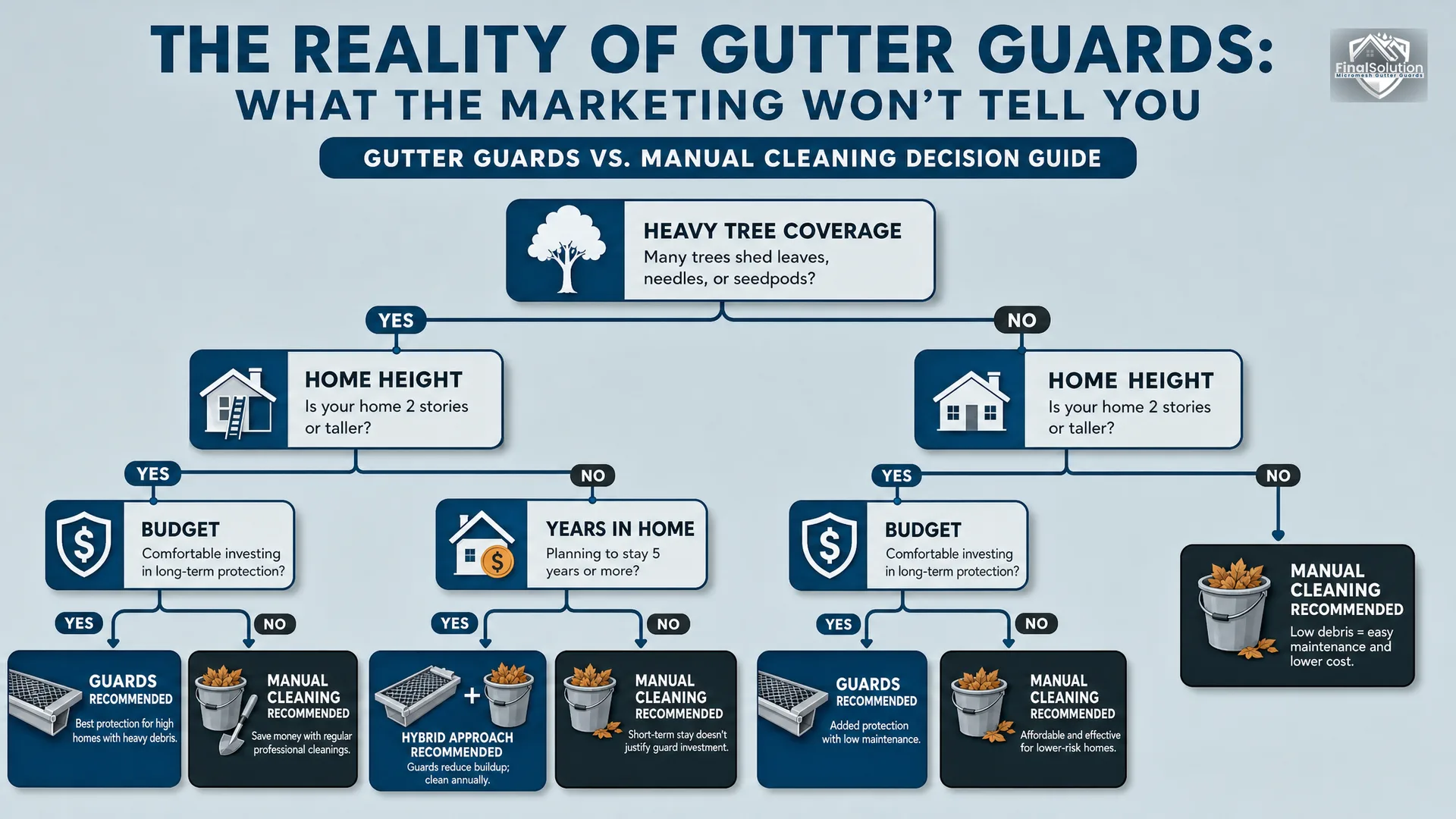
The best system for your home depends on tree coverage, roof pitch, your budget over time, and how much hands-on maintenance you're willing to do. Neither guards nor manual cleaning is universally superior.
Factors That Favor Gutter Guards
Gutter guards make strong financial and practical sense in several scenarios. If your property has multiple mature deciduous trees and you're currently paying for professional cleaning two or three times a year, high-quality micro mesh guards will likely pay for themselves within a few years while protecting your gutters more consistently between visits.
Guards also add real value if you're older or simply prefer not to manage ladder work. And if you're planning to stay in your home for 10 or more years, the long-term labor savings become substantial. Homes in Penfield, Pittsford, and other Rochester suburbs where large tree canopies are common tend to see the strongest return on guard investment.
Factors That Favor Manual Cleaning or Hybrid Approach
If your home has minimal tree coverage, paying for two professional cleanings a year may genuinely cost less than installing a quality guard system. Manual cleaning also gives a technician direct eyes on the inside of your gutters, which means small problems like rust spots, loose seams, or improper pitch get caught early.
A hybrid approach works well for many homeowners: install guards to reduce debris entry, then schedule one professional cleaning per fall to clear the roof-to-gutter zone and verify the system is draining correctly. This approach captures most of the convenience benefit of guards while keeping a professional's eyes on the system annually. For homeowners considering this path, gutter repair services can address any issues found during that annual check before they become costly problems.
Questions to Ask Before You Decide
Before committing to guards or sticking with manual cleaning, run through these questions:
- How many large deciduous trees are within 30 feet of your roofline?
- How many times per year are you currently cleaning or having gutters cleaned?
- How many years do you expect to stay in this home?
- Are your current gutters in good structural condition?
- Do you have a two-story home or a roofline that makes DIY access difficult?
Your answers will point you toward the right choice more reliably than any marketing claim. If you'd like a professional opinion specific to your home, request a free estimate and get a clear recommendation without any pressure.

Frequently Asked Questions
Do best rated gutter guards completely eliminate fall cleaning?
No guard system eliminates cleaning entirely, though high-quality micro mesh guards come closest for most homeowners. You'll still want a visual inspection each fall and occasional clearing of debris that accumulates on top of the mesh or at the roofline. In Rochester's leaf-heavy autumn, plan on at least one check per season regardless of the guard type you have installed.
What are the best consumer rated gutter guards for heavy leaf coverage?
Micro mesh guards made from aluminum or stainless steel consistently earn the highest marks from independent reviewers for homes with heavy deciduous tree coverage. They filter out small debris like maple seeds and shingle grit while handling high water volume. Screen guards are a lower-cost alternative that work well for larger leaves but let finer debris through.
How do I know if my gutter guards are failing?
Watch for water spilling over the front edge of your gutters during rainstorms, soil erosion at your foundation, water stains on fascia or soffit boards, and visible debris buildup on top of the guard surface. Any of these signs suggests the system isn't draining correctly and needs attention before winter arrives.
Are gutter guards worth the cost for a Rochester-area home?
For most homes in Monroe County with significant tree coverage, professionally installed micro mesh guards offer a strong long-term return compared to paying for multiple cleanings per year. The break-even point is typically three to seven years depending on home size, guard type, and local cleaning rates. Homes with minimal tree coverage may not see the same return.
Can I install gutter guards myself, or should I hire a professional?
Brush and foam inserts are designed for DIY installation, but they're also the lowest-performing option in fall conditions. Micro mesh and screen systems can be DIY-installed on single-story homes, but professional installation ensures the guards are properly seated, pitched correctly, and fastened securely, which directly affects how well they perform. Two-story homes and steep rooflines should always be handled by a qualified contractor.
How does autumn weather in Rochester specifically affect gutter guard performance?
The Rochester area typically sees a heavy, compressed leaf drop in October combined with wet conditions from Lake Ontario weather patterns. That moisture keeps leaves on guard surfaces longer than in drier climates, increasing the risk of matting and overflow. Freeze-thaw cycles in November can also shift guard panels if they weren't installed securely, making a post-leaf-drop inspection especially important here.
 Contact Us for a Free Estimate! Share a few details with Final Solution Gutter Guards ROC, we'll help you choose the right next step. Get a free estimate |