Key Takeaways
- Ice dams form when heat escapes through your roof, melts snow, and refreezes at the cold eave line where gutters sit.
- Clogged or poorly maintained gutters accelerate ice dam formation and water backup.
- Gutter ice dam prevention starts in fall with cleaning, insulation checks, and proper ventilation.
- Professional inspection before winter can catch vulnerabilities that lead to interior water damage.
- When ice dams are already present, safe removal matters as much as prevention.
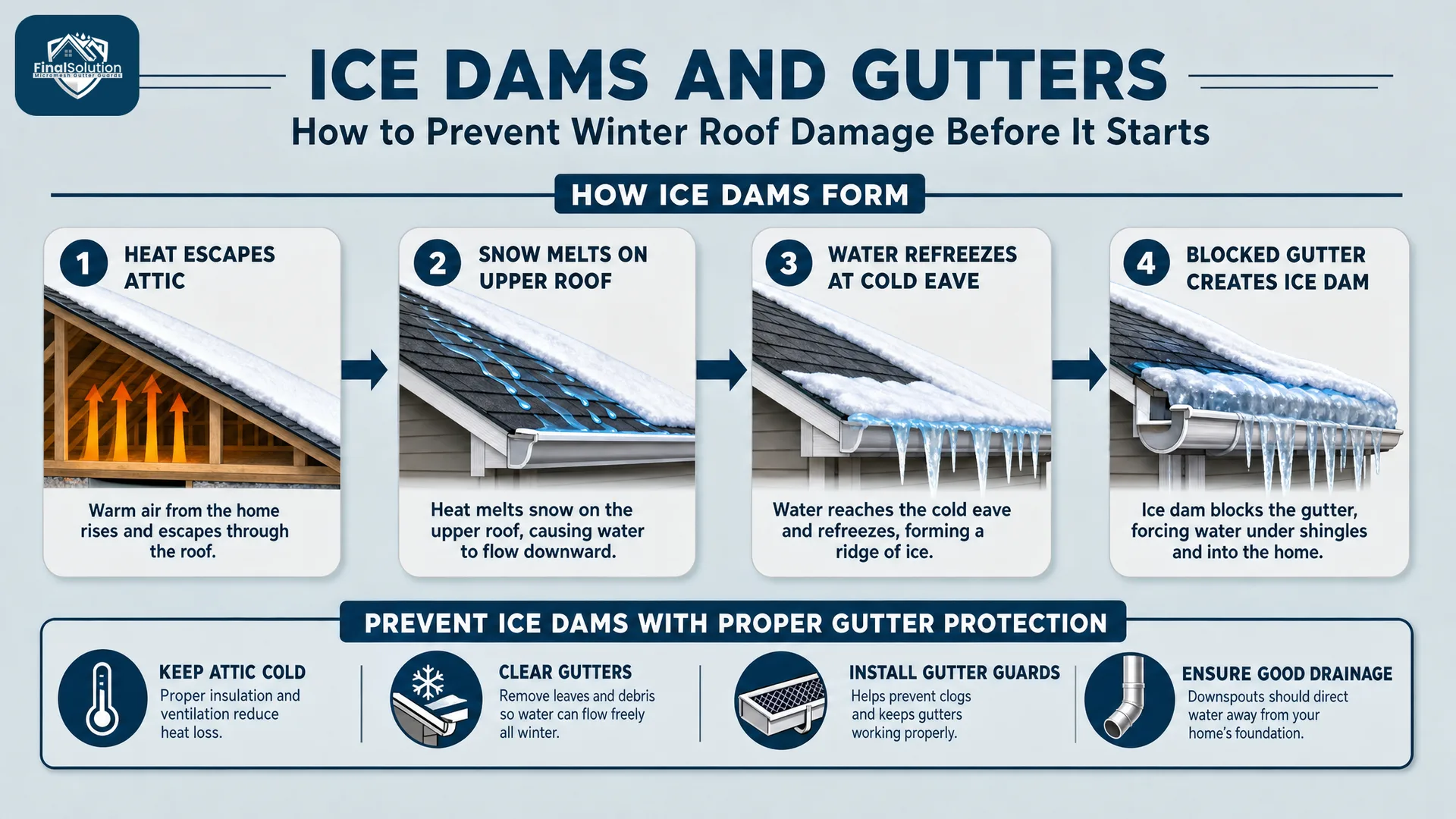
- Ice dams form when heat escapes through your attic, melts snow unevenly, and that meltwater refreezes at the colder eave line where gutters sit.
- Clogged gutters give ice dams a head start. Fall cleaning in late October is the single most impactful thing most Rochester homeowners can do.
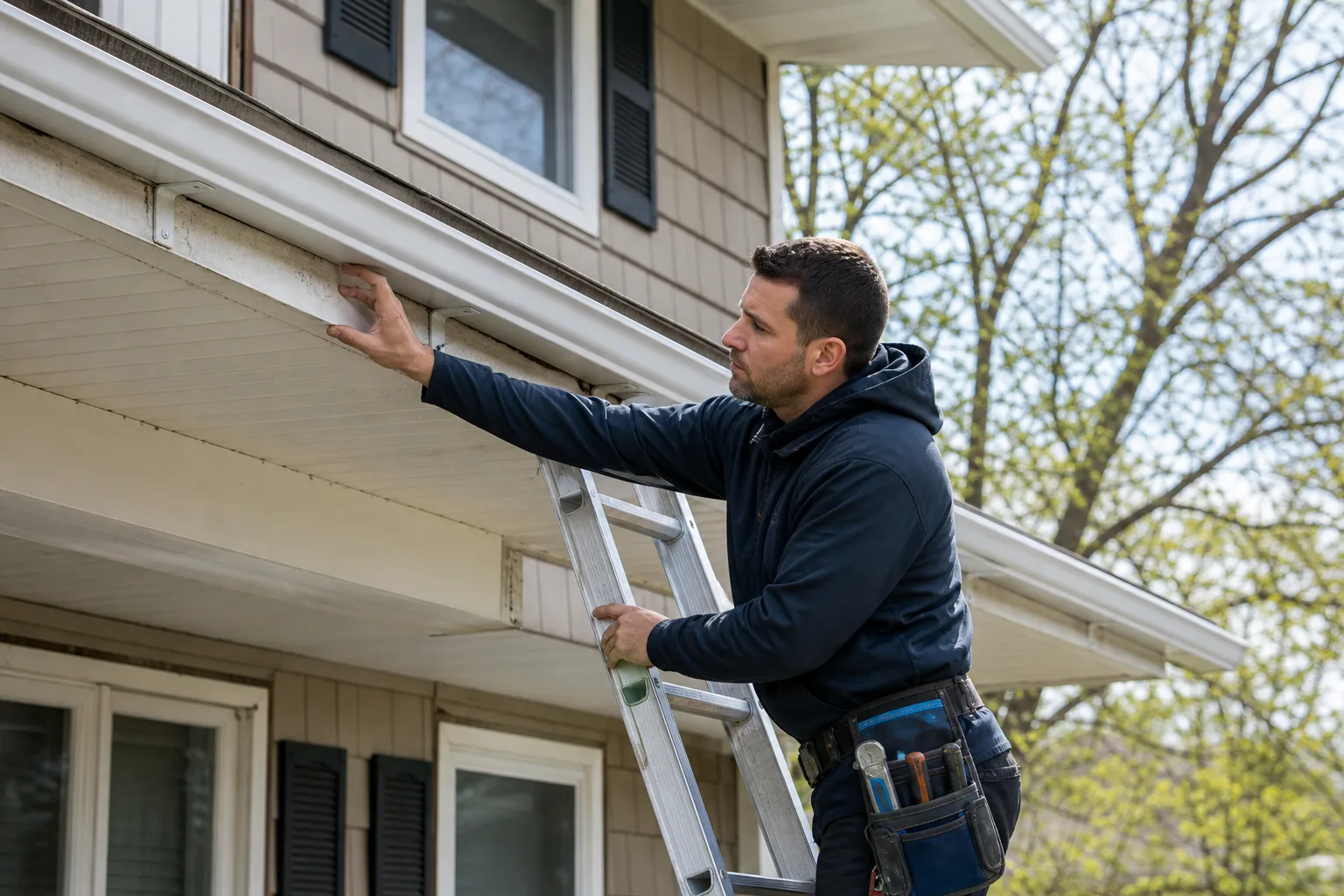
What Ice Dams Are and Why They Form on Rochester Roofs
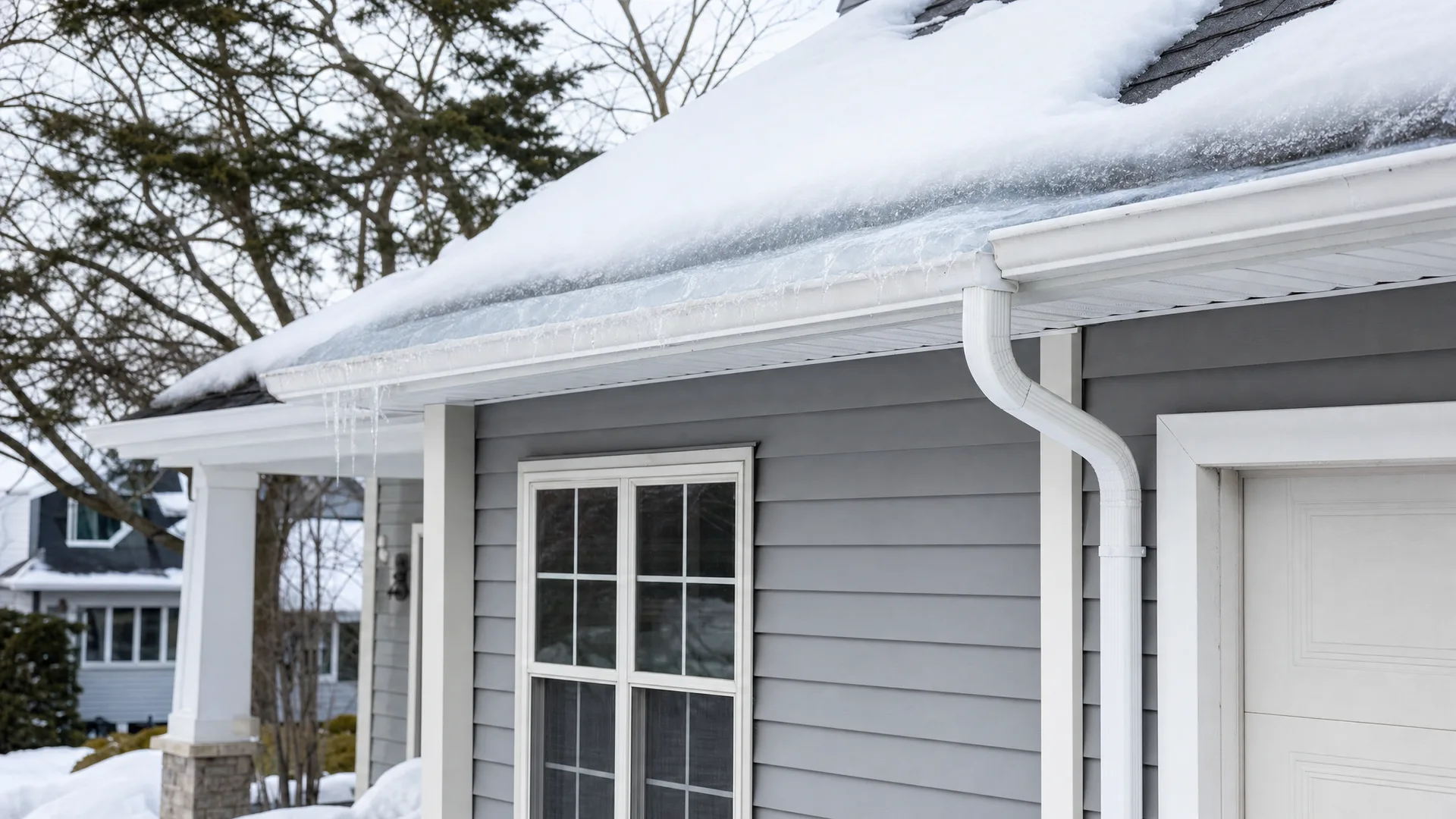
An ice dam is a ridge of ice that builds up at the edge of a roof, trapping meltwater behind it and forcing water beneath shingles, into walls, and eventually into your home's interior.
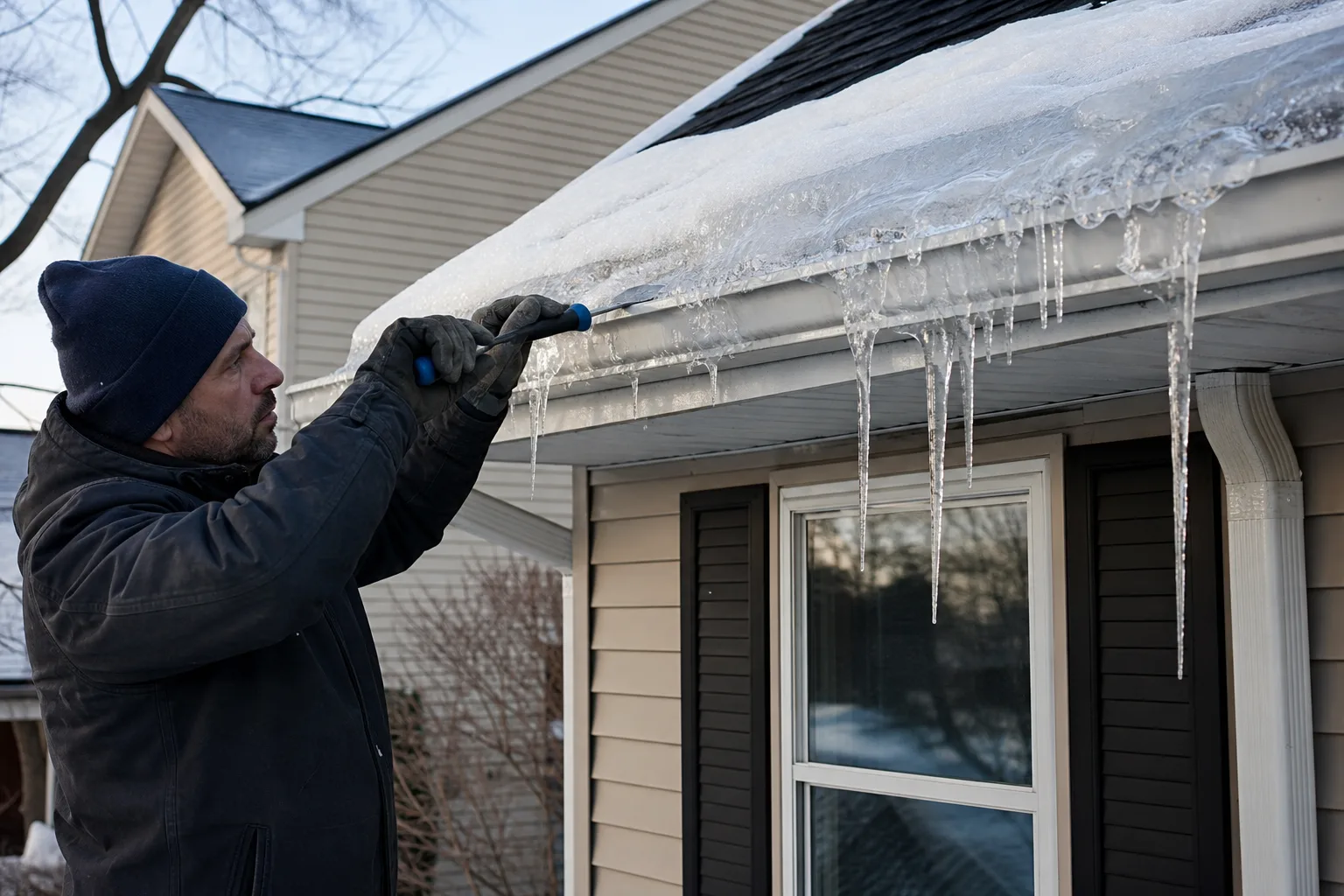
Rochester averages over 90 inches of snowfall per season, which means the conditions for ice dam gutter damage exist for months at a time. Understanding the mechanics helps you stop the problem at its source.
How heat loss and snow melt create ice dams
When your attic is poorly insulated or ventilated, indoor heat escapes through the roof deck and warms the shingles above it. Snow on the warmer upper roof melts, and that water runs down toward the colder eave overhang, where it refreezes. Each freeze-thaw cycle adds an other layer of ice.
Over time, the buildup blocks water from draining off the roof entirely.
This isn't a fluke. It's a predictable chain of events driven by heat loss. According to IKO's guide to winter gutter maintenance, consistent attic temperature control is the most reliable way to interrupt this cycle before it starts.
The role of gutters in ice dam formation
Gutters sit directly at the eave line, which is exactly where ice dams form. When gutters are clogged with leaves, debris, or standing water from fall rains, that water freezes first. The frozen gutter then acts as a foundation, making it easier for ice to accumulate and push back up under shingles.
A clean, properly sloped gutter allows meltwater to drain before it refreezes. A neglected gutter turns that meltwater into a dam almost overnight when temperatures drop.
Local weather patterns that accelerate ice dam risk in Rochester
Rochester's Lake Ontario effect delivers repeated freeze-thaw cycles throughout the winter. Temperatures that swing between the upper 20s and low 40s over the same week are common, and that pattern is exactly what causes the most damaging ice accumulation. Homes in Webster, Greece, and Gates face these conditions repeatedly every season, and the exposure along lake-influenced corridors can be especially severe.
Signs Your Gutters and Roof Are at Risk
Visual indicators of ice dams and gutter damage
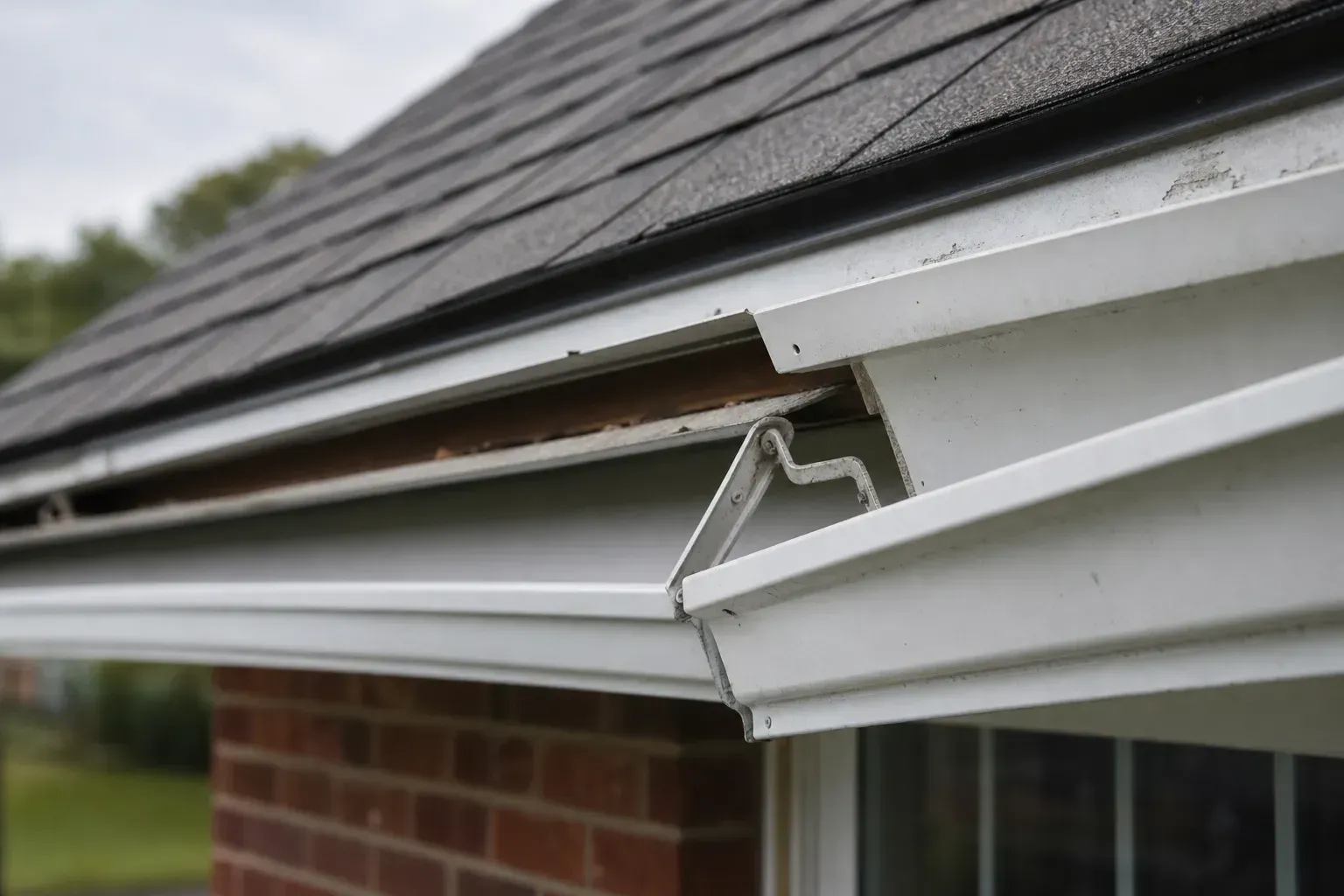
The clearest sign is large icicles hanging from your gutters, especially if they're unusually thick or extend back up onto the roof surface. Gutters that are pulling away from the fascia under the weight of ice are an other red flag. You may also see visible ice ridges along the eave line or water staining on exterior siding below the gutters.
Interior water damage and staining as early warnings
Inside the house, brown ceiling stains near exterior walls or at the top of windows are worth taking seriously. Peeling paint near the roofline and damp insulation in attic corners are signs that water has already found its way in. These problems often appear days or weeks after an ice dam forms, so the visible exterior buildup may already be gone by the time the interior damage shows up.
The Dominion Roofing article on ice dam prevention notes that by the time interior staining appears, the dam has usually been active long enough to compromise both the roof deck and wall assembly.
When to call a professional for inspection
If you notice any of the above signs, schedule a professional inspection before the next snow event. Waiting usually means more water penetration. A contractor who specializes in gutter installations and repairs in Rochester can assess both the gutter system and the roof edge condition in a single visit.
Three Prevention Strategies Before Winter Arrives
The most effective gutter ice dam prevention happens in October and November, before the first significant snowfall arrives.
Improve attic insulation and ventilation to reduce heat loss
Adding insulation to attic floors reduces the amount of heat that reaches the roof deck. Adequate ventilation, through soffit vents and ridge vents, keeps the roof deck temperature closer to the outdoor air temperature, which prevents uneven melting. These two improvements together address the root cause rather than just the symptom.
Clean and maintain gutters thoroughly in fall and early winter
Fall gutter cleaning is non-negotiable in Monroe County. Leaves, seed pods, and debris from October storms settle into gutters before the freeze hits. If that material stays in place, it traps water and accelerates ice formation.
Cleaning gutters in late October or early November, after most leaves have fallen, is the right timing.
Check downspout extensions while you're at it. A downspout that dumps water too close to the foundation can cause separate problems, including soil erosion and basement seepage. Our downspout installation page covers proper extension placement for different lot sizes.
Install gutter guards and heating systems for added protection
Gutter guards reduce how much debris reaches the gutter channel, which means less standing water going into winter. Micro-mesh guards, in particular, let water flow through while blocking organic material. For homes with consistent ice dam history, low-voltage heat cables run along the roof edge and inside downspouts can keep drainage pathways open during extreme cold.
These aren't fixes for a poorly ventilated attic, but they're a meaningful layer of protection on top of solid insulation and clean gutters. If you're weighing your options, the guide on when to repair, replace, or add gutter guards walks through the decision for Rochester-area homes specifically.
Emergency Steps to Take When Ice Dams Form
Safe ice dam removal methods and tools
If an ice dam has already formed, a roof rake is the safest tool for removing fresh snow from the ground before it adds more weight to the problem. Remove snow from the lower 3 to 4 feet of the roof edge to slow new meltwater production. Calcium chloride ice melt packed into nylon stockings and laid across the dam can create drainage channels without damaging shingles.
Do not use rock salt directly on shingles. Rock salt accelerates shingle granule loss and can corrode metal gutters and flashing.
How to protect your home interior during active water intrusion
If water is actively entering through the ceiling or walls, place waterproof tarps or plastic sheeting over insulation and drywall. Document everything with photos before cleanup, especially if you plan to file a homeowner's insurance claim. Move valuables away from wet areas and check whether the electrical panel is at risk of water contact.
Why DIY removal carries risks and when to hire professionals
Climbing onto an ice-covered roof is genuinely dangerous. Each year, homeowners are injured attempting DIY ice dam removal in conditions they underestimate. If the dam is thick, the roof is steep, or the work requires accessing above the first story, hire a professional.
Contractors with the right equipment can remove ice quickly and safely without damaging flashing, shingles, or gutters in the process.
Gutter Maintenance Schedule for Rochester Winter Protection
| Season | Task | Why It Matters |
|---|---|---|
| Late October | Clean gutters after leaf drop | Prevents debris freeze and ice buildup |
| Early November | Inspect hangers, fascia, and slope | Catches loose gutters before first freeze |
| December | Check downspout drainage is clear | Keeps water moving away from the home |
| Mid-winter | Visual inspection after major storms | Identifies active ice dam formation early |
| March / April | Full gutter inspection and repair | Addresses any freeze-related damage |
Fall cleanup and preparation checklist
- Remove all leaves and debris from gutters and downspout openings
- Flush gutters with water to confirm proper slope and drainage
- Check hanger spacing and tighten or replace any loose fasteners
- Inspect fascia boards for rot or water damage
- Confirm downspout extensions direct water at least 4 to 6 feet from the foundation
Mid-winter inspection and debris removal
After significant snowfall or ice storms, do a ground-level visual check of the gutter line. Look for visible ice buildup, gutters separating from the fascia, or downspouts that appear blocked. You don't need to climb a ladder for this check, and catching a problem early makes remediation far simpler.
Spring assessment and damage repair planning
Spring is when the full cost of winter becomes visible. Gutters may have shifted, hangers may have pulled through the fascia, and seams on sectional gutters often separate after repeated freeze-thaw stress. This is the right time to consider whether seamless gutter replacement is a better long-term choice than patching aging sectional gutters.
Our seamless gutters page explains why seamless systems perform better in cold climates.
Working With Local Contractors to Prevent Long-Term Damage
What to expect from a professional ice dam and gutter inspection
A thorough inspection covers the gutter slope, hanger condition, downspout outlet condition, flashing at the roof edge, and any visible signs of fascia rot or water intrusion. A good contractor will also check whether your current gutter size is adequate for your roof's square footage and pitch. Undersized gutters back up faster during heavy melt events, which makes ice dam gutter problems worse even when the gutters are technically clean.
In our experience working with homeowners across Webster, Pittsford, and Greece, the inspection step is where the most preventable damage gets caught. Problems that look minor in November often become expensive repairs by March.
Cost-effective solutions tailored to Rochester homes
Not every home needs the same fix. A ranch-style home with a low-pitch roof may benefit most from heat cables along the eave. A two-story colonial with a steep pitch and heavy tree cover is usually a better candidate for professional gutter guards combined with improved attic ventilation.
| Solution | Best For | Approximate Benefit |
|---|---|---|
| Attic insulation upgrade | Homes with consistent ice dam history | Reduces heat loss at roof deck |
| Professional gutter cleaning | All homes, every fall | Removes debris that traps freezing water |
| Seamless gutter installation | Aging sectional gutters with leaks | Eliminates seam failures from freeze-thaw |
| Micro-mesh gutter guards | Homes with heavy leaf and debris load | Keeps gutters clear between cleanings |
| Roof edge heat cables | Persistent ice dam locations | Maintains drainage channel in extreme cold |
Transparent pricing and honest recommendations matter here. A contractor who tries to sell you every solution on the list regardless of your situation is not the right partner. The goal is to match the solution to your specific roof configuration, tree exposure, and budget.
Building a year-round roof and gutter maintenance plan
The homeowners who avoid expensive winter repairs are almost always the ones who treat gutter maintenance as an annual routine rather than a reactive task. A simple year-round plan looks like this: clean gutters in late October, do a visual inspection after the first major snowfall, schedule a professional assessment in spring, and address any repairs before summer. That four-step rhythm catches most problems before they escalate.
If your gutters are more than 15 to 20 years old or have required repeated patching, this is a good time to evaluate full replacement. Our gutter replacement page covers what to expect from a full system upgrade, including material options and typical project timelines for Monroe County homes.
Frequently Asked Questions
Do gutters cause ice dams or just make them worse?
Gutters don't cause ice dams on their own. The root cause is heat loss through the roof deck that melts snow unevenly. However, clogged or improperly sloped gutters make the problem significantly worse by giving meltwater nowhere to go.
When a blocked gutter freezes solid, it raises the floor for ice accumulation and pushes water further back under shingles.
Keeping gutters clean and properly sloped is one of the most accessible prevention steps available to any homeowner.
Is it safe to remove ice dams myself?
Removing snow from the lower roof edge with a roof rake while standing on the ground is generally safe and effective. Attempting to chip away thick ice while standing on a ladder on a frozen surface is not. Each year, homeowners sustain serious injuries trying to remove ice dams from second-story roofs without proper equipment or training.
If the dam is on a steep roof, above the first story, or has already caused interior water intrusion, contact a professional. The cost of professional removal is almost always less than the cost of a fall injury or structural repair.
How do I know if my attic insulation is adequate?
A good starting indicator is whether the snow on your roof melts significantly faster than on neighboring homes during the same weather conditions. Faster melt on your roof suggests more heat is escaping from below. You can also look for icicles that form unusually quickly or recur every winter in the same spots.
An energy auditor or insulation contractor can measure your current R-value and compare it to recommended levels for the Rochester, New York climate zone. The IKO winter gutter maintenance guide also covers how attic temperature affects gutter performance during freeze-thaw cycles.
Will gutter guards prevent ice dams?
Gutter guards reduce debris accumulation, which keeps gutters draining more reliably through fall and into early winter. That helps. But gutter guards alone will not prevent ice dams if your attic is poorly insulated.
They're one layer of a multi-part solution.
Micro-mesh guards that allow water to pass through while blocking organic debris are generally the most effective option for Rochester's climate. If you're weighing which type fits your home, the guide on gutter repairs and when to upgrade your system covers what to look for in an aging gutter setup.
How much damage can an ice dam actually cause?
The range is wide. A small, short-lived dam might cause minor shingle damage or a cosmetic water stain on a ceiling. A large dam that persists through multiple freeze-thaw cycles can force water under shingles, saturate insulation, rot roof decking, damage drywall, and create conditions for mold growth inside wall cavities.
According to Dominion Roofing's research on ice dam formation, by the time interior staining appears, the dam has usually been active long enough to compromise both the roof deck and wall assembly. The cost of remediation at that stage is substantially higher than the cost of prevention.
When is the right time to replace gutters damaged by ice?
Spring is the best time for a full assessment. Once the ice is gone and temperatures are consistently above freezing, you can see exactly what the winter left behind. Gutters that are pulling away from the fascia, have visible cracks at seams, or show significant rust or corrosion should be replaced rather than patched.
Seamless aluminum gutters hold up better than sectional gutters under repeated freeze-thaw stress because there are no seams to separate. If your current gutters require patching every spring, that's a reliable sign that replacement will save you money over the next several seasons.
 Contact Us for a Free Estimate! Share a few details with Final Solution Gutter Guards ROC, we'll help you choose the right next step. Get a free estimate |