Key Takeaways
- Clean gutters at least once in early fall and again after peak leaf drop to prevent clogs and overflow.
- Inspect downspouts, seams, and fascia boards for damage every season before heavy rain sets in.
- Standing water in gutters is a warning sign: it points to sagging, clogs, or improper slope.
- Gutter guards reduce maintenance frequency but still need an annual check after leaf season.
- When damage is significant or gutters are aging, professional repair or replacement protects more than a DIY patch will.
Why Fall Gutter Maintenance Matters in Rochester's Climate
Rochester's autumn hits gutters from two directions at once: heavy leaf load from the dense tree canopy across neighborhoods like Webster, Penfield, and Brighton, combined with rain totals that climb steadily through October and November. That combination turns a mildly dirty gutter into a fully blocked one almost overnight.
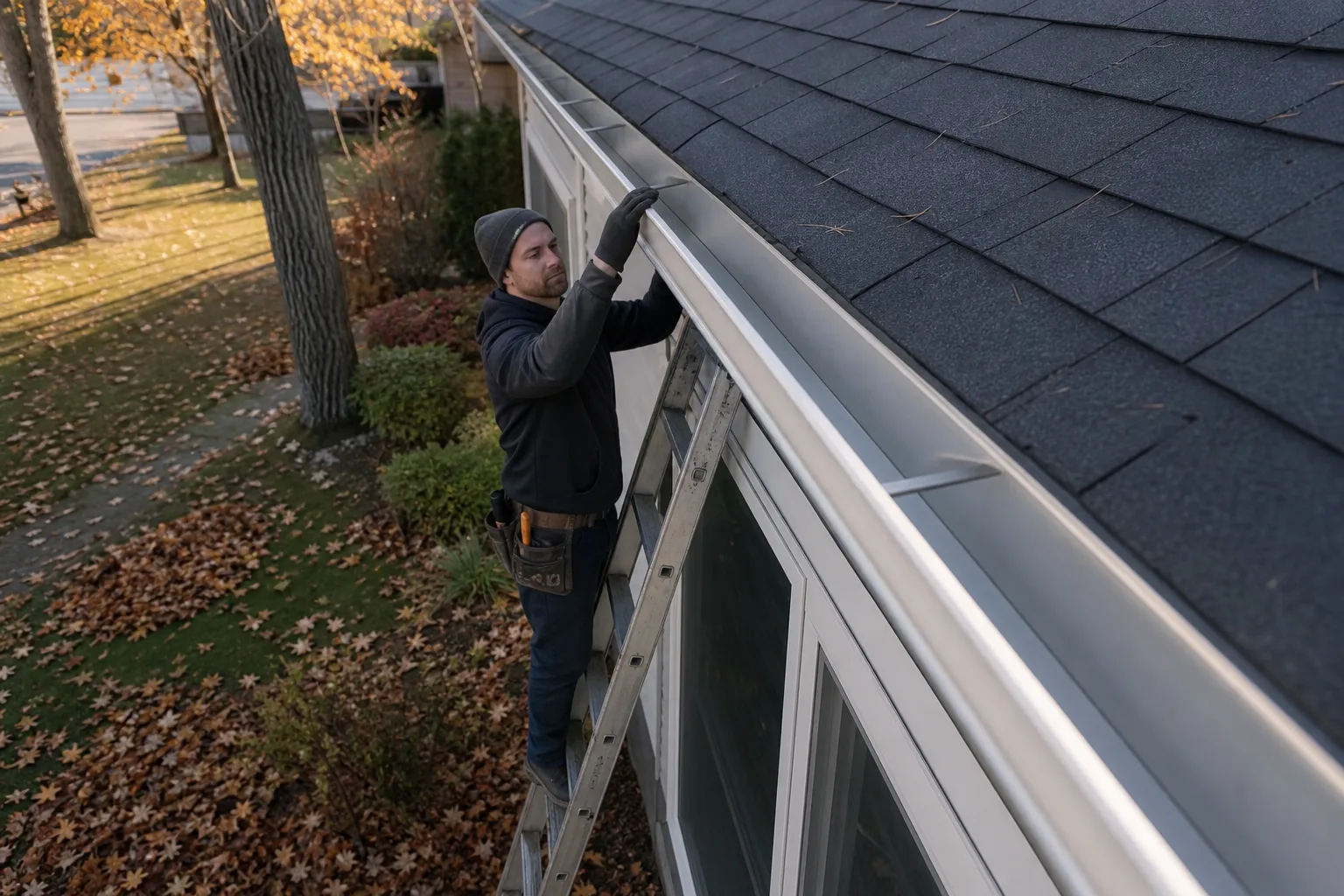
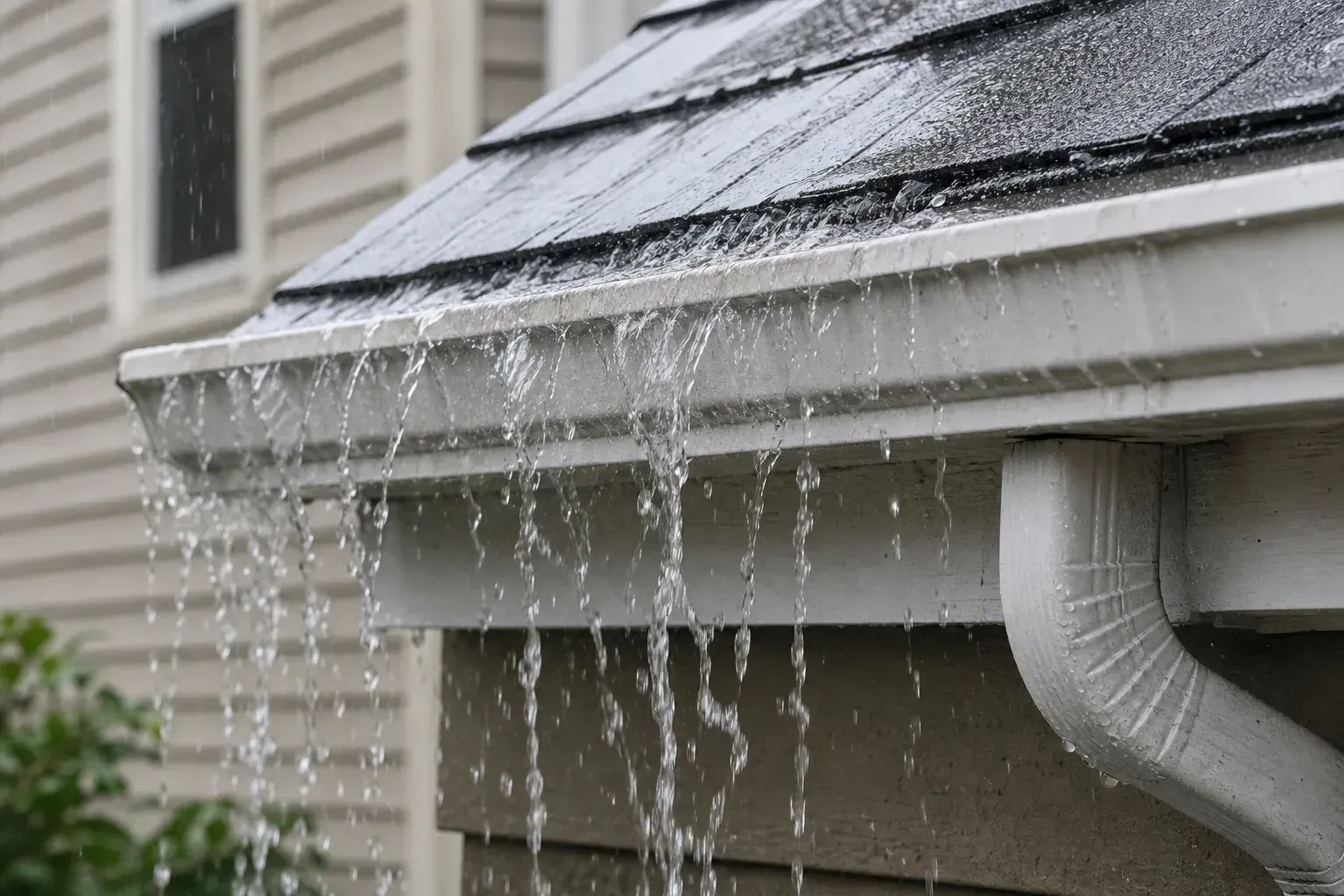
Clogged or damaged gutters during fall rain season can redirect water against your foundation, rot fascia boards, and lead to basement flooding, all of which cost significantly more to fix than a routine cleaning.
Understanding Rochester's Fall Weather Patterns
The Rochester area receives meaningful rainfall throughout September and October, with conditions becoming more intense as Lake Ontario storm systems develop later in the season. By November, you're also dealing with freeze-thaw cycles that expand standing water inside gutters and stress seam joints. If leaves pile up before those first hard rains, the system backs up fast.
Neighborhoods with mature oak, maple, and elm trees, common across Greece, Gates, and Irondequoit, tend to see the heaviest gutter loading. Oaks in particular drop late, meaning a second cleaning in early November often makes sense for those properties.
Risks of Unprepared Gutters Before Heavy Rains
When gutters overflow consistently, water follows the path of least resistance: down your siding, behind your fascia, and toward your foundation. Over time, this erodes soil grading, seeps into basements, and damages soffit materials that are expensive to replace.
According to guidance from roofing and gutter professionals, clogged gutters during heavy rain season can also back water up under shingles at the roofline, causing interior water intrusion that looks like a roof leak but starts at the gutter. That's a costly misdiagnosis if you replace shingles without fixing the drainage first.
Timing: When to Clean and Inspect Before Peak Rain Season
The general rule for how often to clean gutters in a region like Rochester: at minimum twice per year, with one of those cleanings timed to early-to-mid October, before peak leaf drop. A second pass in early November catches the late-season accumulation that the first cleaning misses.
If your property has significant tree coverage, three cleanings per year is reasonable. The goal is always to have clear, flowing gutters before the next heavy rain event, not after the damage is already showing.
Step-By-Step Gutter Cleaning and Inspection
A thorough fall cleaning takes most homeowners two to four hours depending on home size and how clogged the system is. Work methodically from one end to the other, not randomly, so you don't push debris into sections you've already cleared.
Safety Setup and Tools You'll Need
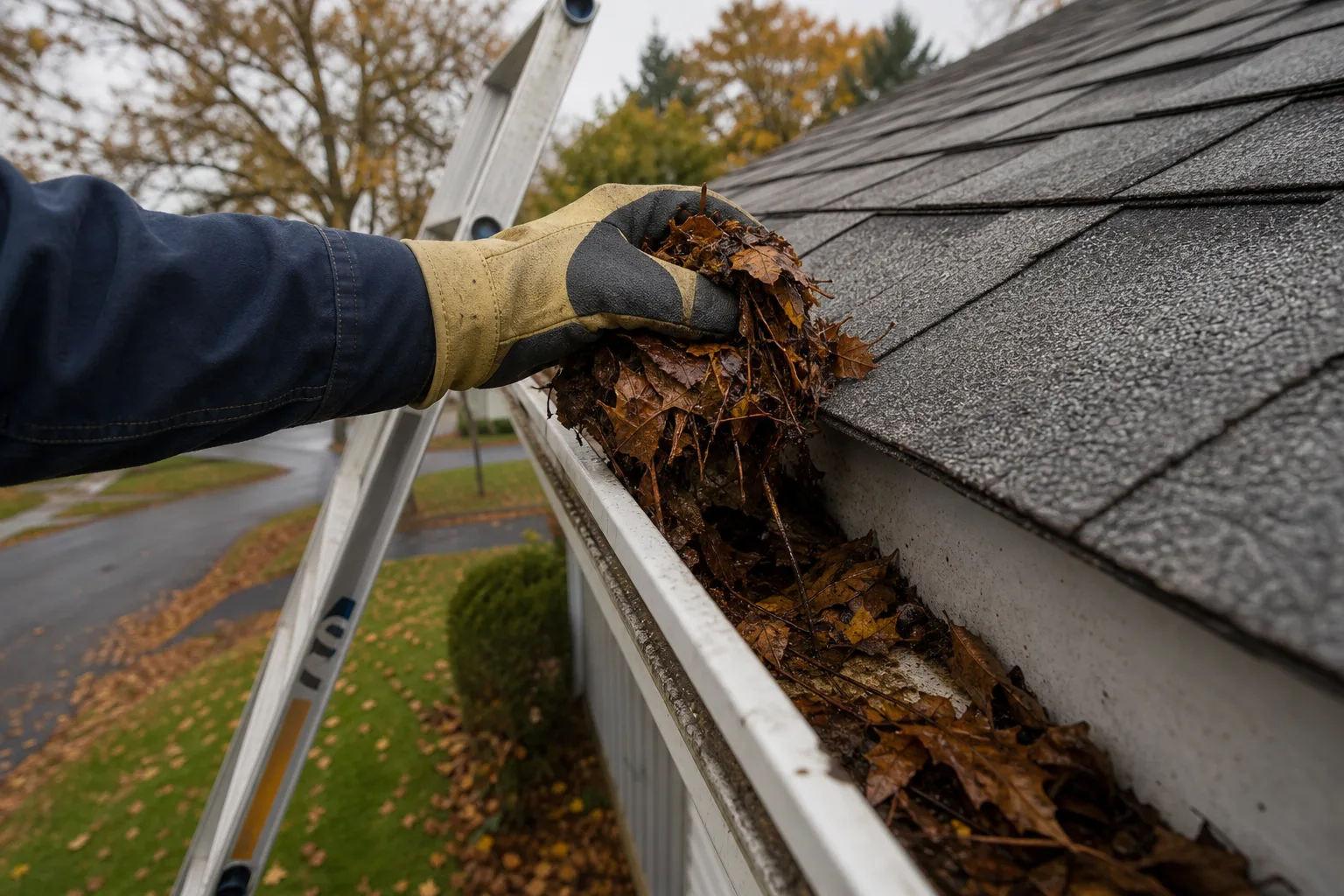
Before you climb anything, check that your ladder is rated for your weight plus tools and positioned on firm, level ground. Leaning a ladder against the gutter channel itself can bend or dislodge it, so always use the roof edge or the siding above the gutter for support.
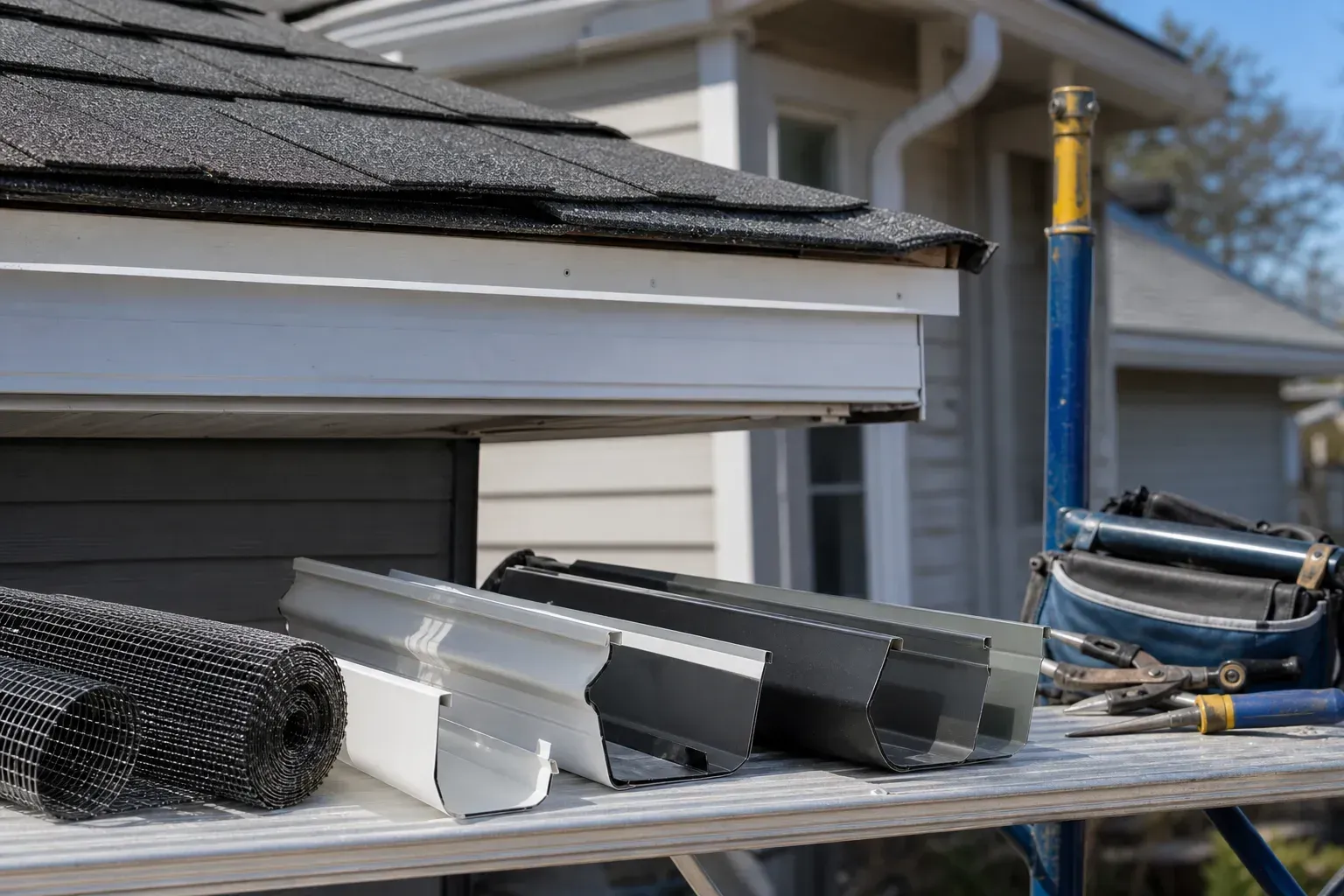
| Tool | Purpose |
|---|---|
| Extension ladder (24, 32 ft typical) | Safe roof-line access |
| Work gloves (rubber-coated) | Hand protection from debris and sharp edges |
| Gutter scoop or garden trowel | Removing compacted leaf matter |
| Garden hose with spray nozzle | Flushing gutters and testing downspout flow |
| Bucket or tarp below | Catching debris cleanly |
| Flashlight or phone light | Inspecting interior gutter seams |
A garden hose is your best diagnostic tool after the physical cleaning. Running water from one end toward the downspout tells you immediately whether the slope is correct and whether downspouts are draining freely.
Removing Leaves, Debris, and Buildup
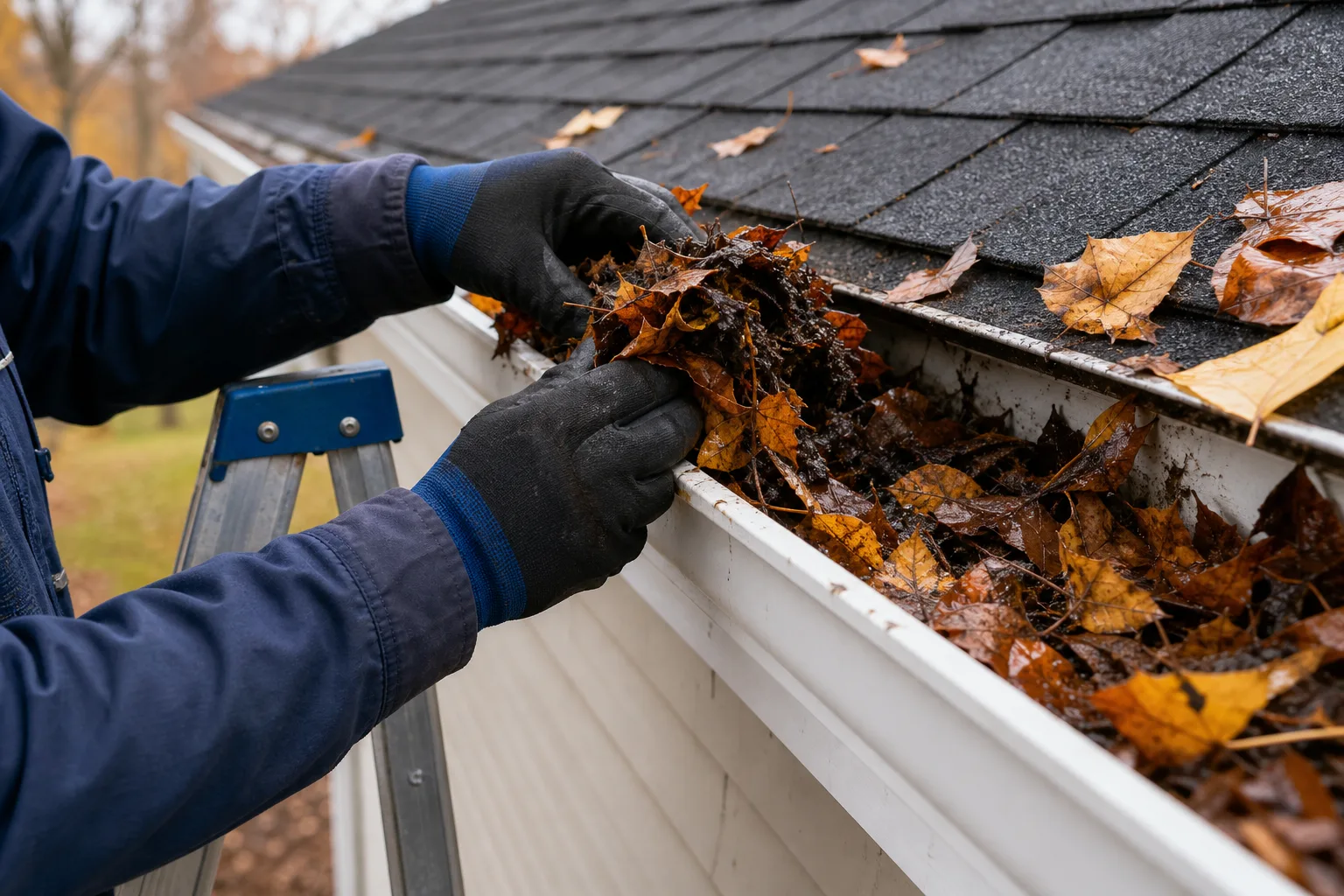
Start at the downspout end and work away from it, scooping debris toward you and dropping it into a bucket or tarp below. Dry debris is easier to manage than wet; if you can pick a dry day, do it. Wet leaves compact and are heavier, which makes the job slower and messier.
Once the bulk material is out, flush the gutter channel with your hose. Watch the water flow: it should move briskly toward the downspout with no pooling. If you see standing water in gutters after flushing, that section either has a low spot from sagging or a partial blockage still sitting in the downspout.
Checking Gutters and Downspouts for Damage
Run your hand along the inside of the gutter and look for rust spots, separated seams, or areas where the sealant has cracked. On aluminum gutters, small rust patches can be patched; large sections of corrosion are a sign that replacement makes more sense than repair.
Check each downspout by running the hose directly into the top. Water should exit the bottom within a few seconds. If it backs up, you have a clog to clear, a plumber's snake or a high-pressure hose attachment can usually break it loose.
Critical Repairs and Upgrades Before Fall Rains
Cleaning gets debris out. Repair work makes sure the structure can handle what falls next. These are the fixes worth doing in September or early October so you're not calling a contractor during a rainstorm.
Sealing Leaks and Fixing Sagging Sections
Leaking seams are among the most common issues on older sectional gutters. Clean the area thoroughly, let it dry, and apply a gutter-rated sealant or butyl tape on the interior joint. Exterior patching alone often fails because water pressure pushes from inside.
Sagging is a separate problem. A gutter that sags in the middle holds water and can eventually pull away from the fascia entirely. Replacing or tightening the gutter spikes or hangers, ideally upgrading to hidden hanger clips spaced every 24 to 36 inches, fixes the sag and gives the gutter far more structural support going into a wet season.
Reattaching Loose Gutters and Fascia
Walk your roofline and push gently against each gutter section. It should feel solid. Any section that wobbles or has visible gaps between the gutter back and the fascia board needs reattachment before fall rains make it worse.
If the fascia board itself is soft, spongy, or visibly rotted, that's a bigger job. Rotted fascia can't hold hardware reliably, and installing new gutters over damaged wood will just repeat the cycle. Check the gutter repair services available from Final Solution Gutter Guards ROC if you find fascia damage during your inspection.
Upgrading Downspout Extensions and Drainage
Most homes need downspout extensions long enough to carry water at least 4 to 6 feet away from the foundation. If yours terminate at the base of the house or onto a splash block that slopes toward the building, you're concentrating water exactly where you don't want it.
Flexible extensions are inexpensive and available at any hardware store. For problem areas near basements or in low spots, a buried drainage pipe run to a pop-up emitter in the yard is a more permanent solution worth considering. Downspout installation done right addresses both the extension length and the grading around the outlet.
Gutter Protection Solutions for Rochester Fall Weather
Rochester's leaf volume and heavy rain intensity make gutter guards a worth while investment for many homeowners. The question is which type holds up well here.
Gutter Guards and Leaf Protection Systems
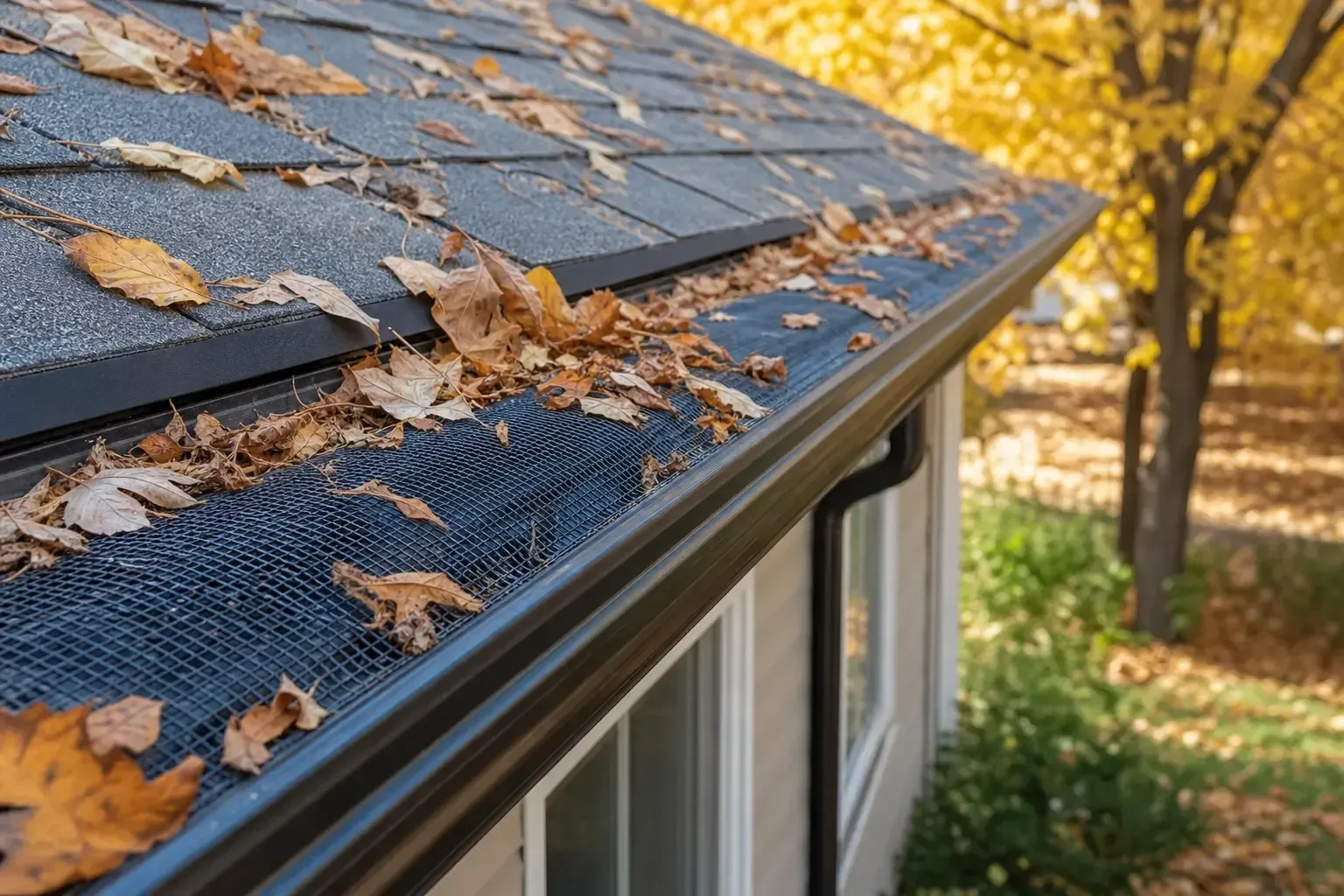
Gutter guards reduce how often you need to clean and prevent the fast-clogging that happens during October leaf storms. They work best as part of a complete system: properly sloped gutters, secure hangers, and guards installed flat and flush so debris sheds naturally.
As noted by resources covering preparing gutters for heavy fall conditions, gutter guards don't eliminate maintenance entirely, but they significantly reduce the frequency and urgency of cleanings. For properties with mature trees, that's a practical benefit year after year.
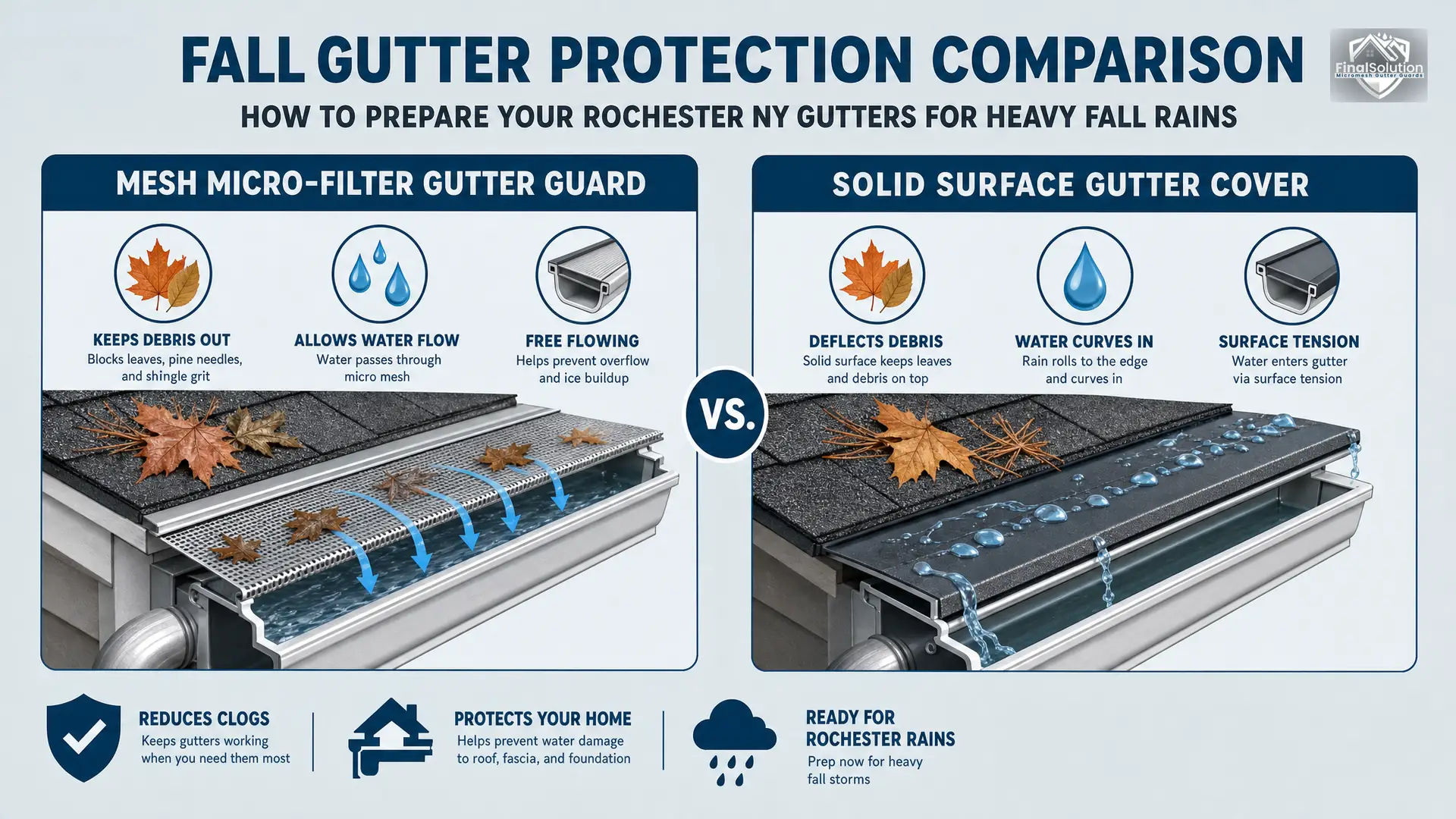
Mesh vs. Solid Covers: What Works Best in Heavy Rain
| Guard Type | How It Works | Best For | Limitation |
|---|---|---|---|
| Micro-mesh | Fine screen filters debris; water passes through | Most homes with mixed debris types | Needs occasional rinsing |
| Solid surface (reverse curve) | Water curves in via surface tension; debris falls off | Moderate leaf load | Can overflow in very heavy rain bursts |
| Foam insert | Sits inside gutter channel, blocks debris | Light debris environments | Harbors mold and seeds over time |
| Brush insert | Bristles catch debris; water flows through | Occasional light use | Debris embeds in bristles |
For Rochester NY gutters dealing with both heavy leaf fall and intense rain events, micro-mesh guards are generally the strongest performer. They handle large leaf volume and still allow water to enter the channel quickly during downpours. Learn more about theoptions available from Final Solution Gutter Guards ROC to find the right fit for your home.
Cost and ROI of Gutter Protection
Guard costs vary by material and linear footage, but most homeowners find the investment pays back quickly when measured against cleaning frequency and damage prevention. A home that needed two professional cleanings per year, at roughly $150 to $250 each, can offset a meaningful portion of guard installation costs within just a few seasons.
Beyond cleaning savings, the bigger return is damage avoidance. Foundation repairs, fascia replacement, and basement waterproofing all run into thousands of dollars. Guards that keep water flowing correctly year-round protect that investment quietly and consistently.
If you're weighing whether to repair, replace, or add protection, this practical guide for Rochester-area homeowners walks through the decision in detail.
DIY vs. Professional Gutter Prep: What You Should Know
Knowing where the line falls between a manageable weekend job and a task that needs a professional saves you time, money, and the risk of making a problem worse.
When to Handle Maintenance Yourself
Single-story homes with accessible rooflines are reasonable DIY territory for most capable homeowners. Cleaning gutters, flushing downspouts, replacing a worn end cap, and tightening a loose hanger bracket are all tasks that don't require specialized tools or training.
The key is being honest about ladder safety. Working at height on a wet or sloped surface carries real risk. If you're uncomfortable on a ladder, or if your roofline requires leaning or reaching at awkward angles, the cost of a professional visit is well worth it.
Signs You Need a Professional Gutter Contractor
Some situations call for a trained eye and proper equipment. Call a professional when you notice any of the following:
- Gutters pulling away from the fascia along multiple sections of the roofline
- Soft, spongy, or visibly rotted fascia boards that can't hold new hardware
- Persistent standing water in gutters after cleaning that points to a slope or installation problem
- Seams leaking at multiple points along a sectional gutter run
- Gutters that are 20 or more years old and showing widespread corrosion or deformation
- Downspouts that are crushed, cracked, or disconnected at the underground connection
In any of these cases, patching won't hold long. A professional assessment tells you whether repair is viable or whether full gutter replacement makes more sense before winter arrives. Replacing old sectional gutters with seamless gutters eliminates most seam-leak issues entirely, since there are no joints along the run except at corners and downspout outlets.
Your Fall Gutter Prep Action Plan
Having a plan on paper makes the difference between gutters that are ready before the first big storm and gutters you meant to check but never got to.
Pre-Rain Checklist and Timeline
Use this timeline to stay ahead of Rochester's fall weather instead of reacting to it:
| Timing | Task |
|---|---|
| Early September | Walk the roofline visually; note any sagging, gaps, or paint streaks on fascia |
| Early October | First full cleaning; flush downspouts; check slope and hanger hardware |
| Mid-October | Inspect seams and end caps; seal any open joints; extend downspouts if needed |
| Early November | Second cleaning after peak leaf drop; confirm guards (if installed) are seated correctly |
| Before first freeze | Final downspout flush; confirm no standing water remains in any gutter section |
This five-step timeline covers how often to clean gutters for the Rochester climate specifically. Properties with heavy tree coverage should add a spot check in late November to catch the oak and beech leaves that drop last.
Pre-rain inspection checklist:
- [ ] Gutters free of debris and flowing freely
- [ ] Downspouts draining at least 4 feet from foundation
- [ ] All hangers and brackets secure, no visible sagging
- [ ] No open seams, cracks, or rust patches on interior channel
- [ ] End caps tight with no gaps
- [ ] Fascia boards solid, no soft spots or rot
- [ ] Gutter guards (if present) seated flat with no gaps at edges
- [ ] Splash blocks or extensions sloping away from the house
Next Steps: Schedule Service or Order Supplies
If your inspection turns up minor issues, a loose hanger, one leaking seam, a downspout extension that needs lengthening, gather supplies and schedule a weekend to handle it before mid-October. Hardware stores stock gutter sealant, hanger clips, and extensions year-round.
If the inspection reveals anything larger, don't wait. Contractors book up quickly in fall across Monroe County, and a job that takes one afternoon now can become a multi-day project if water damage compounds through November. Homeowners in Webster, Greece, Gates, and surrounding communities can schedule gutter service directly with Final Solution Gutter Guards ROC for a free estimate and honest assessment of what your system actually needs.

Frequently Asked Questions
How often should you clean gutters in Rochester, NY?
Most Rochester-area homes benefit from two cleanings per fall: one in early October before peak leaf drop, and a second in early November after the maples, oaks, and beeches have shed. Properties with dense tree coverage overhead may need a third pass in late November to stay clear heading into freeze season.
The broader rule for how often to clean gutters is at minimum twice per year, once in spring after seed pods and early debris accumulate, and once in fall. Skip the fall cleaning and you risk blocked downspouts heading into the first freeze.
What are the signs that my gutters need repair before fall rains?
Watch for water stains running down your siding, paint peeling near the fascia, gutters visibly pulling away from the house, or water pooling at your foundation after rain. Inside the gutter channel, look for separated seams, rust streaks, and sections that sag or hold standing water even after a flush.
Any of these signs before fall rains arrive means repair is overdue. Addressing them in September or early October costs far less than dealing with water intrusion damage in December.
Can I use gutter guards instead of cleaning my gutters every year?
Guards significantly reduce how often debris accumulates, but they don't eliminate maintenance entirely. Micro-mesh guards filter out most leaves and debris while letting water through, but fine particles like shingle grit and seed pods can still collect on the mesh surface over time. Plan for at least one annual inspection and light rinse even with guards installed.
The best gutter guard systems for heavy rain combine a well-sloped, properly hung gutter with a quality micro-mesh cover, neither element works as well without the other.
How do I know if my gutters are the right size for heavy Rochester rains?
Standard 5-inch K-style gutters handle most residential applications well. Homes with steep roof pitches or large roof surface areas that funnel significant water volume into a single run may benefit from 6-inch gutters, which move roughly 40% more water than their 5-inch counterparts. If your gutters overflow consistently during heavy rain even when they're clean, size could be the issue rather than debris.
A professional assessment can confirm whether your current gutter size is appropriate for your roof's drainage load or whether an upgrade would solve persistent overflow problems.
What happens if I ignore gutter prep before fall rains in Rochester?
Blocked gutters overflow and redirect water against your foundation walls, into your basement, behind your fascia, and under your roofing at the eaves. In Rochester's climate, that water then freezes in early winter, expanding inside joints and along the foundation crack. The repair costs for foundation waterproofing, fascia replacement, or interior water damage consistently exceed hundreds to thousands of dollars, far more than seasonal gutter maintenance.
As resources covering fall gutter preparation consistently note, the consequences of neglected gutters show up slowly at first and then all at once when a major storm arrives.
Is it worth upgrading to seamless gutters before winter?
For homes with older sectional gutters that leak at multiple seams, seamless gutter installation is worth serious consideration before winter. Seamless gutters are custom-fabricated to your home's exact dimensions and have no joints along the run, only at corners and downspout outlets, which eliminates the most common source of leaks.
The upgrade also gives you a fresh start on hanger placement, slope calibration, and downspout sizing. If your current system is showing its age, fall is actually an ideal time to replace it so you head into freeze season with a fully functional system.
 Contact Us for a Free Estimate! Share a few details with Final Solution Gutter Guards ROC, we'll help you choose the right next step. Get a free estimate |