Key Takeaways
- Undersized downspouts are one of the most overlooked causes of foundation water damage.
- Most residential downspouts should handle the roof drainage area they serve, and many older homes are equipped with pipes that fall short.
- Saturated soil around your foundation leads to hydrostatic pressure, cracking, and long-term structural problems.
- Proper downspouts installation sizing, placement, and extension length all play a role in protecting your home.
- A professional inspection can catch drainage gaps before they cost you significantly more to repair.
What You Need Before You Start
Before you or a contractor can address undersized downspouts, you need a clear picture of your current system. This is not a project you want to rush. Skipping the assessment phase is exactly why so many Monroe County homeowners end up replacing downspouts that still do not drain properly.
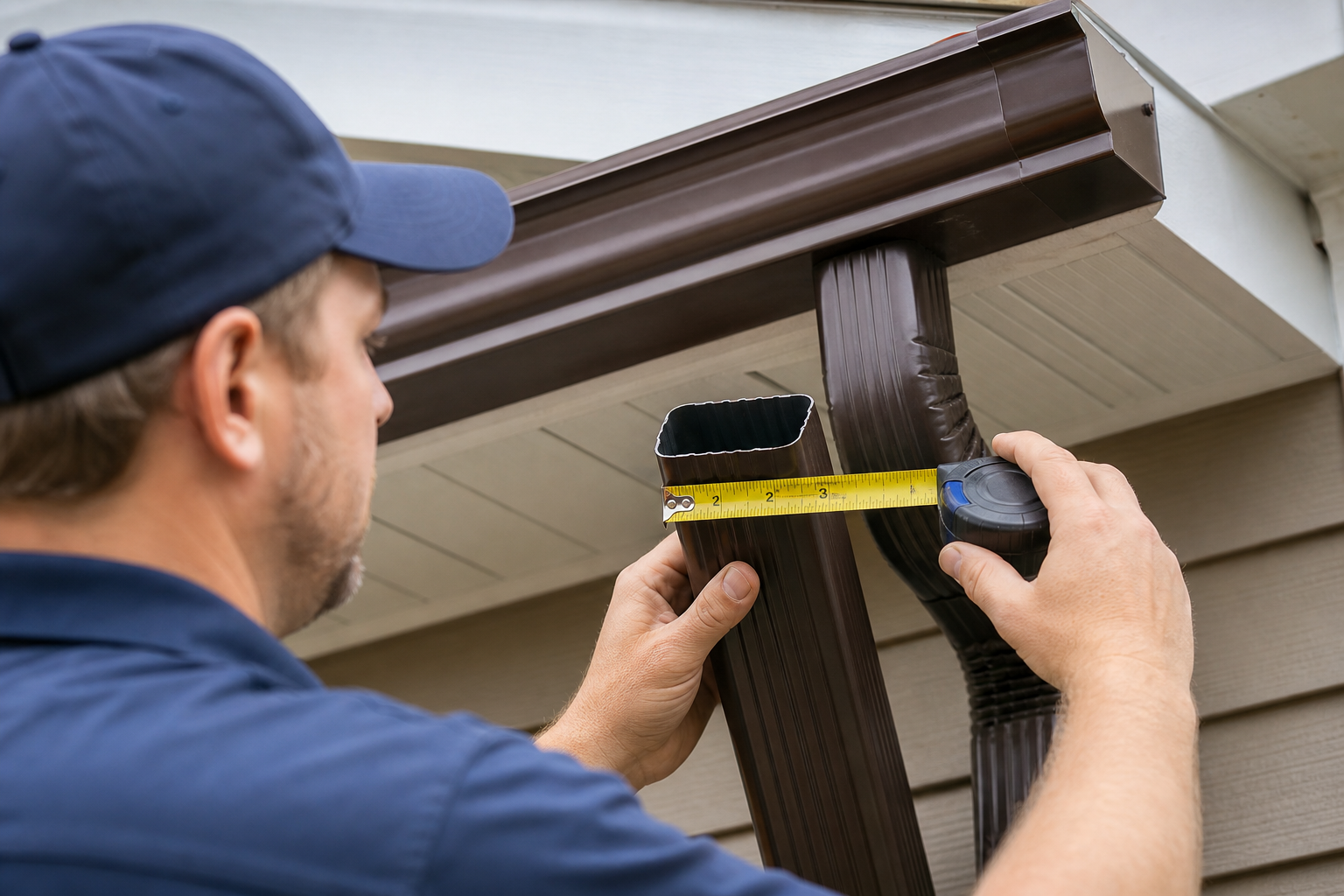
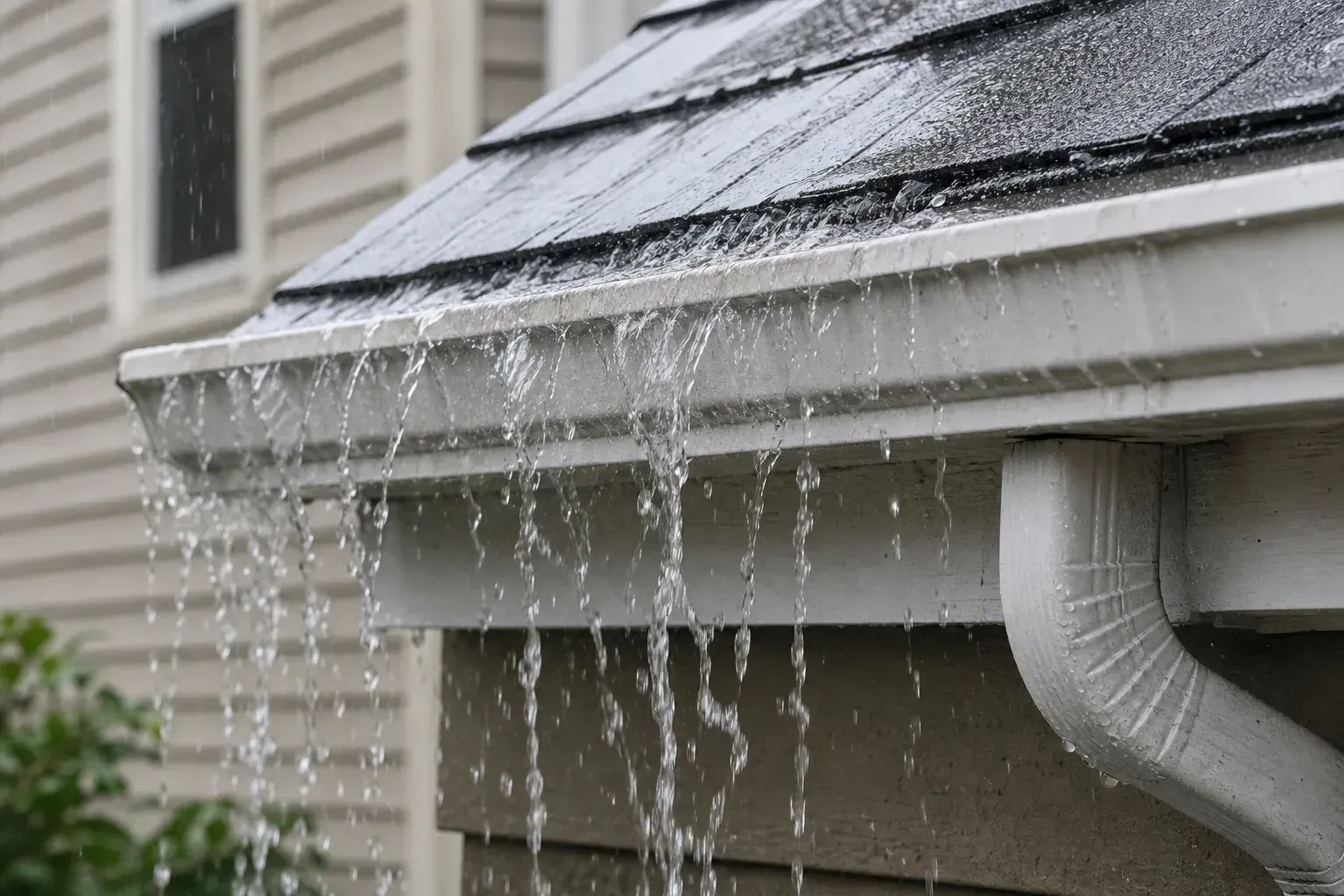
Undersized downspouts force water to back up into the gutter trough, overflow at the fascia, and deposit concentrated runoff directly against the home's foundation, accelerating soil saturation and hydrostatic pressure against basement walls.
Tools and Materials Checklist
If you are planning to assess this yourself before calling a professional, here is what you will need on hand:
| Item | Purpose |
|---|---|
| Measuring tape | Confirm existing downspout dimensions (2x3 in. vs. 3x4 in.) |
| Ladder (secure footing) | Reach gutter outlets and connection points |
| Flashlight or headlamp | Inspect interior of downspout for blockages or crimping |
| Garden hose | Test flow rate and spot overflow points |
| Marker or tape | Flag problem areas for the contractor |
| Notepad or phone camera | Document current layout for contractor reference |
A standard residential downspout measures 2 inches by 3 inches. Many older homes in Webster and Greece still have these. The more capable size is 3 inches by 4 inches, which moves significantly more water volume per minute.
If your roof is larger than roughly 600 square feet of drainage area per downspout, the smaller size is likely undersized for your situation.
Safety and Prep Considerations
Never lean a ladder against a gutter section. It dents the trough and shifts the slope you are trying to evaluate. Place the ladder against the fascia board or use standoff stabilizers.
If your gutters are two stories up, skip the DIY assessment entirely and have a professional handle it. The goal here is information gathering, not a hazardous roof-line climb.
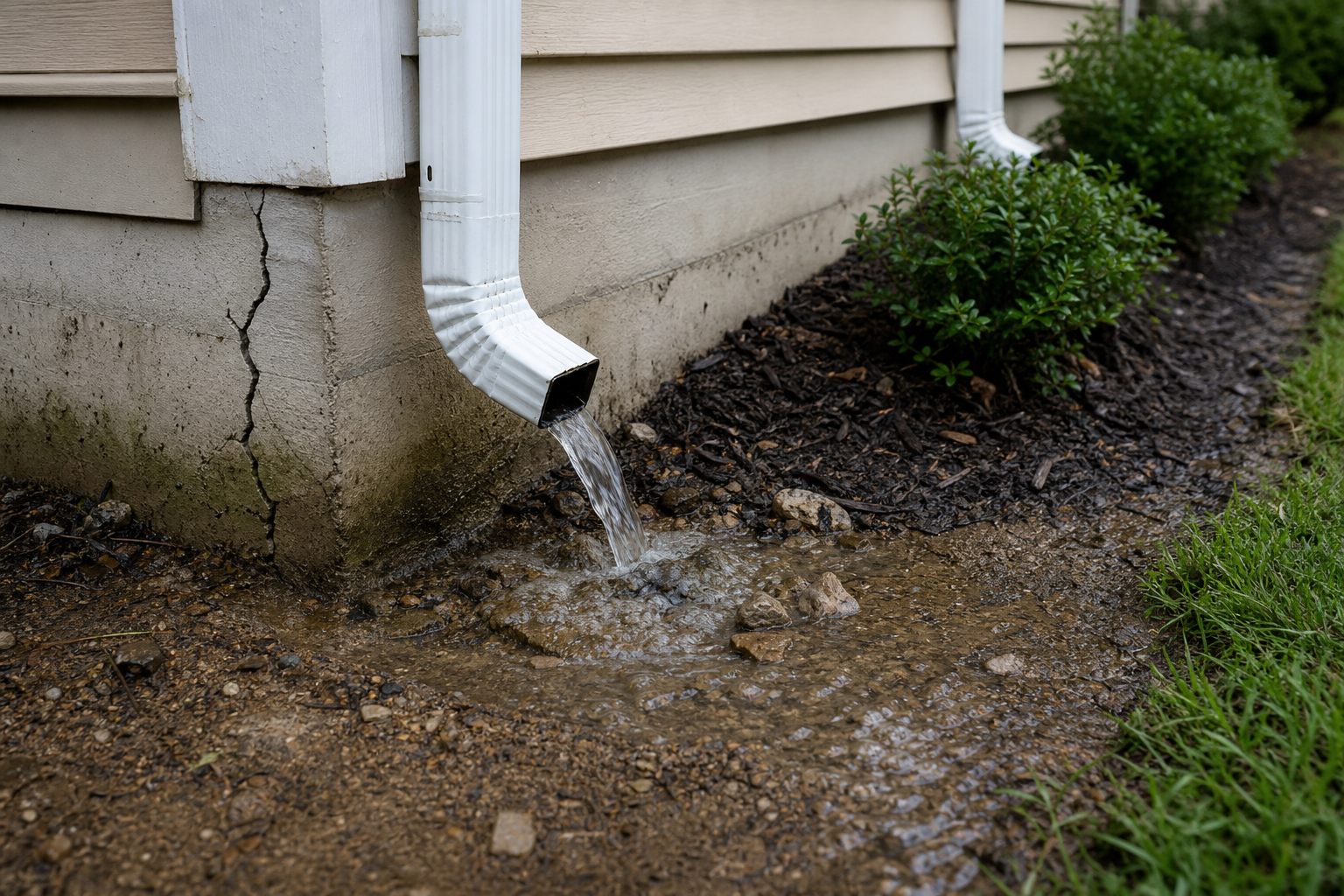
Check the ground around each downspout before you start. If the soil is already pulling away from the foundation, soft, or visibly eroded, that is a red flag that the drainage problem has been active for some time.
Step-By-Step Walkthrough
Once you have your baseline information, correcting undersized or misdirected downspouts follows a clear sequence. For most homeowners, this means working with a contractor on downspout installation that is properly sized, properly sloped, and properly extended away from the foundation.
Assess the Current Situation
Walk the perimeter of your home after a moderate or heavy rain. Look for these signs:
- Water dripping or streaming over the front edge of the gutter (overflow, not just splash)
- Soil erosion channels directly beneath downspout outlets
- Staining or efflorescence (white mineral deposits) on basement walls
- Soft, spongy soil pressed against the foundation
- Paint peeling on fascia boards just above gutter attachment points
Each of these signals a drainage capacity problem. Note every location and photograph it. Overflow at the midpoint of a gutter run often means the downspout at the end is too small to clear water fast enough, so it backs up and spills in the middle.
Prepare the Work Area
Before any new downspouts installation begins, clear the area directly below each downspout of debris, vegetation, or stored items. If you have decorative shrubs planted against the house, the contractor will need safe access to the fascia and gutter outlet.
Check that the gutter itself is properly pitched. A gutter that runs flat or pitches the wrong direction will defeat even a correctly sized downspout. The standard slope is roughly 1/4 inch of drop for every 10 feet of horizontal gutter run toward the downspout outlet.
Execute the Core Work
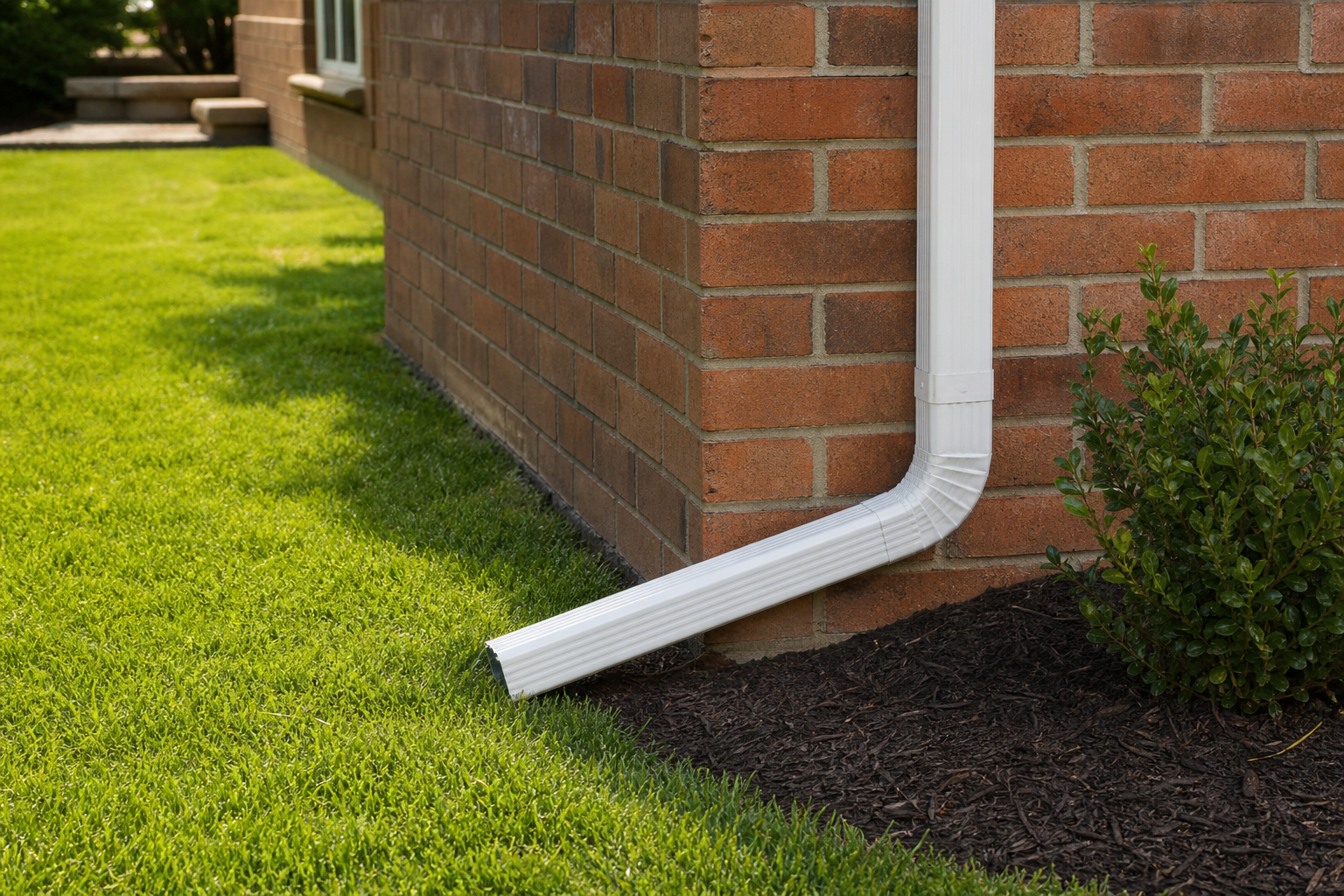
A proper downspouts installation involves more than swapping pipe sizes. The connection at the gutter outlet must be sealed correctly, the downspout must be secured to the wall with appropriate brackets, and the bottom extension (elbow and splash block or underground drain) must direct water at least 6 feet away from the foundation.
Larger 3x4 inch downspouts can handle roughly twice the drainage volume of standard 2x3 inch pipes. For homes with long gutter runs or steep roof pitches, adding a second downspout on the same run is often more effective than simply upsizing the single existing one.
Inspect Quality and Wrap Up
After installation, run water through the system with a garden hose at the gutter inlet. Confirm that water exits cleanly at the downspout outlet with no backflow, no dripping at seams, and no overflow at the gutter. Check that the discharge point directs water downhill and away from the foundation on all sides.
Walk the basement or crawlspace shortly after the next real rainstorm. If you previously had seepage or moisture on the walls, comparing before and after is the best real-world confirmation that the fix worked.
Common Mistakes to Avoid
Skipping Prep or Planning Steps
The most common error is replacing a downspout with the same size as the old one without checking whether the original size was ever adequate. Sizing should be based on roof drainage area, roof pitch, and local rainfall intensity. Rochester and the Monroe County area can receive significant precipitation during spring and fall storms, which means you want capacity to spare, not capacity that barely keeps up.
Cutting Corners on Quality Checks
Using flexible accordion-style downspout extensions as a permanent solution is another pitfall. They trap debris, sag over time, and restrict flow. Rigid aluminum or steel extensions sealed at the joint are far more durable.
If you are investing in gutter replacement at the same time, do the downspouts right so you are not revisiting the same problem in two years.
Rushing the Final Inspection
Do not sign off on any downspout work until you have personally seen water move through the system. A downspout that looks good but is slightly crimped at a bracket, or has a low spot in a buried extension, will still pool water near your foundation. The final flow test is not optional.
Timeline, Cost, and When to Call a Pro
Typical Project Timeline
| Phase | Typical Duration |
|---|---|
| Initial assessment and measurement | 1–2 hours |
| Ordering materials (if upsizing) | 1–3 business days |
| Downspout removal and reinstall | 2–4 hours per downspout |
| Post-install inspection and flow test | 30–45 minutes |
Most single-family homes can have all downspouts addressed in a single day once materials are on hand.
Budget Ranges and Cost Drivers
Downspout costs vary based on material, size, and how many outlet points you are replacing. Aluminum downspouts in the 3x4 inch size are the most common upgrade for Monroe County homes. Labor and materials together for a straightforward swap typically run in the range of $150 to $400 per downspout, depending on height, access, and whether any buried drain connections are involved.
Homes that also need gutter re-pitching or outlet relocation will be at the higher end.
Signs You Need Professional Help
Call a professional for downspouts installation if you notice any of these:
- Visible foundation cracks, especially horizontal ones in a block or poured wall
- Water intrusion in the basement after every moderate rain
- Gutter outlets that are cracked, pulling away, or rusted through at the connection
- Downspouts that terminate in underground drains you cannot visually trace
Maintenance and Long-Term Care
Routine Checks
Downspouts need attention at least twice a year. In the Rochester area, aim for a check in late November after the leaves have fallen and again in early April before spring rains hit. Look for:
- Debris clogs at the gutter outlet where it connects to the downspout
- Brackets that have pulled away from the wall
- Outlet extensions that have shifted away from the intended drainage path
- Any visible denting or crushing at downspout joints
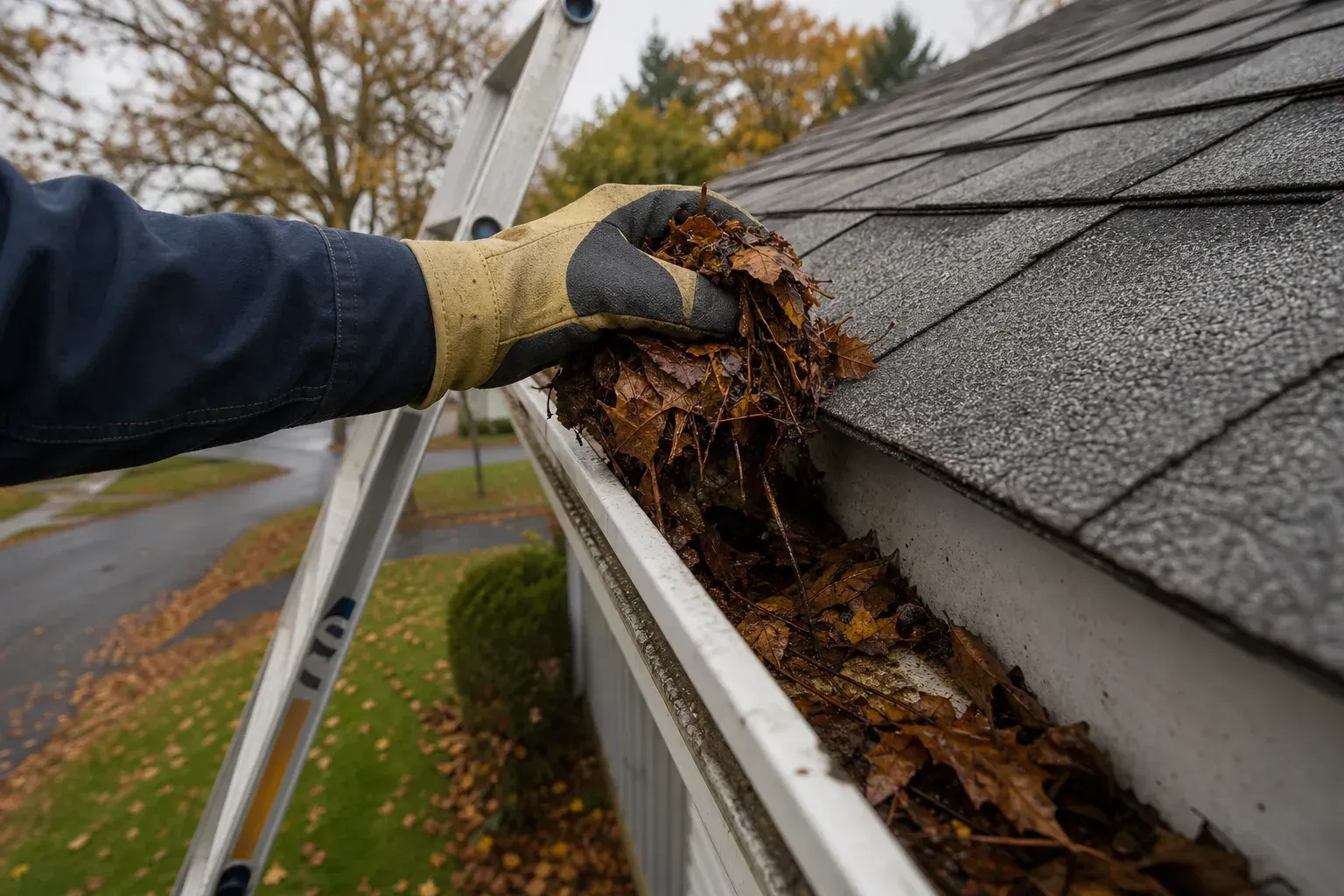
Keeping your seamless gutters clear of debris is the first line of defense. A clogged gutter puts the same hydraulic pressure on your downspouts as an undersized pipe.
Extending Results Over Time
Splash blocks help but are not enough on their own for homes with flat grade near the foundation. A buried rigid drain pipe routed to a pop-up emitter at least 8 to 10 feet from the house is a more reliable long-term solution. Pair that with properly sized 3x4 inch downspouts and a clean gutter system, and you have dramatically reduced the chance of foundation moisture problems.
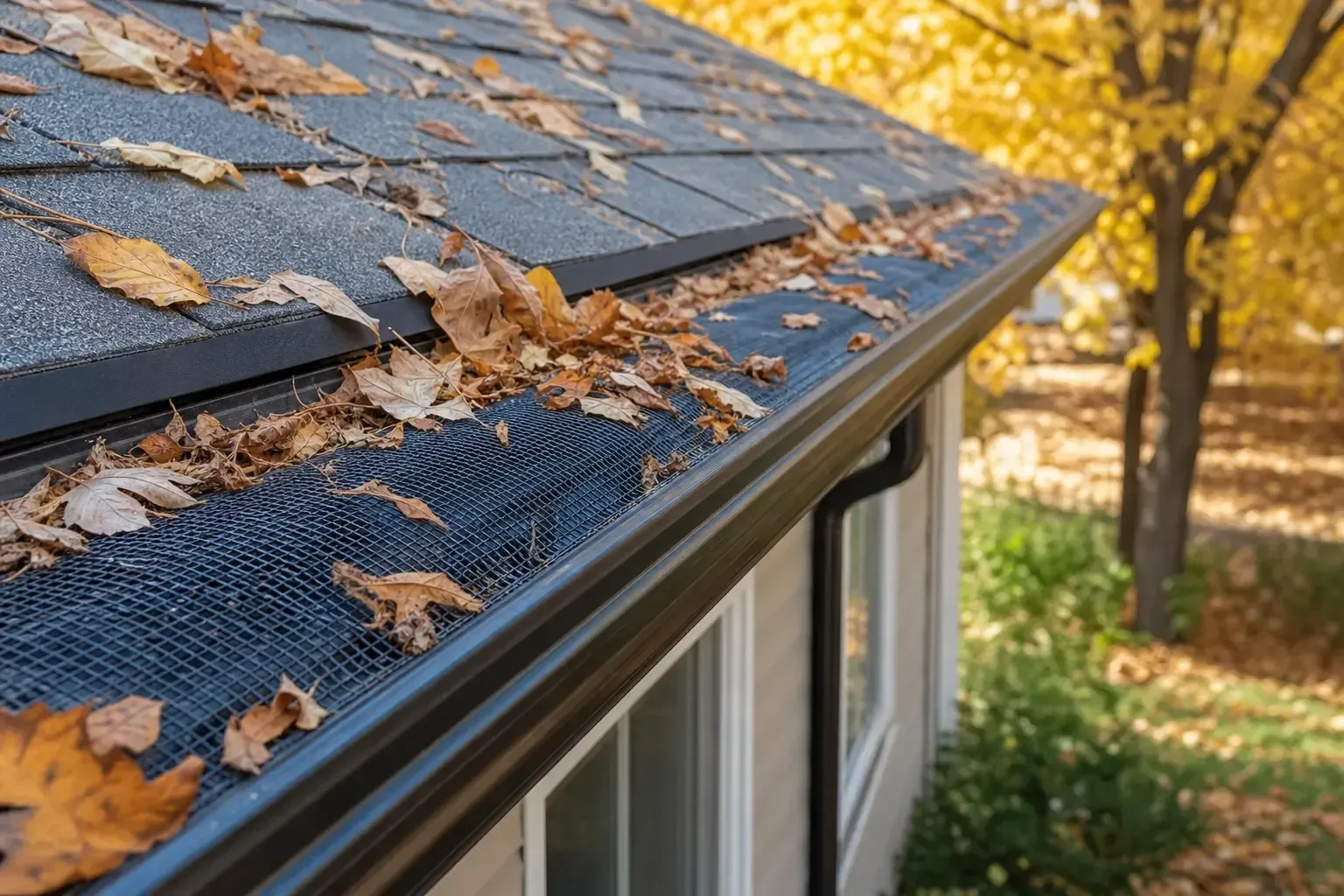
Gutter guards also reduce the maintenance burden. When your gutters stay clear, water flows predictably into your downspouts rather than overflowing unpredictably along the fascia line.
Conclusion and Next Steps
Quick Recap
Undersized downspouts are one of the most preventable causes of foundation water damage. The fix is rarely complicated, but it does require accuratesizing, proper materials, and correct placement of the discharge point. Most Monroe County homeowners who address downspout sizing early avoid the far more expensive cycle of basement waterproofing, foundation patching, and soil remediation.
Recommended Next Actions
Start by walking your property after the next rain. If you see overflow, erosion, or pooling within 6 feet of the foundation, those are actionable signals. From there, the path forward is straightforward: get a professional assessment, confirm your downspout dimensions match your roof drainage area, and upgrade where they do not.
If you are already seeing signs of moisture in your basement or soft soil against the foundation, do not wait for the next storm season. Reach out to Final Solution Gutter Guards ROC for gutter installations and repairs in Rochester, NY and get a clear picture of what your system actually needs.
Frequently Asked Questions
How do I know if my downspouts are undersized?
The clearest sign is water overflowing the front edge of your gutter during a moderate rain when the gutters are not clogged. If water is pouring over the lip rather than exiting cleanly through the downspout, the pipe is not moving water fast enough. You can also measure the downspout itself: a 2x3 inch rectangular pipe is the older standard, while 3x4 inch is recommended for most modern homes with larger roof surfaces.
Another indicator is visible soil erosion or channeling directly below the downspout outlet. That concentration of water in one spot is exactly what drives foundation moisture problems over time.
Can undersized downspouts really cause foundation cracks?
Yes, and it happens more gradually than most homeowners expect. When a downspout cannot clear water fast enough, gutters overflow and deposit water at the base of the exterior wall. Over repeated rain events, that moisture saturates the surrounding soil, which increases hydrostatic pressure against the foundation wall.
Poured concrete and concrete block foundations are both vulnerable to this kind of sustained lateral pressure, which eventually leads to cracking, bowing, or seepage.
The damage does not typically happen after one storm. It builds season after season, which is why many homeowners do not connect the foundation problem to the gutter system that caused it.
What size downspout does my home actually need?
A general rule used by many gutter contractors is one downspout per 600 square feet of roof drainage area when using standard 2x3 inch pipes, or up to 800 to 1,200 square feet per outlet with 3x4 inch pipes. Steeper roof pitches and local rainfall intensity also factor in, since steeper roofs shed water faster and put more volume into the gutter in a shorter window.
If you are unsure how your roof area maps to your current downspout count and size, a professional assessment during a gutter installation consultation will give you specific numbers for your home rather than generic estimates.
How far should downspouts extend from the foundation?
The widely cited minimum is 6 feet from the foundation wall for surface-level discharge. Some building professionals and waterproofing specialists recommend extending that to 8 to 10 feet, particularly on lots with flat grading or clay-heavy soil that does not absorb water quickly. The Rochester area has a mix of soil types across Monroe County, and many older neighborhoods have grade that has settled toward the house over the decades.
If surface extensions are impractical due to walkways, driveways, or landscaping, a buried rigid pipe routed to a pop-up emitter is a cleaner and more effective long-term option than accordion-style flexible extensions.
How often should downspouts be inspected or replaced?
Plan on a visual inspection twice a year: once in late fall after leaves have stopped dropping, and once in early spring before heavy rain season begins. Look for dents, loose brackets, disconnected sections, and any signs of water staining on the exterior wall near the downspout run.
Aluminum downspouts under normal conditions can last 20 years or more when properly installed and maintained. Galvanized steel options are also durable but can rust at joints over time if sealant breaks down. If your downspouts are original to a home built more than two decades ago, a professional inspection is a reasonable investment even if they appear intact from the ground.
Does adding gutter guards help with downspout performance?
Gutter guards reduce the volume of debris entering the gutter trough, which in turn reduces the likelihood of downspout clogs caused by compacted leaves and sediment. A clean gutter moves water more efficiently to the outlet, so your downspouts work as designed rather than fighting a partially blocked inlet.
That said, gutter guards do not fix a downspout that is fundamentally undersized for your roof area. The two solutions address different parts of the same drainage system. If your gutters overflow during heavy rain even when they are clean, the issue is capacity, not debris, and a professional gutter guard installation paired with properly sized downspouts gives you the most complete protection.
 Contact Us for a Free Estimate! Share a few details with Final Solution Gutter Guards ROC, we'll help you choose the right next step. Get a free estimate |