Key Takeaways
- Neglected gutters allow water to pool directly against your foundation, which can crack and shift concrete over time.
- Freeze-thaw cycles in Rochester winters make foundation deterioration from water exposure significantly worse.
- Signs of foundation damage include sticking doors, wall cracks, and bowing basement walls.
- Gutter cleaning, proper downspout extensions, and gutter guards are your most effective prevention tools.
- Catching gutter problems early is far less expensive than foundation repair or mold remediation.
Why Gutters Matter More Than Most Homeowners Realize
Most homeowners think of gutters as a nice-to-have feature that keeps rain off the front stoop. In reality, your gutter system is the primary barrier between your roof's runoff and your home's structural base. When gutters work correctly, they collect thousands of gallons of rainwater per storm and route it safely away from your home.
How gutters direct water away from your foundation
A properly installed gutter system channels water from your roof into downspouts, which carry it several feet away from your home's perimeter. The goal is to keep water from ever reaching the soil directly surrounding your foundation. That soil, when kept at a consistent moisture level, provides stable support for your home.
The domino effect of water pooling near your home
When gutters fail, water does not just sit on the surface. It soaks into the ground, follows the path of least resistance, and often finds that path directly against your foundation walls. The soil surrounding a basement is usually looser and more porous than undisturbed ground, which means water migrates there quickly.
Over months and years, that constant moisture load takes a real toll.
The Path from Neglected Gutters to Foundation Failure
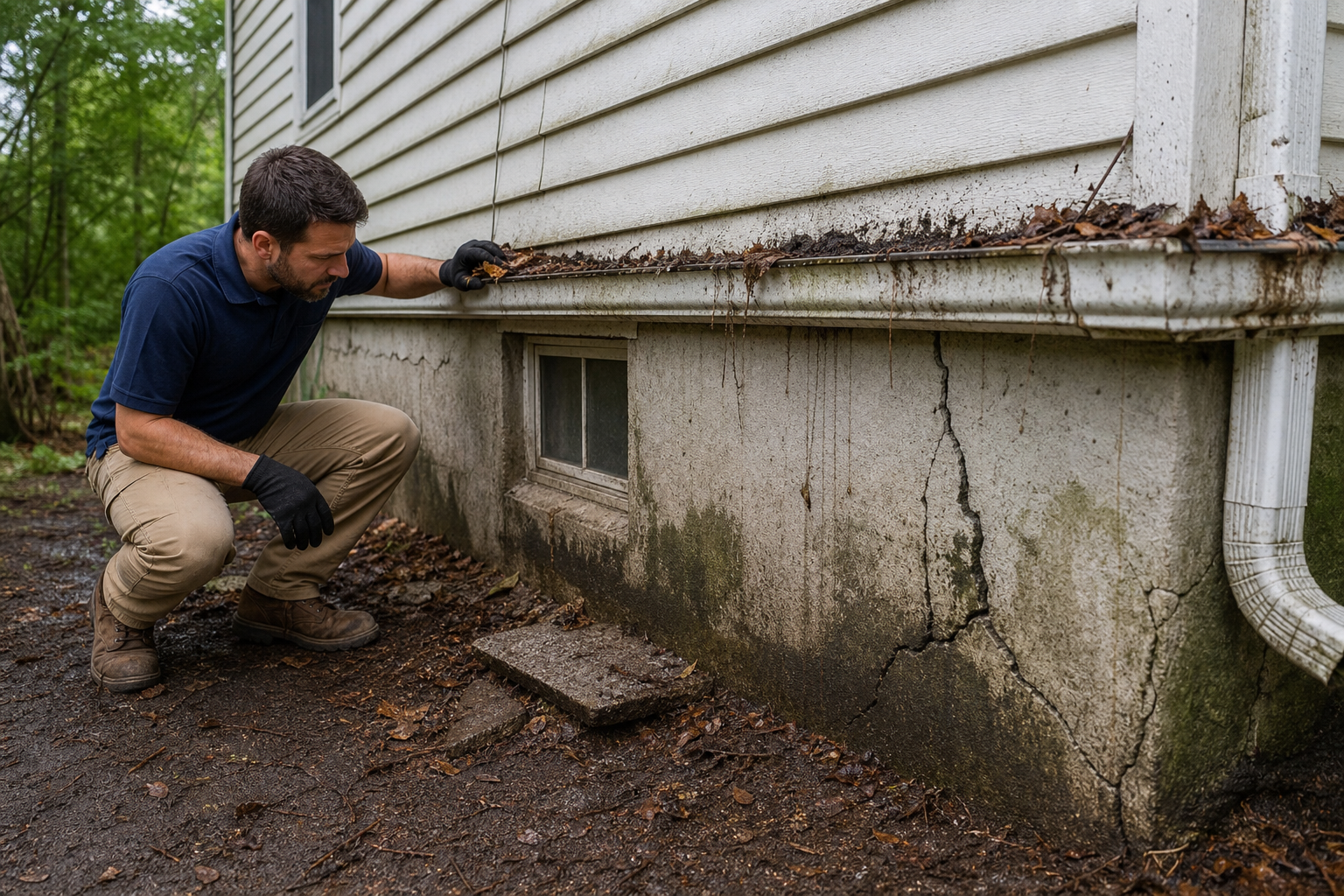
Clogged or damaged gutters that allow water to overflow near a home's foundation are one of the leading causes of preventable foundation damage for residential properties.
Clogged gutters overflow and saturate soil around your foundation
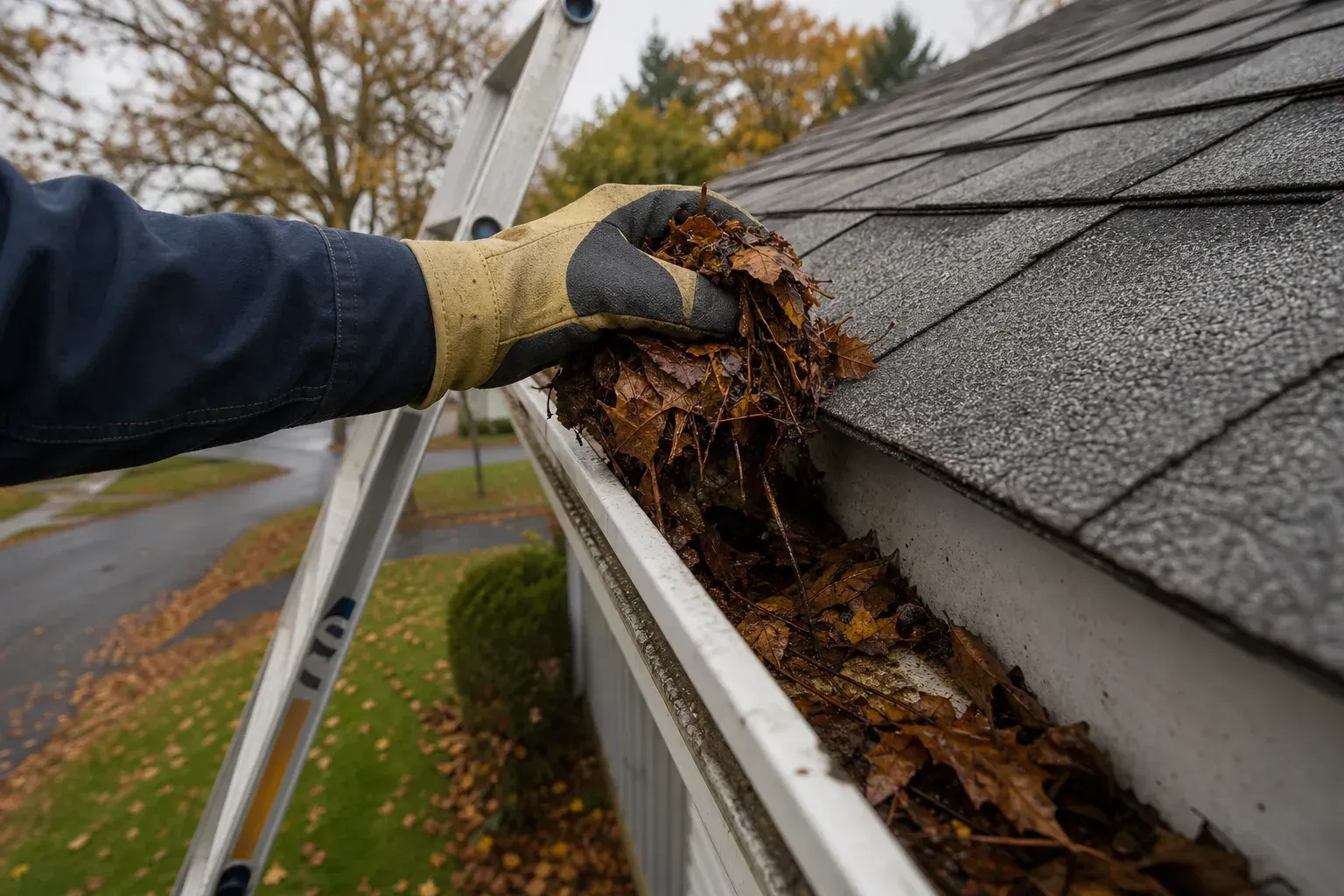
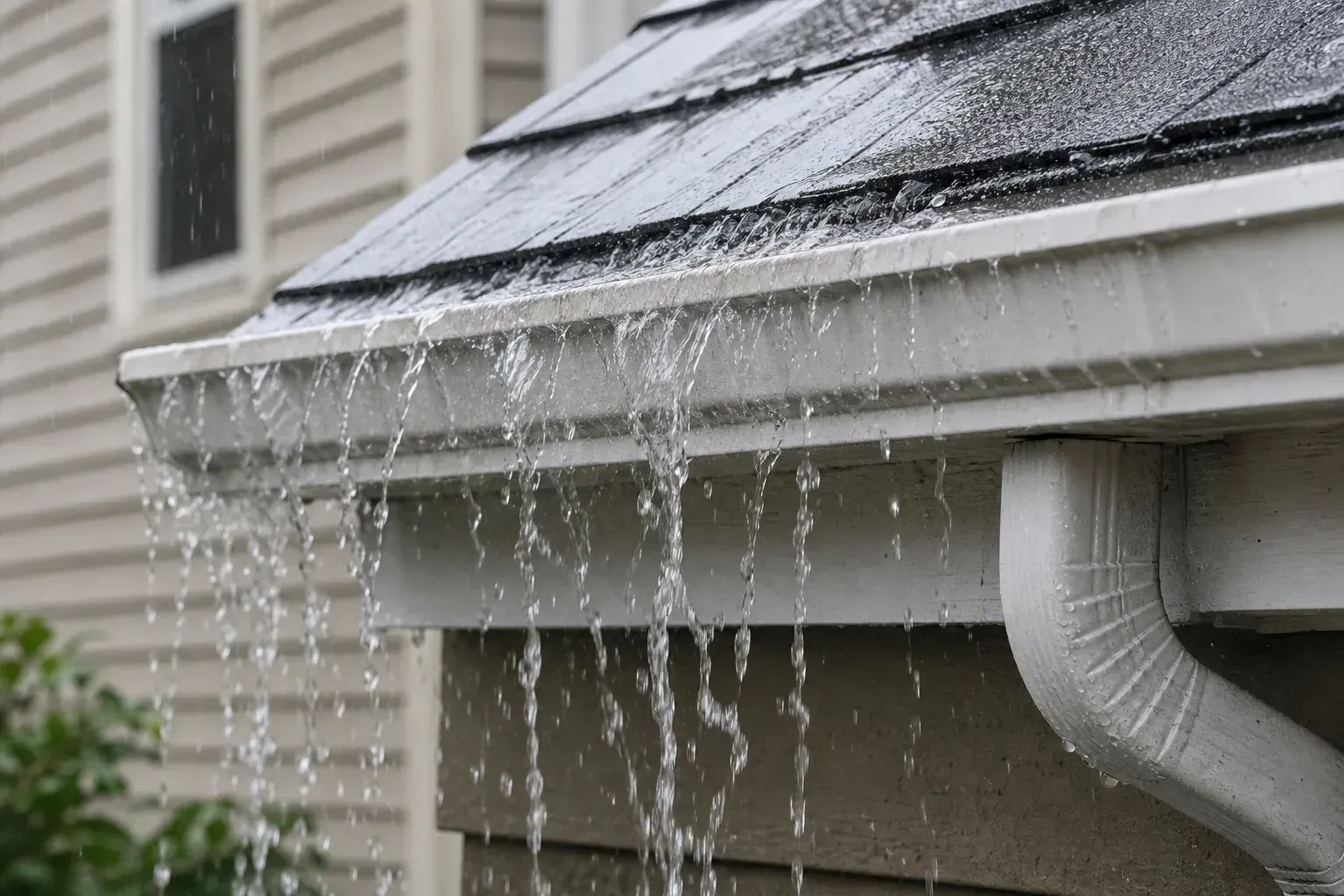
When your gutters are packed with leaves, shingle grit, and debris, rainwater has nowhere to go except over the edge. That overflow lands right at your home's drip line, exactly where your foundation sits. According to guidance on water damage from clogged gutters, this overflow is a consistent driver of soil erosion, hydrostatic pressure buildup, and foundation cracking.
In Monroe County, the rain volume during spring and fall storms is significant enough that a single blocked gutter can dump hundreds of gallons of water next to your foundation in one storm.
Excess moisture weakens concrete and causes settling
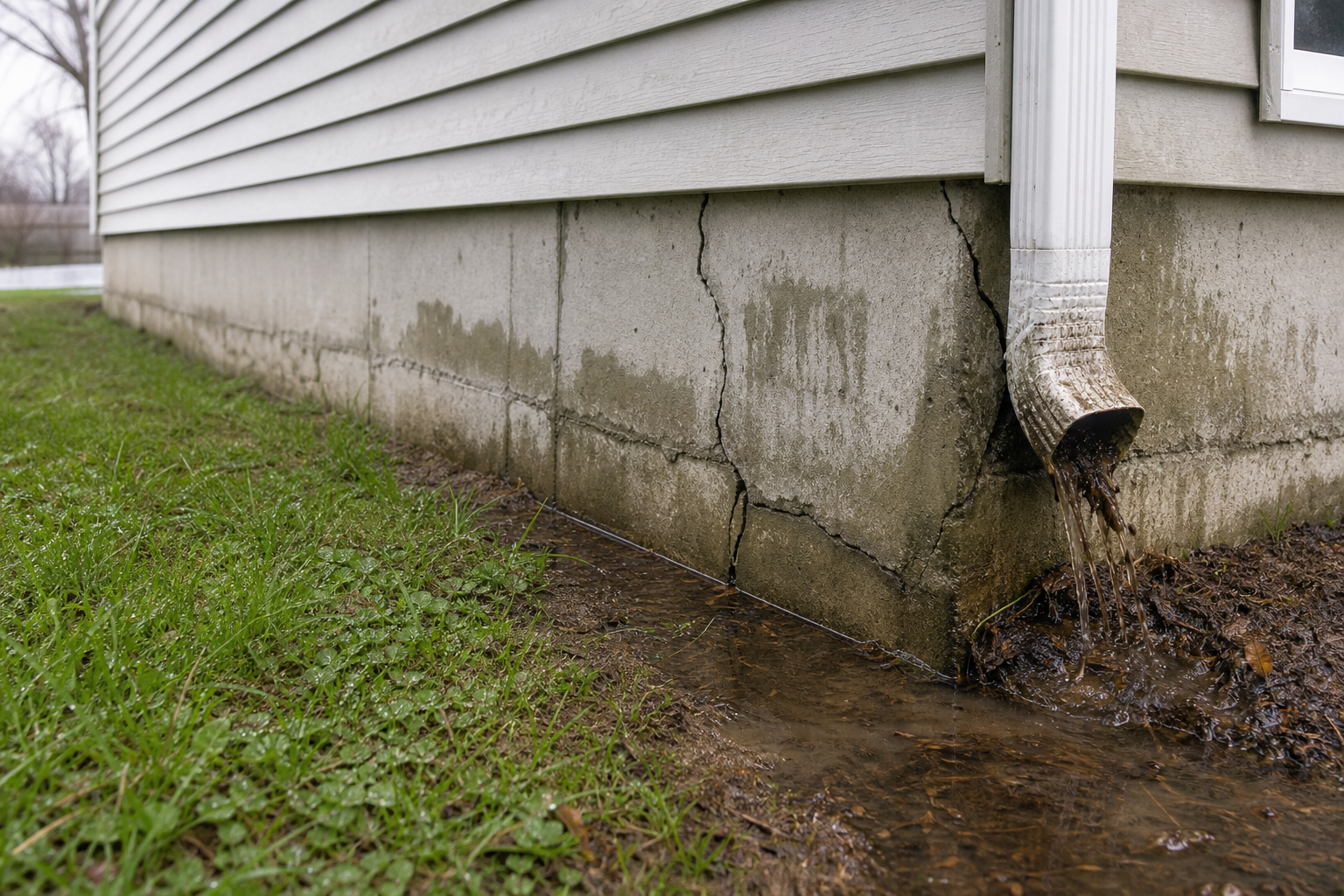
Concrete foundations are strong under compression, but sustained moisture exposure weakens them. Water pressure against basement walls, called hydrostatic pressure, pushes inward. Over time, this causes hairline cracks that grow wider, and in some cases, walls begin to bow or lean.
If the soil settles unevenly because of erosion, your foundation can shift, which pulls the rest of your home's structure with it.
Freeze-thaw cycles accelerate concrete deterioration
Here in Rochester, this problem does not stop when the temperature drops. Water that has seeped into small foundation cracks expands when it freezes, widening those cracks with each cycle. By the time spring arrives, what started as a hairline crack may be wide enough to allow water infiltration.
That freeze-thaw process, repeated across multiple winters, can turn a manageable repair into a major structural project.
Foundation Damage Signs You Cannot Ignore
Catching these warning signs early is the difference between a straightforward repair and a structural overhaul. Walk your basement and exterior perimeter a few times per year and look for any of the following.
Visible cracks in basement walls and floors
Hairline cracks are common in newer concrete, but horizontal cracks, stair-step cracks in block walls, and cracks wider than 1/4 inch deserve immediate attention. Horizontal cracks in particular suggest that the wall is experiencing lateral soil pressure, often a sign that moisture-saturated soil is pushing inward. The signs of foundation damage from water include not just cracks but also white mineral staining (efflorescence), which tells you water has been migrating through the wall.
Doors and windows that stick or misalign
When a foundation shifts, the entire frame of your house moves with it. Doors that suddenly stick, windows that no longer open smoothly, or gaps forming between window frames and walls are all symptoms of structural movement. These issues often appear in a second floor or main level before you ever see a crack in the basement.
Bowing walls and mold growth
A bowing or leaning basement wall is a serious structural warning. It means the wall has been under sustained pressure long enough to deform. Pair that with visible mold growth along the base of walls or in corners, and you have clear evidence that moisture has been present for an extended period.
Mold takes hold within 24 to 48 hours of surfaces staying wet, so its presence indicates a recurring or ongoing water intrusion problem, not a single isolated event.
How Water Enters Your Home When Gutters Fail
Water seeps through foundation cracks into basements
Once hydrostatic pressure creates cracks, water finds those cracks every time it rains. Even small cracks let in enough moisture to keep a basement perpetually damp. That moisture damages stored belongings, degrades drywall, rusts mechanicals, and creates the conditions mold needs to grow.
The connection between overflowing gutters and interior water damage is well documented, overflowing gutters and interior water damage is a well-established progression that begins outside and ends inside your walls.
Crawl spaces flood, damaging insulation and wood framing
Homes with crawl spaces are especially vulnerable. Water that enters a crawl space soaks wood floor joists, sill plates, and subfloor sheathing. Wood that stays wet long enough develops rot, and rot compromises the structural integrity of your floor system.
Insulation in crawl spaces also absorbs moisture and loses its R-value, leading to higher energy bills on top of the structural damage.
Interior moisture promotes mold and structural decay
Even without visible standing water, elevated humidity from ongoing moisture intrusion creates conditions where mold, mildew, and wood decay thrive. This affects air quality throughout the home. Occupants may notice musty smells, worsening allergy symptoms, or respiratory irritation before they ever see a visible mold patch.
Repair Costs: What Neglected Gutters Can Cost You
Understanding the financial stakes helps put routine gutter maintenance in perspective.
Foundation repair and stabilization expenses
| Repair Type | Typical Cost Range | Notes |
|---|---|---|
| Crack injection (epoxy/polyurethane) | $500–$2,500 | Effective for isolated cracks |
| Wall anchors or carbon fiber straps | $4,000–$12,000 | Used for bowing or leaning walls |
| Full basement waterproofing system | $8,000–$25,000+ | Interior drain tile, sump pump, vapor barrier |
| Foundation underpinning (piering) | $10,000–$30,000+ | Required for severe settling or shifting |
These figures represent typical ranges for the Rochester region. Every home is different, and costs vary by extent of damage, contractor, and access.
Water damage remediation and mold removal
Mold remediation for a basement typically runs $1,500 to $9,000 depending on how far the mold has spread. Add professional water damage drying and structural repairs, and a single flooding event can easily exceed $10,000. Compare that to the cost of routine gutter cleaning, which is a fraction of that amount, and the case for maintenance becomes obvious.
Prevent Foundation Damage: Gutter Maintenance and Beyond
The good news: most of this damage is entirely preventable. A consistent gutter maintenance routine stops the problem before it starts.
Clean gutters quarterly and after heavy storms
Most gutter professionals recommend cleaning at least twice a year, once in late spring after tree seeds and pollen fall, and once in late fall after the leaves are down. In the Rochester area, where we get significant tree coverage and heavy seasonal rain, quarterly cleaning is a smarter target. Knowing how often gutters should be cleaned is the first step toward keeping your foundation dry.
If you need gutter repair in Webster or across Monroe County, addressing sagging sections, leaky joints, and detached downspouts at the same time as cleaning saves you from doing the work twice.
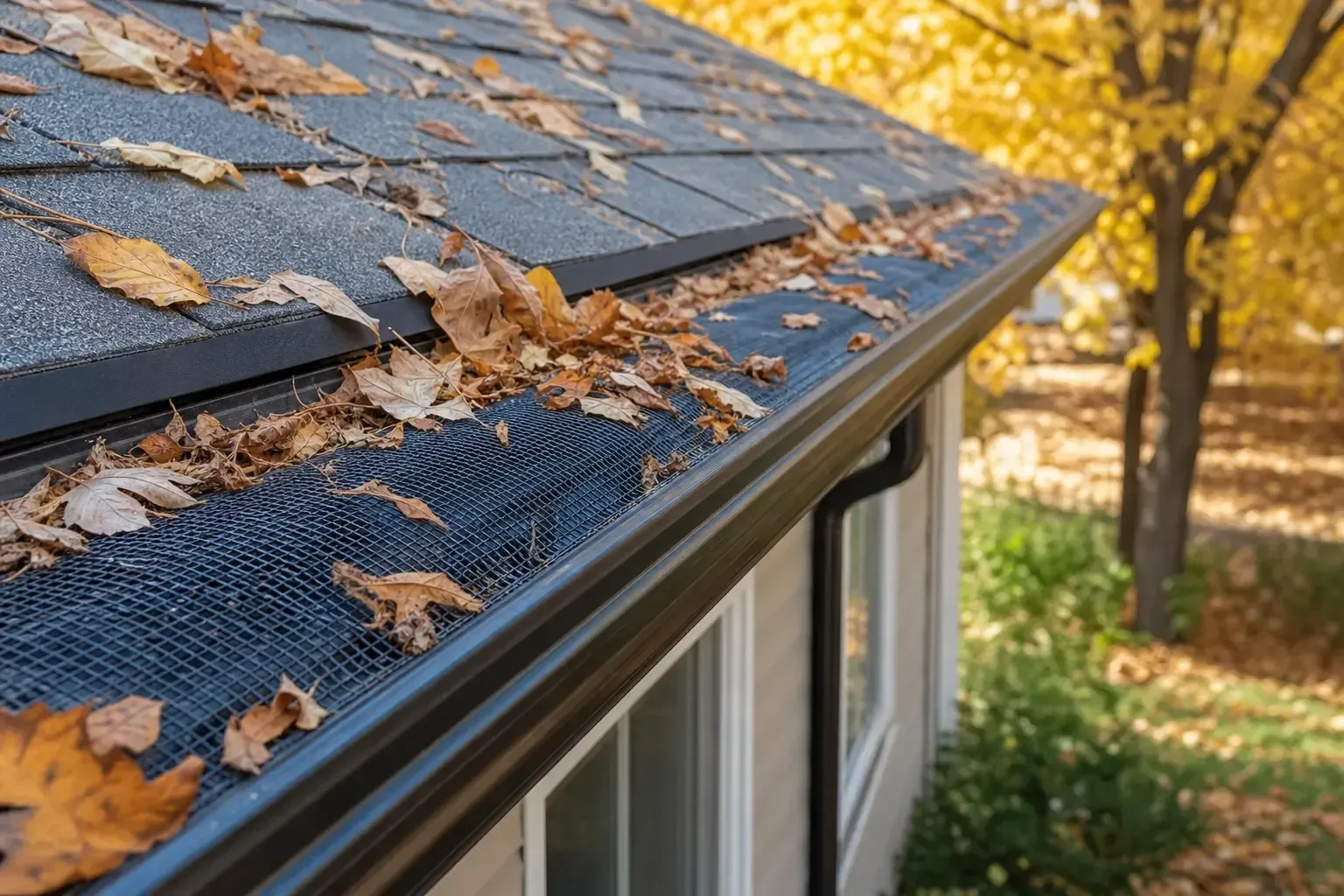
Install gutter guards and extend downspouts away from foundation
Your downspouts should discharge water at least 6 feet from your foundation. Extensions are inexpensive and easy to add. If you have a grading problem or a low spot where water naturally runs back toward the house, that needs to be corrected as well.
Grade soil properly and monitor basement conditions
The ground around your home should slope away from the foundation at roughly 1 inch per foot for the first 6 feet. Flat or negative grades send water directly toward your basement. After heavy rains, check your basement and crawl space for any signs of seepage.
Catching it early, a small damp spot rather than standing water, makes a big difference in what the repair involves.
Frequently Asked Questions
How often should gutters be cleaned to protect your foundation?
Most homes in the Rochester area benefit from cleaning gutters at least twice a year, once in late spring and once after the leaves fall in autumn. If you have significant tree coverage or experienced heavy storms, quarterly cleaning gives you better protection. Gutters that go a full year without attention are far more likely to overflow and send water directly against your foundation.
What happens if gutters overflow consistently?
When gutters overflow with every rain, water dumps at the drip line of your roof, right next to your foundation. Over time, that repeated saturation softens the backfill soil, increases hydrostatic pressure against your basement walls, and leads to cracking, shifting, and eventual water intrusion. The dangers of water damage from clogged gutters compound with each storm season, making early correction critical.
Can clogged gutters really cause interior water damage?
Yes, and the path is more direct than most homeowners expect. Overflow saturates soil, soil pressure cracks foundation walls, and water follows those cracks into your basement or crawl space. From there, elevated humidity and standing moisture promote mold growth and wood decay throughout the home's structure.
What starts outside your roofline ends up inside your walls.
How do I know if my foundation damage was caused by gutters?
Look for the combination of signs: cracks near the base of exterior walls, damp or musty basement air, staining along basement walls at or below grade, and gutters that visibly overflow or pull away from the fascia. If your gutters have been neglected for several seasons and you're seeing these symptoms together, water from your roof system is the most likely culprit. A professional inspection can confirm the source.
Are gutter guards worth it for foundation protection?
Gutter guards reduce debris accumulation, which reduces overflow frequency between cleanings. For homes under mature trees, common throughout Webster, Greece, and Pittsford, guards make a meaningful difference in how consistently water is directed away from your foundation. They work best when paired with properly sized gutters and well-positioned downspouts rather than as a standalone fix.
You can learn more about your options on our gutter guards page.
How much does foundation repair typically cost compared to gutter maintenance?
Routine gutter cleaning costs a fraction of what foundation repairs run. Even a basic crack injection repair starts around $500, while serious structural work like wall anchors, interior waterproofing systems, or underpinning can reach $25,000 or more. Regular gutter maintenance is one of the lowest-cost ways to protect one of your largest investments.
Addressing a sagging section of gutter or a disconnected downspout now is almost always cheaper than what comes next if you don't.
What should I do if I already see cracks in my basement walls?
Start by documenting the cracks with photos and measuring their width. Cracks wider than 1/4 inch, horizontal cracks, or any crack that is actively leaking water should be evaluated by a foundation specialist promptly. At the same time, inspect your gutters.
If they are clogged, pulling away from the fascia, or discharging water too close to your home, address those issues immediately, otherwise, water will keep feeding the problem regardless of what repairs are made inside.
 Contact Us for a Free Estimate! Share a few details with Final Solution Gutter Guards ROC, we'll help you choose the right next step. Get a free estimate |