Key Takeaways
- Seamless gutters can only perform as well as the downspout system they drain into. Capacity mismatches cause overflow even on new installations.
- Roof area and local rainfall intensity should drive downspout sizing decisions, not guesswork or builder defaults.
- One downspout per 30 to 40 linear feet of gutter is the standard industry spacing guideline for most residential applications.
- Improper grading at the downspout outlet is one of the most overlooked causes of foundation water intrusion.
- Professional assessment specific to your home's layout, roof pitch, and drainage conditions is the most reliable path to a system that actually works.
Why Downspouts Are Non-Negotiable for Seamless Gutter Performance
Seamless gutters eliminate the leak-prone seams of sectional systems, but they cannot compensate for an undersized or poorly placed downspout system. Water volume determines performance, and downspouts control where that volume goes.
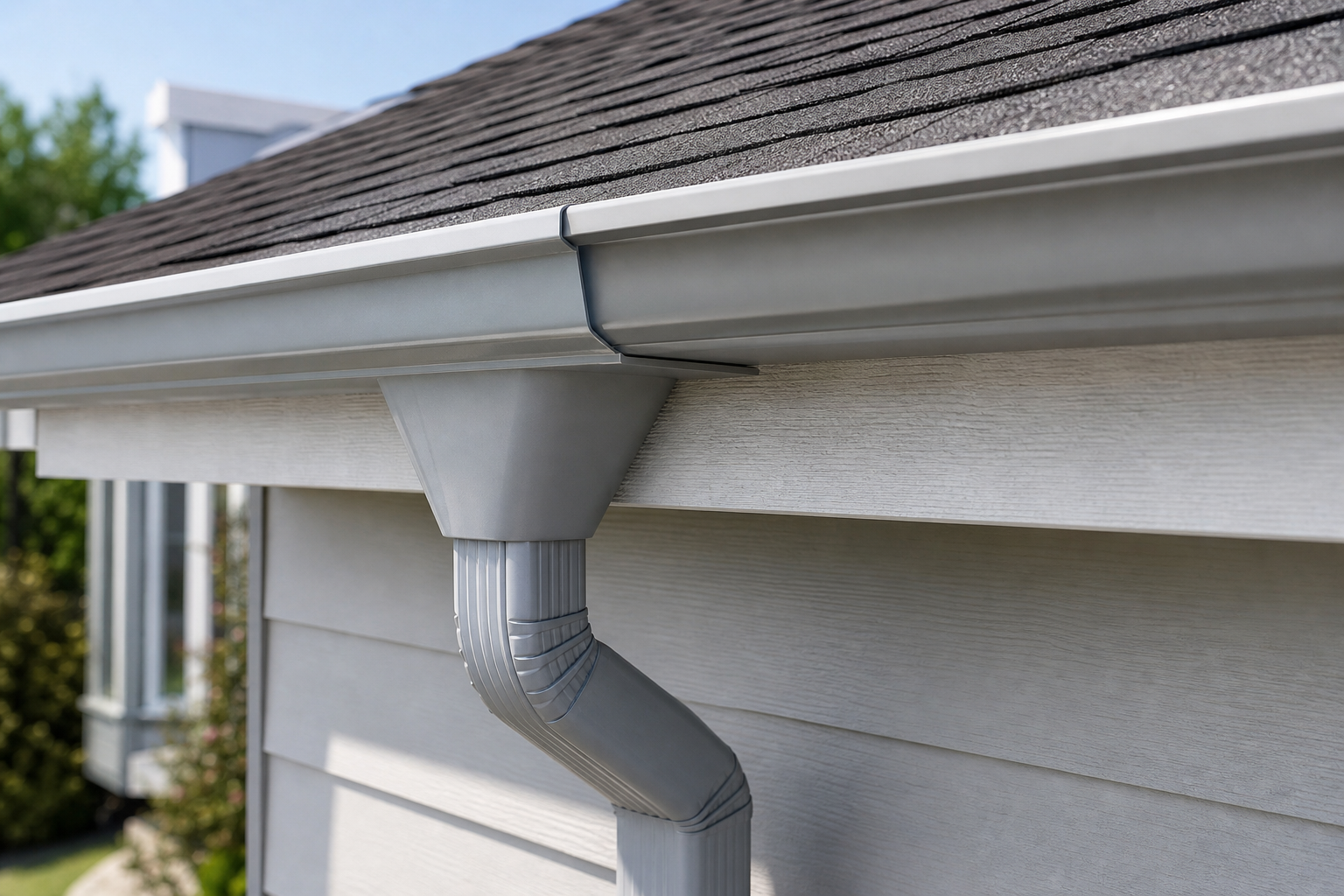
Seamless gutters earn their reputation for fewer leaks and a cleaner look. According to Englert's breakdown of seamless gutter benefits, the absence of sectional joints dramatically reduces the most common failure points in traditional gutter systems. But that quality upgrade only holds up if the water collected has somewhere adequate to drain.
How water volume overwhelms gutters without adequate drainage
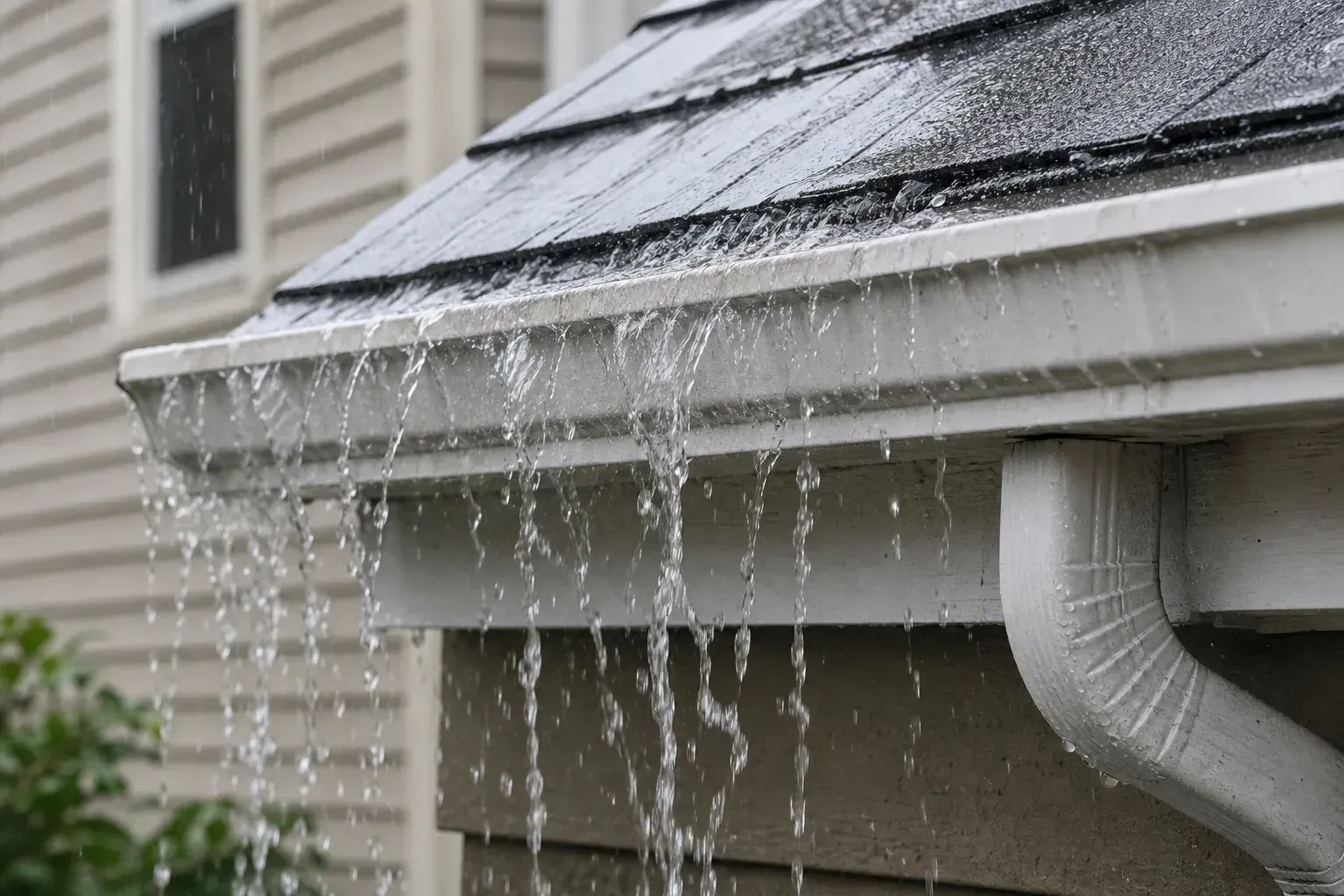
A standard residential roof can direct hundreds of gallons of water into your gutter system during a single moderate rainstorm. If your downspouts cannot handle that volume quickly enough, water backs up, overflows the front edge of the gutter, and lands exactly where you don't want it, right next to your foundation.
This is not a problem exclusive to old or damaged gutters. Even a brand-new seamless gutter installation will overflow if the outlet count or pipe diameter is undersized for the roof it serves.
Foundation damage, erosion, and fascia rot from poor downspout design
Water that repeatedly pools at the base of your home creates serious long-term problems. Soil erosion undermines the grading that directs water away from the foundation. Over time, hydrostatic pressure works against basement walls, and even small amounts of repeated moisture intrusion can lead to mold, efflorescence, and structural cracking.
Fascia boards take a hit too. When gutters overflow at the back edge, water saturates the wood behind the gutter channel. Fascia rot is slow and easy to miss until the gutter starts pulling away from the house.
At that point, you're looking at a gutter repair job that could have been avoided with the right drainage setup from the start.
The difference between gutter capacity and actual water management
Gutter capacity describes how much water the channel can hold at one time. Water management describes the complete journey water takes from rooftop to ground. You can install a 6-inch K-style gutter with excellent capacity and still have a drainage failure if the downspouts are too narrow, too few, or poorly positioned.
Think of it this way: a wide highway with a single toll booth still creates a bottleneck. Your gutter is the highway. Your downspouts are the toll booths.
Getting the balance right is what makes the whole system function.
Downspout Sizing and Placement Standards
Getting sizing right from the beginning saves you from retrofitting problems after the first big storm. The numbers here are based on widely accepted industry practice, not guesswork.
Calculating roof area and rainfall intensity for your region
The two factors that drive downspout sizing are the square footage of roof area draining into a gutter run and the peak rainfall intensity for your region. Rochester and Monroe County sit in a climate zone that regularly sees intense spring and fall precipitation, so using national averages often undersizes a system for local conditions.
A rough rule of thumb: a 2x3-inch rectangular downspout handles roughly 600 square feet of roof area under moderate rainfall. A 3x4-inch downspout handles up to 1,200 square feet. Homes with steep pitches or large unbroken roof planes may need to size up even further, because pitch multiplies the effective drainage area.
Recommended spacing: one downspout per 30 to 40 linear feet of gutter
Placement matters as much as count. Corners, valleys, and low-slope sections all concentrate water flow. A downspout placed in the center of a long gutter run performs differently than one at the end.
Your installer should account for where water actually accumulates, not just divide the footage evenly.
Slope and pitch requirements for seamless gutter systems
Gutters need to slope toward the downspout outlet to drain completely rather than hold standing water. The standard pitch is roughly 1/4 inch of drop per 10 linear feet of gutter. Too little slope and water stagnates, which accelerates debris buildup and corrosion.
Too much slope and the far end sits so high it misses runoff from that part of the roof entirely.
Common Downspout Failures and How to Avoid Them
Most drainage problems are predictable. These are the failure patterns that show up most often.
Debris clogs in elbows, joints, and outlet connections
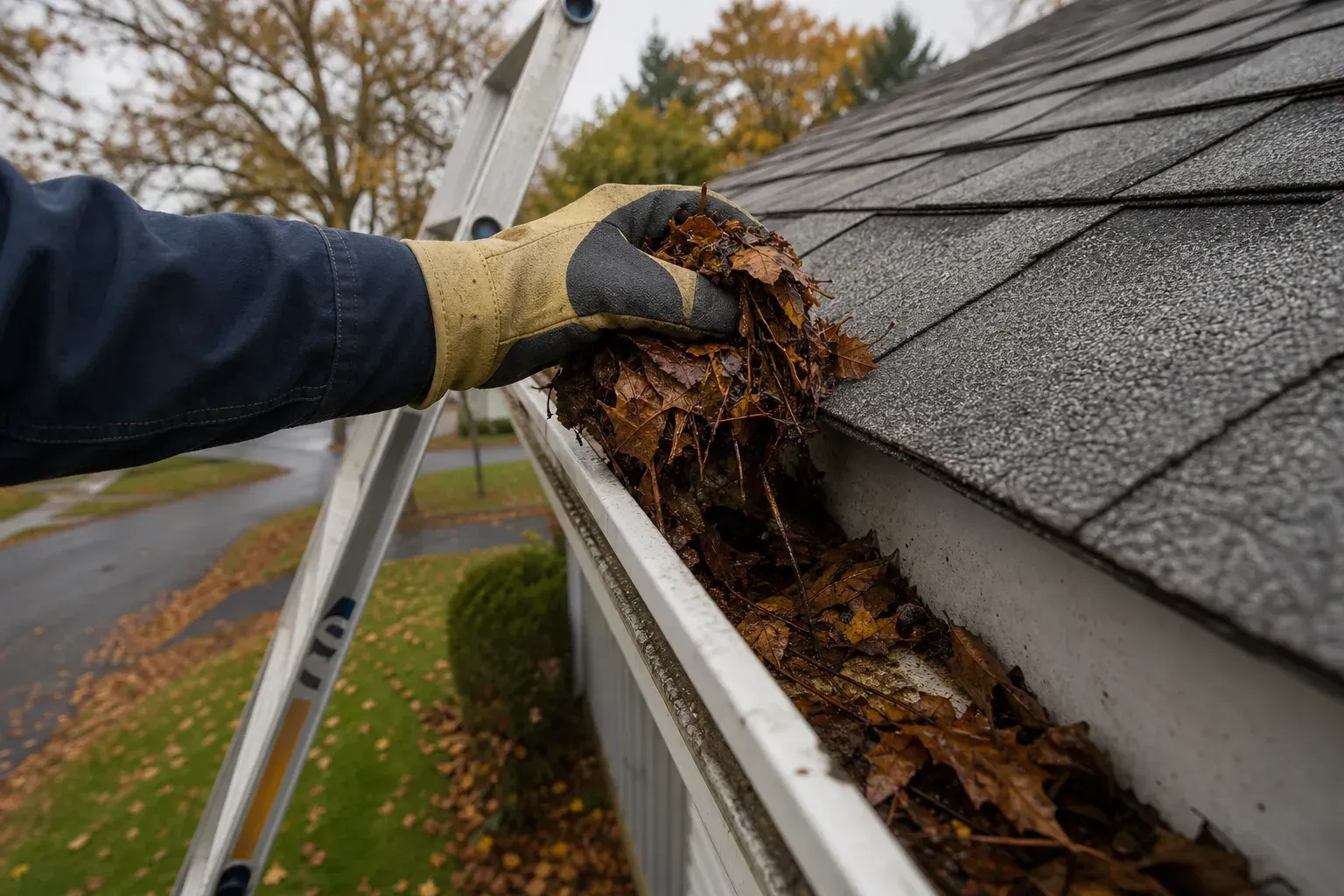
The bottom elbow where the downspout transitions from vertical to angled is the most common clog point in the entire system. Shingle grit, seed pods, and compacted leaf debris collect right there. When that elbow plugs, water has nowhere to go except back up and over the gutter edge.
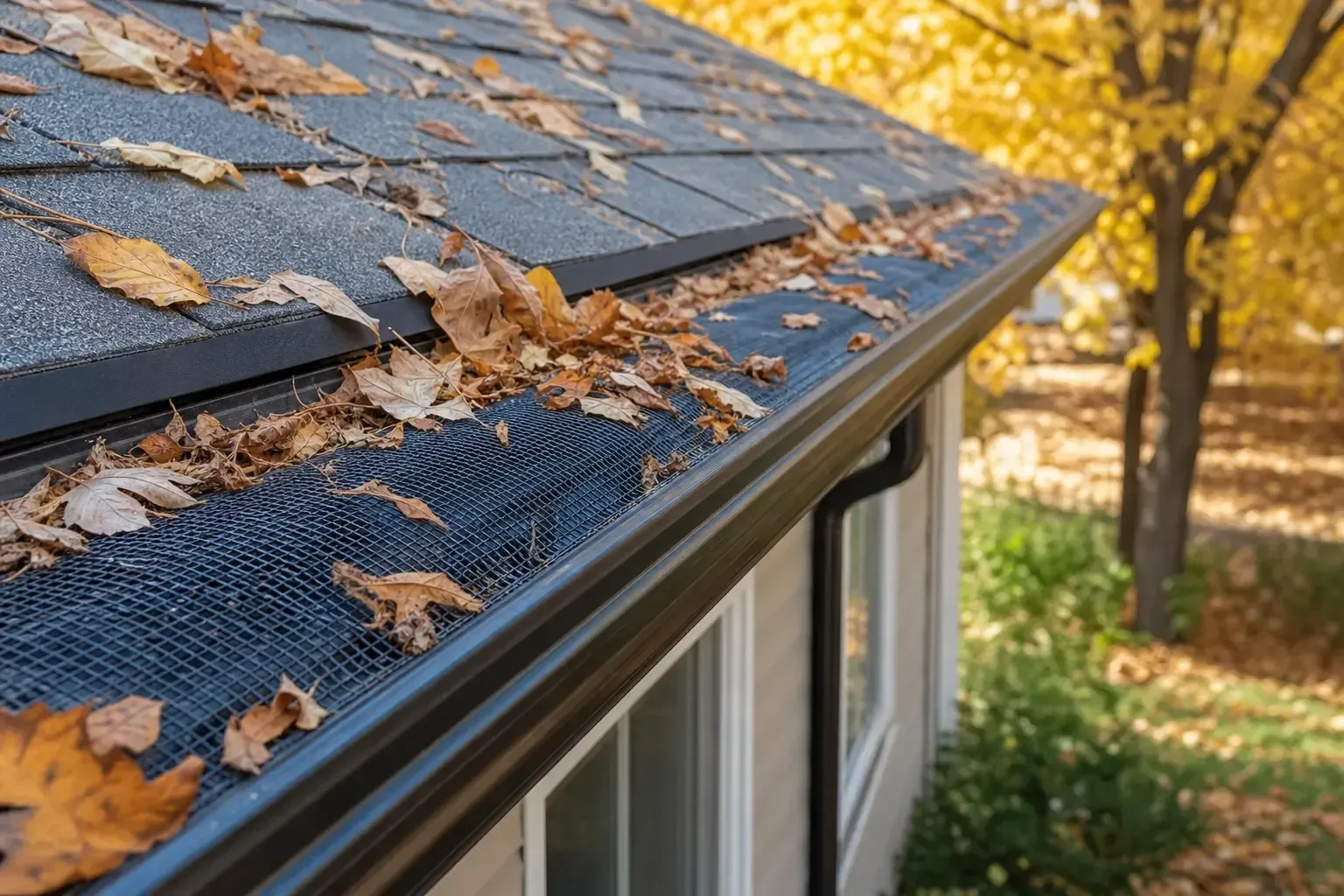
Adding gutter guards helps reduce the volume of debris entering the system in the first place, but it doesn't eliminate the need to inspect downspout outlets periodically, especially after heavy wind events.
Improper grading and water pooling near the foundation
A properly functioning downspout that discharges water flat against a foundation wall is nearly as bad as a clogged one. The soil immediately adjacent to your home should slope away at a gradient sufficient to carry discharge water at least 6 feet from the foundation before it can absorb into the ground.
If that grading has settled or compacted over the years, even a well-sized downspout becomes a liability. This is a landscaping and drainage problem that works hand-in-hand with your gutter system. Addressing it doesn't always require expensive excavation, but it does require attention.
Undersized downspouts that cannot handle peak rainfall
Builder-grade homes frequently ship with the minimum number of downspouts at the smallest standard diameter. That may work adequately in mild weather but fail badly during the kind of intense summer convective storms that Monroe County gets each year. If you notice your gutters overflow during hard rain but drain fine otherwise, undersized outlets are likely the cause, not clogged gutters.
Downspout Extensions and Drainage Solutions
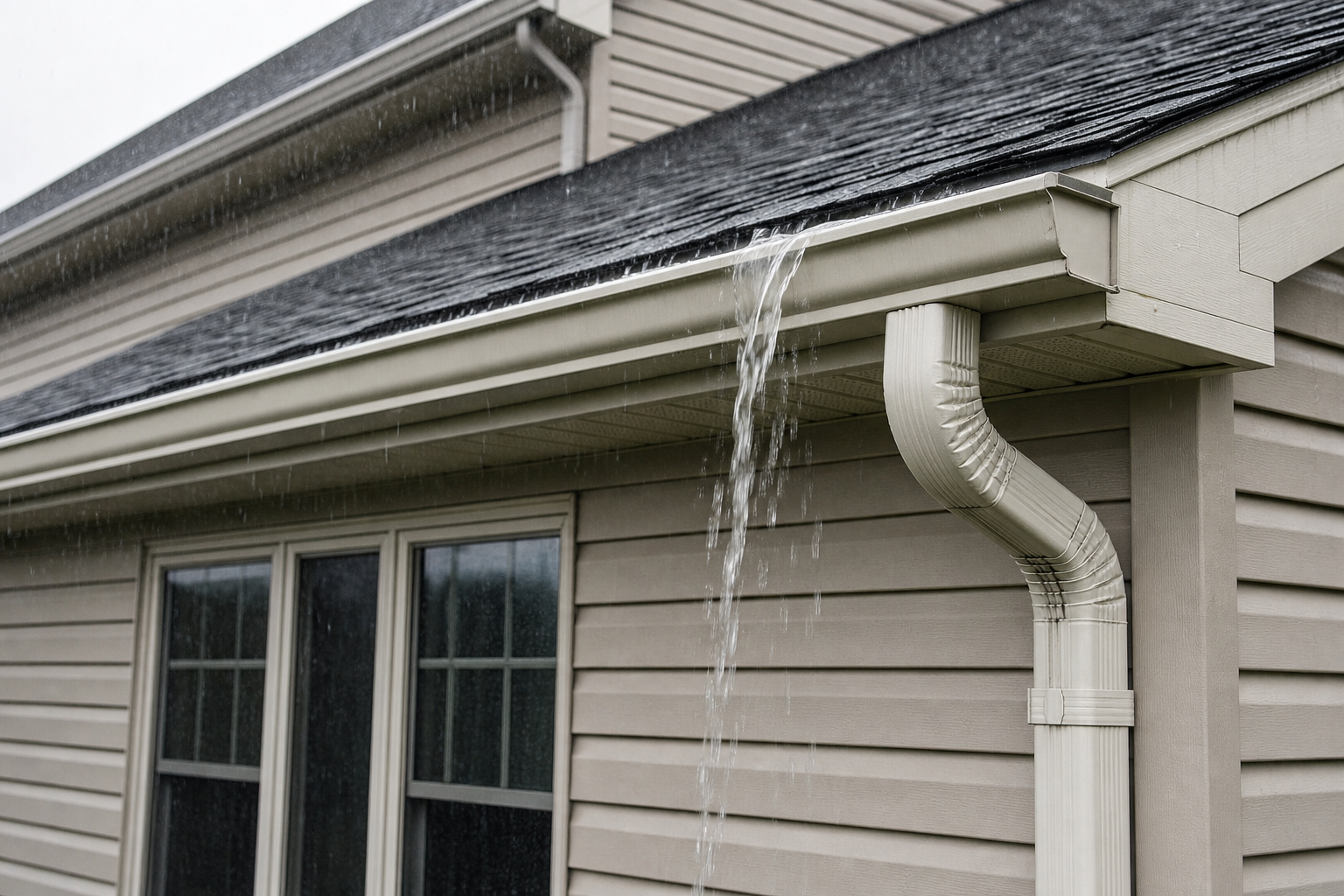
Getting water away from the house doesn't stop at the bottom of the downspout. How you handle discharge directly affects your landscaping, your foundation, and your neighbors' yards.
Splash blocks versus underground drainage systems
A splash block is the simplest discharge solution: a concrete or plastic pad placed at the downspout outlet to prevent soil erosion and direct runoff away from the building. They're inexpensive, easy to install, and effective when the surrounding grade is already adequate.
Underground drainage systems bury a corrugated pipe from the downspout outlet to a discharge point farther away, often a dry well, a pop-up emitter at the lawn edge, or a street drain connection. These are particularly useful for homes where surface grading is limited or the discharge point needs to be farther than a splash block can manage.
French drains and daylight drainage for long-term protection
A French drain is a gravel-filled trench with a perforated pipe that collects and redirects groundwater or downspout discharge away from the foundation area. "Daylighting" a drain means routing the pipe so it exits at a downslope location on the property where water can disperse harmlessly.
These solutions work well for Monroe County homes with flat lots, high clay soil content, or persistent wet-basement problems. They're not always needed, but when they are, connecting them properly to your downspout installation makes a measurable difference in long-term drainage performance.
| Discharge Solution | Best For | Typical Limitation |
|---|---|---|
| Splash block | Adequate grade, short runs | Limited to near-foundation only |
| Downspout extender | Minor grade issues | Can be tripped over, mowed over |
| Underground drain pipe | Flat lots, longer distances | Requires proper slope to work |
| French drain | Persistent wet soil or poor drainage | Higher installation cost |
| Daylight drain | Sloped lots with a clear outlet point | Needs open outlet location |
Maintenance Practices That Keep Downspouts Working
The best system still needs regular attention, especially in a region with four distinct seasons and heavy leaf fall.
Seasonal cleaning and debris removal schedules
The two most important cleaning windows in Rochester are late spring(after maple seed and pollen season) and late fall(after leaf drop, before freeze). Both seasons push significant organic debris into gutters, and that material compacts quickly inside downspout elbows.
Running water through the downspout from the top with a garden hose is one of the simplest ways to verify it's clear. No flow out the bottom? Start checking elbows.
Scheduling a professional cleaning as part of a broader gutter installation and repair service in Rochester ensures both gutters and downspouts get checked at the same time.
Inspecting joints, hangers, and outlet connections
Beyond clogs, watch for physical wear at the connection points. Downspout hangers pull away from siding over time, especially after ice cycles expand and contract the metal. Loose hangers let the pipe shift, which changes the drainage angle and can create low spots where water sits and freezes.
Outlet connections where the downspout meets the gutter bottom are also worth a close look each spring. If the outlet screen is bent, corroded, or missing entirely, debris passes straight into the pipe. Replacing a damaged outlet fitting is a small repair that prevents a much larger problem downstream.
For homes where these details have been neglected for a few seasons, a full inspection from a local gutter contractor can identify everything at once rather than discovering issues one storm at a time.
| Maintenance Task | Recommended Frequency | Why It Matters |
|---|---|---|
| Flush downspouts with hose | Twice yearly (spring and fall) | Confirms clear flow, reveals hidden clogs |
| Clear gutter channel and outlets | Late spring and late fall | Prevents backup into downspout system |
| Check hanger fasteners | Annually | Loose hangers misalign the pipe and trap water |
| Inspect outlet screens | Annually | Damaged screens allow debris into the downspout |
| Verify foundation grading | Every 2 to 3 years | Settled soil can redirect discharge toward the house |
| Full professional inspection | Every 2 to 3 years | Catches wear, joint separation, and sizing issues early |
Getting Your Seamless Gutter and Downspout System Right
Understanding the standards is useful. Having someone apply them correctly to your specific house is what actually protects your home.
Working with professionals to assess your home's specific needs
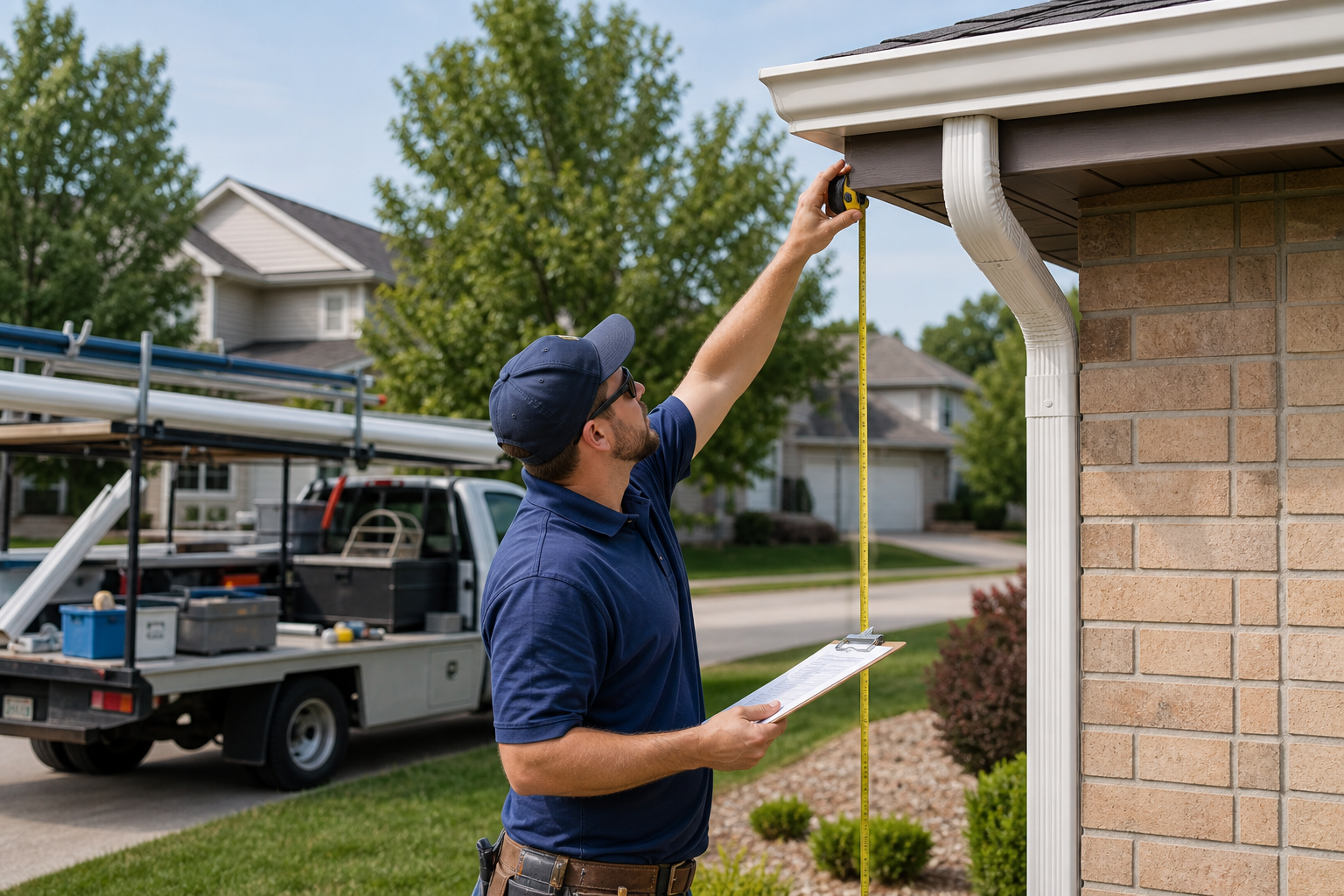
Every home in Monroe County has a slightly different set of drainage challenges. Lot slope, roof complexity, tree coverage, soil type, and existing landscaping all influence what your downspout system needs to do. A professional walkthrough takes all of that into account rather than applying a one-size-fits-all formula.
At Final Solution Gutter Guards ROC, Josh Lovins and his team evaluate the full picture: gutter sizing, downspout count and placement, outlet conditions, and how discharge water behaves once it leaves the pipe. Whether you're in Webster, Greece, Gates, or anywhere else across the greater Rochester area, the goal is a system sized for your roof and calibrated for local weather, not just minimum builder standards. You can see examples of completed work across the project gallery to get a sense of what properly installed systems look like on real homes.
Next steps: inspection, repair, or replacement options
If your gutters overflow during rainstorms, your downspouts drain slowly, or you've noticed erosion or staining at your foundation, those are clear signals that something in the system needs attention. The fix might be as simple as adding a downspout extension or clearing a stubborn elbow clog. It might mean adding a second downspout to a long gutter run, or replacing undersized 2x3-inch outlets with 3x4-inch fittings better suited to your roof area.
Starting with a free estimate gives you a clear picture of what your system actually needs before you spend anything.
Frequently Asked Questions
How many downspouts do I need for a typical Rochester-area home?
Most homes need one downspout for every 30 to 40 linear feet of gutter run. A 1,500-square-foot ranch home with a straightforward roofline might need three to four outlets. A larger two-story home with valleys, dormers, or multiple roof planes will need more.
Homes in the Rochester region should lean toward the closer spacing given the intensity of local spring and fall storms.
The best way to get an accurate count is to have a professional measure your roof drainage areas and factor in your specific roofline geometry rather than estimating from the ground.
What size downspout do I need for my gutter system?
The two standard residential sizes are 2x3 inches and 3x4 inches for rectangular downspouts. A 2x3 outlet is generally adequate for roof sections up to about 600 square feet under typical conditions. A 3x4 handles up to roughly 1,200 square feet.
Steeper roof pitches increase the effective drainage area, which often pushes sizing up one step.
Round downspouts are less common on residential homes but follow similar capacity logic. When in doubt, sizing up costs little and prevents a lot.
Why do my seamless gutters overflow even though they look clean?
Overflow during rain most often points to an undersized or insufficient number of downspouts rather than dirty gutters. The gutter channel itself may be perfectly clear, but if water cannot exit the system fast enough through the outlets, it backs up and spills over the front edge.
Check whether downspout elbows are clogged, whether the outlet screens are intact, and whether your downspout count and sizing match your roof area. If everything looks clear but overflow continues, adding a downspout to the run is usually the right fix.
How far should a downspout discharge from my foundation?
Water exiting a downspout should be directed at least 4 to 6 feet away from the foundation before it contacts the ground. Splash blocks, rigid extensions, or flexible downspout extenders all accomplish this at a low cost.
For homes where lot grading makes surface extension difficult, an underground drain pipe routed to a pop-up emitter or a daylight outlet farther downslope provides a more permanent solution. This is especially relevant in Monroe County neighborhoods where lots are relatively flat and clay-heavy soils slow absorption.
When should I consider replacing my downspouts versus just repairing them?
Repair makes sense for isolated issues: a single clogged elbow, a loose hanger, a damaged outlet screen, or a minor separation at a joint. Those are quick fixes that extend the life of an otherwise sound system.
Replacement becomes the better choice when downspouts are heavily corroded, when the sizing is consistently undersized for the roof, or when they're being upgraded as part of a full seamless gutter replacement. If your existing system is more than 20 years old and showing multiple failure points, replacing the full drainage setup at once is more cost-effective than repeatedly patching individual components.
Does adding gutter guards reduce downspout maintenance?
Gutter guards significantly reduce the volume of leaves, seed pods, and debris that enter the gutter channel, which means less organic material reaching the downspout elbows. That translates to fewer clogs and less frequent flushing required. However, guards don't eliminate maintenance entirely.
Downspout outlets, hangers, and joints still benefit from annual inspection regardless of what's installed above them. Guards and a well-sized downspout system work best together, not as substitutes for each other.
 Contact Us for a Free Estimate! Share a few details with Final Solution Gutter Guards ROC, we'll help you choose the right next step. Get a free estimate |