Key Takeaways
- Sagging gutters are almost always caused by debris weight, failed fasteners, or an improper pitch from the original install.
- Ignoring the problem can lead to fascia rot, foundation erosion, mold growth, and pest entry.
- Many repairs are straightforward (adding hangers, clearing debris), but widespread damage or rotted fascia usually calls for full replacement.
- Rochester's heavy snow and ice loads make gutter slope and hanger spacing especially important.
- A professional inspection catches problems early and saves money compared to emergency repairs after water damage sets in.
The Real Cost of Ignoring Sagging Gutters
Gutter sagging looks minor from the driveway. It rarely is. A dip in the gutter line means standing water is pooling in that low spot and working against your home's structure with every rainstorm, according to common industry estimates from 2024.
The longer it sits, the deeper the damage reaches and the more expensive the fix becomes in the $2,500–$6,000 range for mid-size projects. In our experience, homeowners who address gutter sagging early spend a fraction of what those who wait end up paying for rot, fascia replacement, or foundation repairs, with roughly 60–70% of homeowners reporting similar outcomes.
Water Damage to Fascia, Soffits, and Roof Edges
The fascia board is the wood your gutter attaches to. When water pools against it for weeks at a time, that wood softens and begins to rot. Once fascia deteriorates far enough, fasteners pull free and the gutter sags further with nothing solid left to hold it.
Soffit damage and roof decking failure follow quickly. Catching gutter sagging early keeps repair costs focused on the gutter itself rather than the structural trim behind it, where damage can cost $500 to $1,500 or more depending on how far rot has spread.
Foundation and Landscape Erosion
Properly functioning downspout installation moves water away from the foundation entirely, which is the core function of the system. When sagging redirects that flow downward along the home's exterior, soil erosion and hydrostatic pressure against the foundation wall are the result. Foundation repairs are among the most expensive consequences of ignored drainage failure, often running into thousands of dollars.
Pest Entry Points and Mold Growth
Standing water and damp wood draw carpenter ants, termites, and mosquitoes. Moisture seeping behind a loose gutter can establish mold and mildew inside wall cavities, damage that stays hidden until it is already serious and costly to remediate. This hidden damage is often the most expensive outcome of neglected gutter sagging, and it is also the most preventable.
For more detail, see gutter guard installation.
Why Gutters Sag: Primary Causes
Understanding the source of gutter sagging helps you choose the right solution. Most failures stem from one or more of these causes.
Debris Buildup and Standing Water Weight
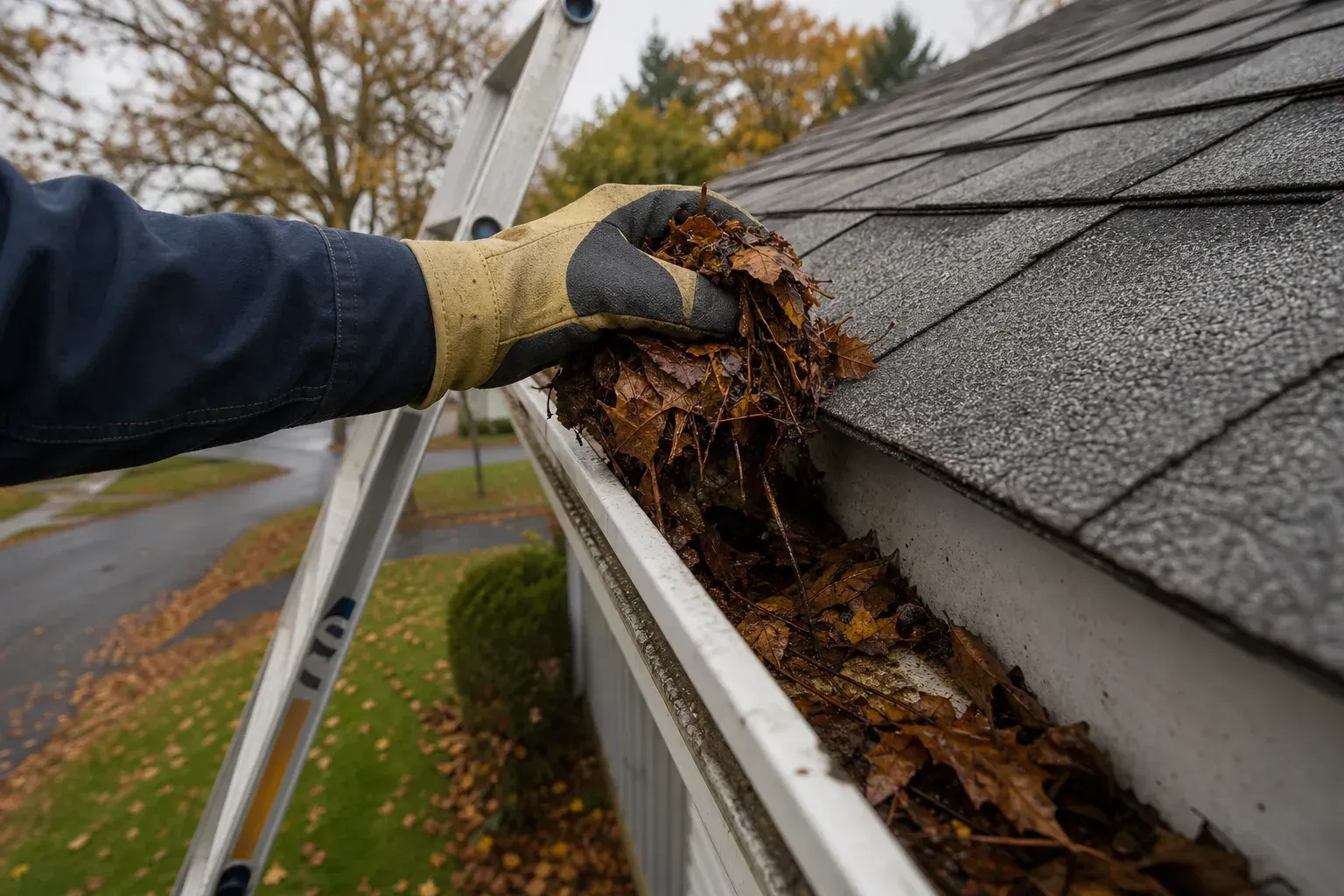
The most common cause of gutter sagging is clogged gutters. Leaves, twigs, and compacted debris hold water long after rain stops. Water weighs approximately 8.3 pounds per gallon, and a single clogged section can retain many gallons at once, pulling hangers loose and stretching seams.
Rochester's fall leaf drop and spring seed pods make this especially prevalent in Monroe County. According to Ned Stevens' guide to sagging gutters, debris accumulation consistently ranks as the leading trigger for gutter failure.
Loose, Rusted, or Missing Fasteners
Gutter spikes used in older installations gradually back out of the fascia over time, and Rochester's freeze-thaw cycles accelerate this process. Each time water freezes in a clogged gutter, expansion pries the fastener further out. Modern installations using gutter screws and hidden hanger brackets hold far better.
Homes with spike-and-ferrule systems installed 15 to 20 years ago are overdue for a fastener upgrade regardless of other conditions. We've inspected these older systems and found fasteners loose enough to slip by hand, a clear sign gutter sagging is already underway.
Poor Installation and Inadequate Slope
Gutters need a slight downward pitch toward the downspout, typically around a quarter inch of drop per 10 feet of run. Without that slope, water sits flat instead of draining, adds weight, encourages rust, and pulls the gutter down at the lowest point in the run. Hangers spaced more than 24 inches apart leave too much unsupported gutter between anchor points, a common shortcut in budget installations that produces mid-run gutter sagging within a few years.
How to Spot Sagging Gutters Before Major Damage Occurs
Catching gutter sagging early is the difference between a minor repair and a major project. Most warning signs are visible from ground level without climbing.
Visual Inspection Signs
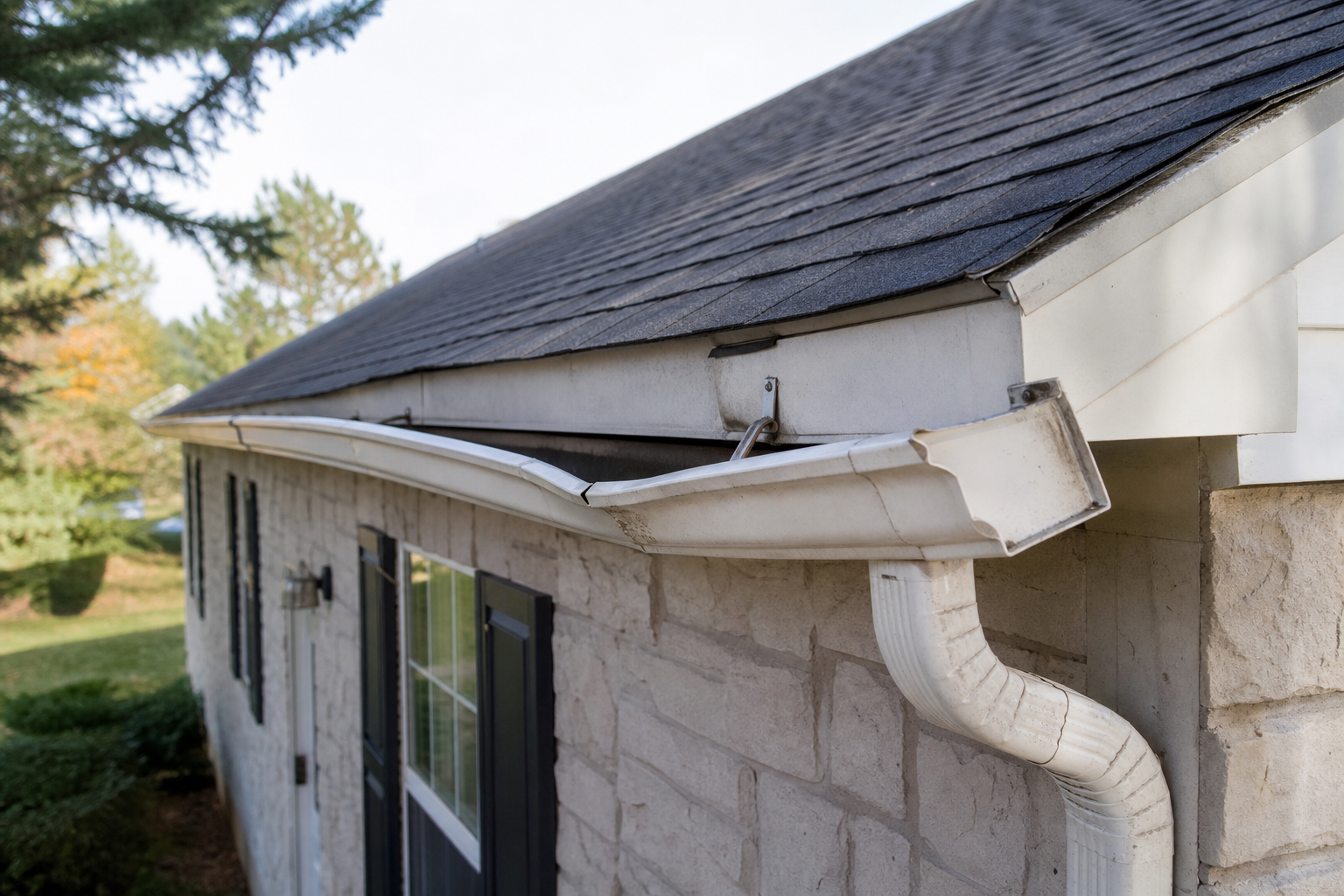
Walk around your home's perimeter and observe the gutter profile from a distance. A visible dip or curve in the middle of a run is the clearest indicator. Sections pulling away from the fascia, visible gaps at bracket points, or gutters tilting outward at the lip all warrant investigation. Dark staining, peeling paint, or soft-looking wood behind the gutter often signals water has been pooling there for an extended period.
Water Overflow and Drainage Patterns
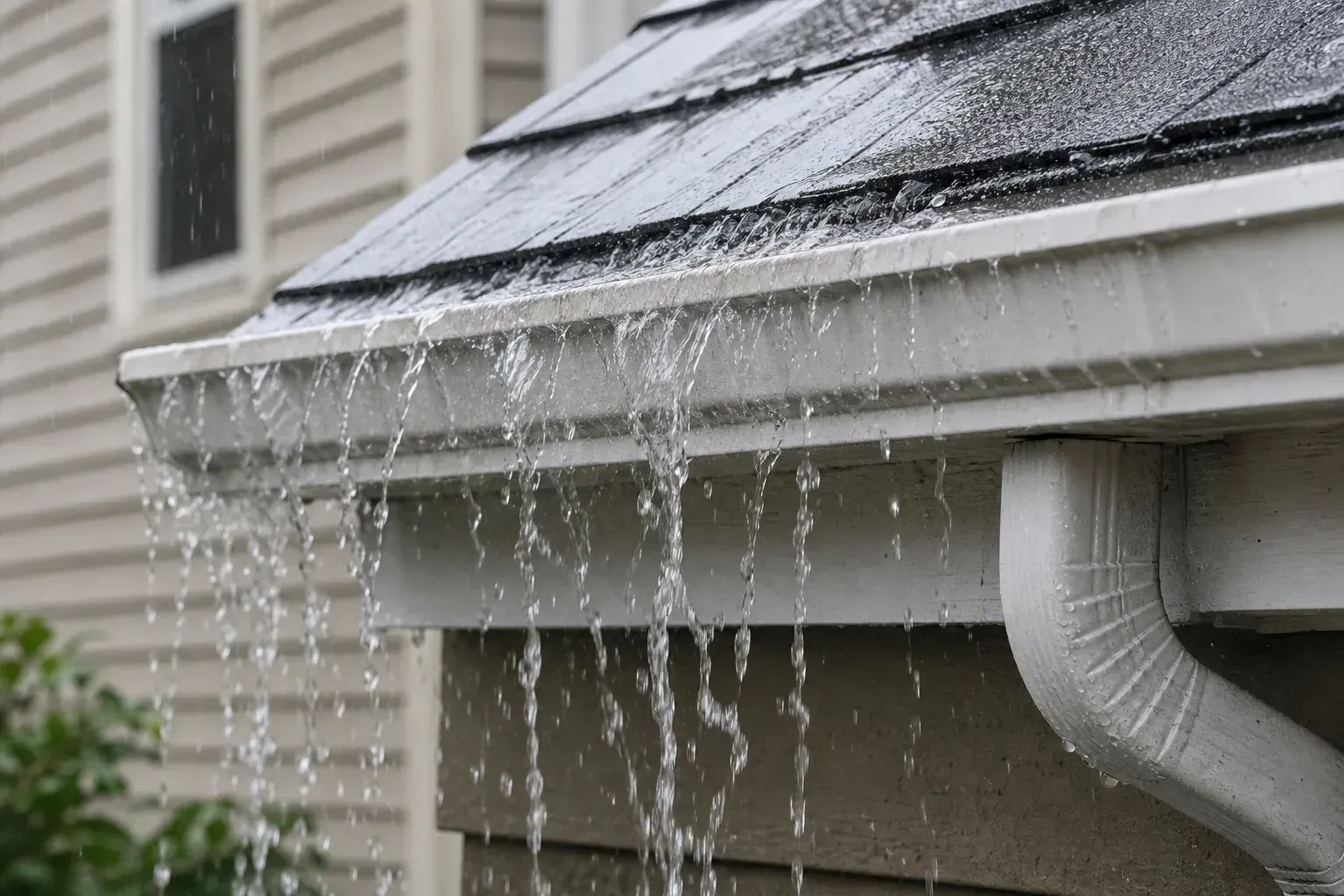
During or just after heavy rain, watch where water flows. Gutters overflowing in the middle of a run (not just at the downspout end) are a reliable sign of gutter sagging. Water spilling along your foundation after rain or visible splash marks on siding below the gutter line confirm the problem.
Overflow at the front lip rather than flow toward the downspout signals either incorrect pitch or a gutter too full to drain.
Repair vs. Replacement: What Your Gutters Actually Need
Not every sag requires full replacement. Knowing which path makes sense saves money and avoids replacing gutters that still have useful life remaining.
When Reinforcement and Bracket Repair Make Sense
Minor gutter sagging from loose fasteners or a single clogged section is almost always repairable. Adding new hanger brackets, replacing old spikes with gutter screws, and clearing debris can restore proper slope and eliminate the problem entirely. If gutters are less than 10 years old, the material is in decent condition, and fascia is solid, repair is usually the right choice.
The guide to when to repair, replace, or add gutter guards provides clear decision criteria for Monroe County homeowners.
When Full Replacement Is the Better Investment
Replacement makes more sense when sagging runs across multiple sections, rotted fascia cannot hold new hangers, or gutters are cracked, separated, or rusting through. Systems older than 20 years with multiple failure points rarely justify piecemeal repair. Understanding what is gutter installation from scratch versus patching an aging system helps clarify cost.
Full seamless gutter installation delivers a continuous run without seams, which eliminates the joints most vulnerable to future sagging and leaks.
| Situation | Recommended Action |
|---|---|
| Single loose bracket, fascia solid | Repair: replace fastener, adjust slope |
| Gutters under 10 years, minor sag | Repair: clean, add hangers, confirm pitch |
| Multiple sagging sections, aging system | Replacement evaluation |
| Rotted fascia, cracked gutter material | Full replacement including fascia repair |
| System over 20 years, recurring failure | Full replacement with seamless aluminum |
| Loose or missing hangers on newer gutters | Repair: add screws and brackets |
| Single sagging section, fascia still solid | Repair: realign slope, add hangers |
| Multiple sagging sections across the roofline | Replacement recommended |
| Rotted fascia behind the gutter | Fascia repair + full gutter replacement |
| Gutters older than 20 years with widespread damage | Full replacement |
| Repeated repairs on the same sections | Replace with seamless gutters |
Step-by-Step Repair Solutions for Homeowners
If damage is limited and fascia is sound, a homeowner comfortable on a ladder can address some repairs directly.
Cleaning and Debris Removal as a First Line of Defense
Do this before anything else. Pull out all leaves, shingle grit, and packed debris, then flush with a garden hose to confirm water flows toward the downspout. Sometimes clearing alone eliminates the weight load causing gutter sagging and reveals whether structural issues remain.
If the gutter drains cleanly after clearing and the sag disappears, you may only need a slight slope adjustment. If it still holds water or the sag is visible with the gutter empty, the problem is structural.
Tightening and Replacing Fasteners
Spike-and-ferrule fasteners that have backed out can often be replaced with long gutter screws driven into the same holes or into fresh wood nearby. Gutter screws grip fascia far more reliably than spikes and hold up better under ice and debris loads. If fascia wood is soft or crumbling where the screw needs to go, stop and call a professional.
Driving screws into rotted wood will not hold, and forcing the repair only delays a larger failure.
Realigning Gutter Slope and Adding Support Brackets
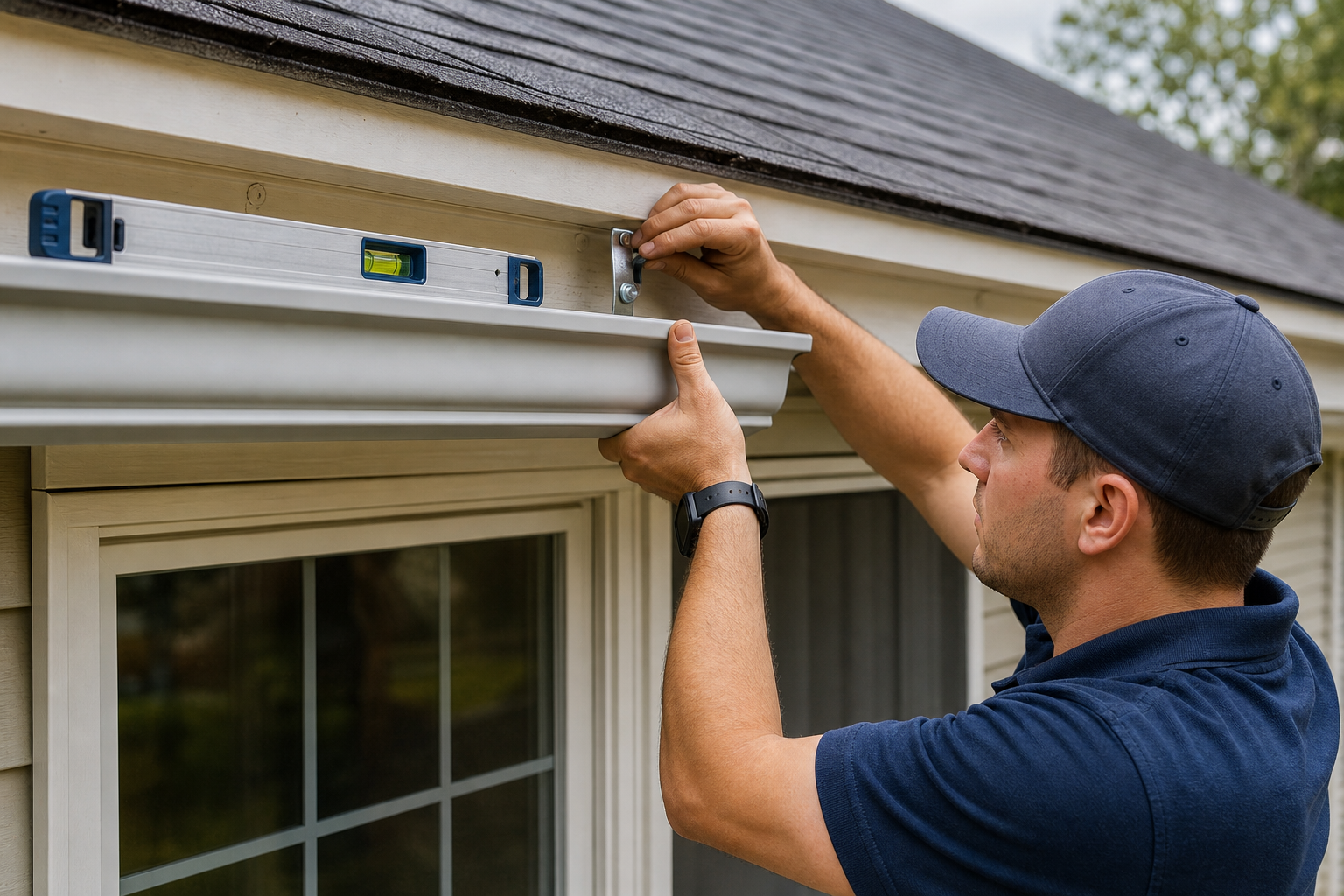
Once fasteners are solid, check the pitch using a string line or level to confirm at least a slight drop toward the downspout. Snap the gutter into proper position and add hidden hanger brackets every 24 inches or less to maintain alignment. This spacing handles snow and ice loads far better than the wider spacing common in older installs.
For homeowners in Webster, Greece, Gates, and across Monroe County, professional gutter repair is recommended whenever problems involve rotted wood, widespread slope failure, or systems beyond simple fastener fixes.

Prevention: How to Keep Your Gutters From Sagging in the Future
Once gutters are back in proper condition, keeping them there is mostly consistent maintenance. Rochester's climate makes this especially critical. Heavy snow loads in winter, spring ice melt, and fall leaf drop all stress gutters in ways warmer climates do not.
The best repair is the one you never need, and a simple routine extends the entire system's life by years.
Regular Maintenance Schedule and Seasonal Cleaning
Plan on cleaning gutters at least twice a year: late spring after tree seeds and pollen settle, and late fall after the last leaves drop. Homes near large maples or oaks may need a third cleaning in early autumn when leaf drop peaks. Each cleaning should include flushing gutters with a hose to confirm flow, checking for low spots or standing water, and inspecting hangers and fascia for early signs of movement.
According to All American Gutter Protection's seasonal damage guide, catching a loose bracket in October is a five-minute fix, while ignoring it through winter leads to costly structural repairs.
A quick inspection after major ice storms is also smart. Ice dams and heavy snow pull on gutters differently than water and can shift hangers even on recently installed systems. If you notice any separation from the fascia after a freeze, inspect it before spring thaw adds more water weight.
Gutter Guards and Leaf Prevention Systems
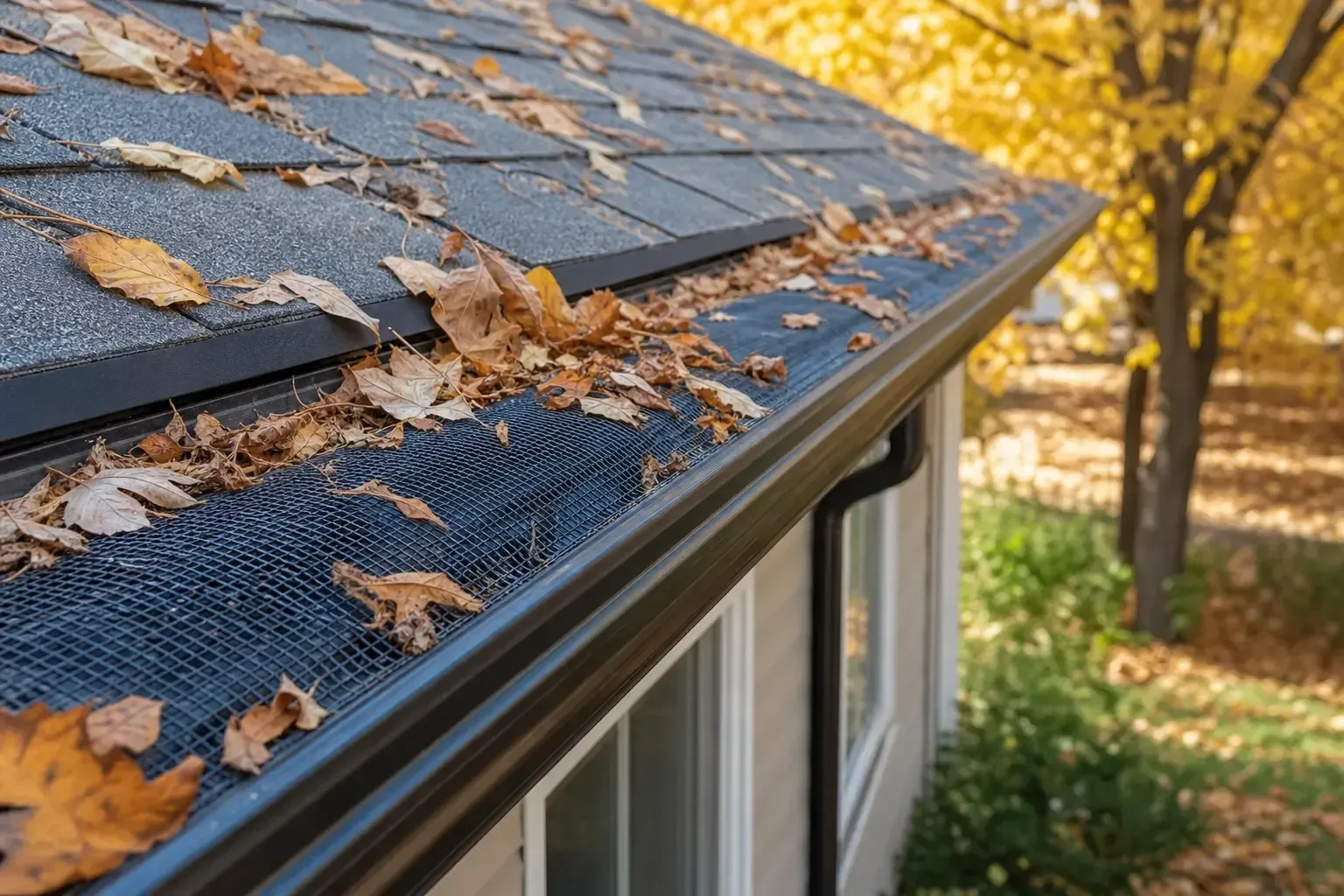
Gutter guards do not eliminate maintenance entirely, but they cut debris accumulation significantly.
Micro-mesh guards block fine debris like shingle grit and seed pods that simpler screen-style guards let straight through.
Frequently Asked Questions
How do I know if my gutters are sagging or just dirty?
A dirty gutter still runs level along the roofline.
Can I fix sagging gutters myself, or do I need a professional?
Clearing debris, swapping loose spikes for gutter screws, or adding a hanger bracket are all manageable for a homeowner comfortable on a ladder with basic tools.
How much does it cost for gutter installation or repair?
Repair costs vary based on sections affected, fascia condition, and your gutter system type.
For a precise answer, a free gutter estimate from a local contractor is the most reliable starting point.
How often should gutters be cleaned to prevent sagging?
Twice a year is the baseline for most homes.
Regular cleaning prevents the debris weight that is the single most common trigger for gutter sagging.
What is gutter installation, and when does it make sense over repair?
Gutter installation is the process of measuring, cutting, and mounting a new gutter system along your roofline, including hangers, end caps, downspouts, and outlet connections.
What is the average cost of gutter installation for new seamless systems?
The average cost of gutter installation for seamless aluminum gutters depends on linear footage, roof complexity, hanger spacing, and whether fascia repairs are needed.
What type of gutters hold up best in Rochester's climate?
Seamless aluminum gutters are the most practical choice for the Rochester area.
Will gutter guards prevent sagging?
Gutter guards significantly reduce the debris buildup that causes most gutter sagging.
How do I find a reliable gutter contractor in the Rochester area?
Look for a locally owned company with verifiable reviews, transparent pricing, and clear explanations of what repair or replacement includes.
 Contact Us for a Free Estimate! Share a few details with Final Solution Gutter Guards ROC, we'll help you choose the right next step. Get a free estimate |