Key Takeaways
- Gutter width should be matched to your roof's drainage area and your local rainfall intensity, not guessed.
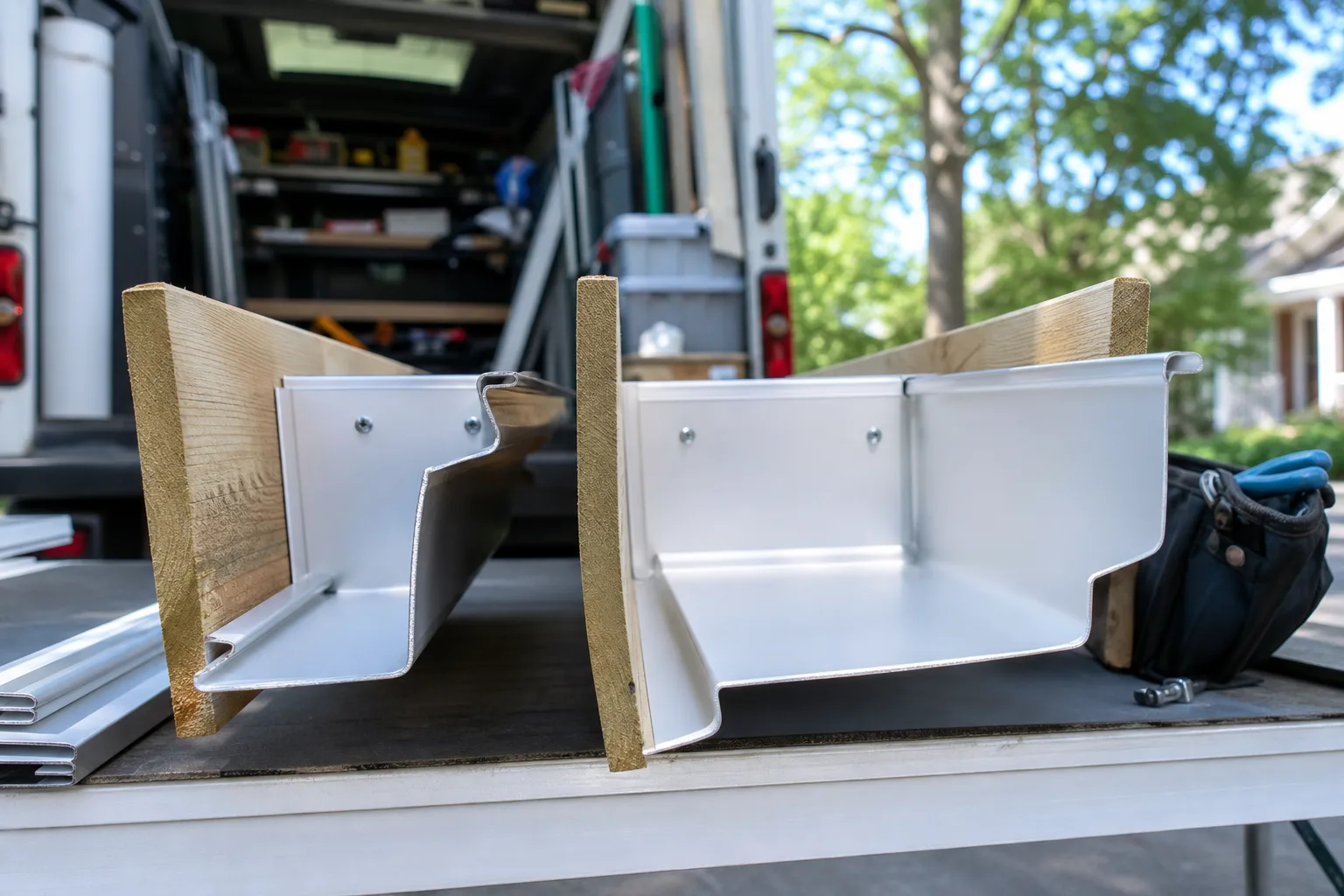
- 5-inch gutters handle most single-story and smaller residential roofs well; 6-inch gutters are better suited to large or steeply pitched homes.
- Rochester's weather patterns, including heavy spring rains and sudden summer storms, make proper sizing especially important in this region.
- Downspout size and spacing are just as critical as gutter width. One undersized downspout can bottleneck an otherwise well-sized system.
- A professional measurement and estimate takes the guesswork out of the process entirely.
Why Gutter Size Matters for Your Home
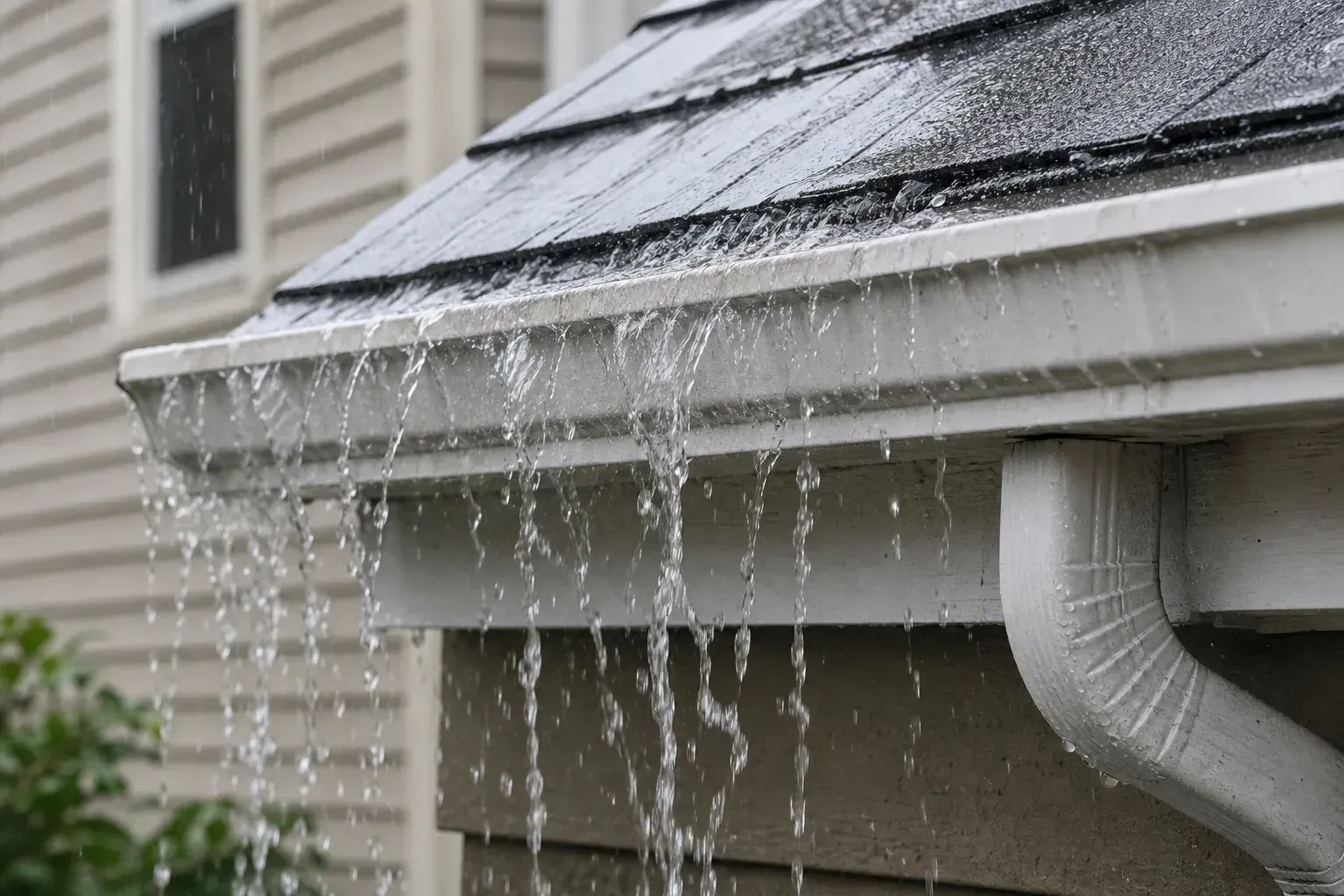
Rain gutter sizing directly controls how much water your drainage system can move in a given amount of time. A channel that's too narrow simply can't keep up during a heavy downpour, and the water that should be traveling toward your downspouts ends up spilling over the edge instead.

The right gutter size is determined by three things working together: the total area of roof draining into the gutter, the peak rainfall rate in your region, and the pitch of the roof that accelerates water flow. Sizing based on just one of these factors leads to under- or over-built systems.
How undersized gutters lead to overflow and water damage
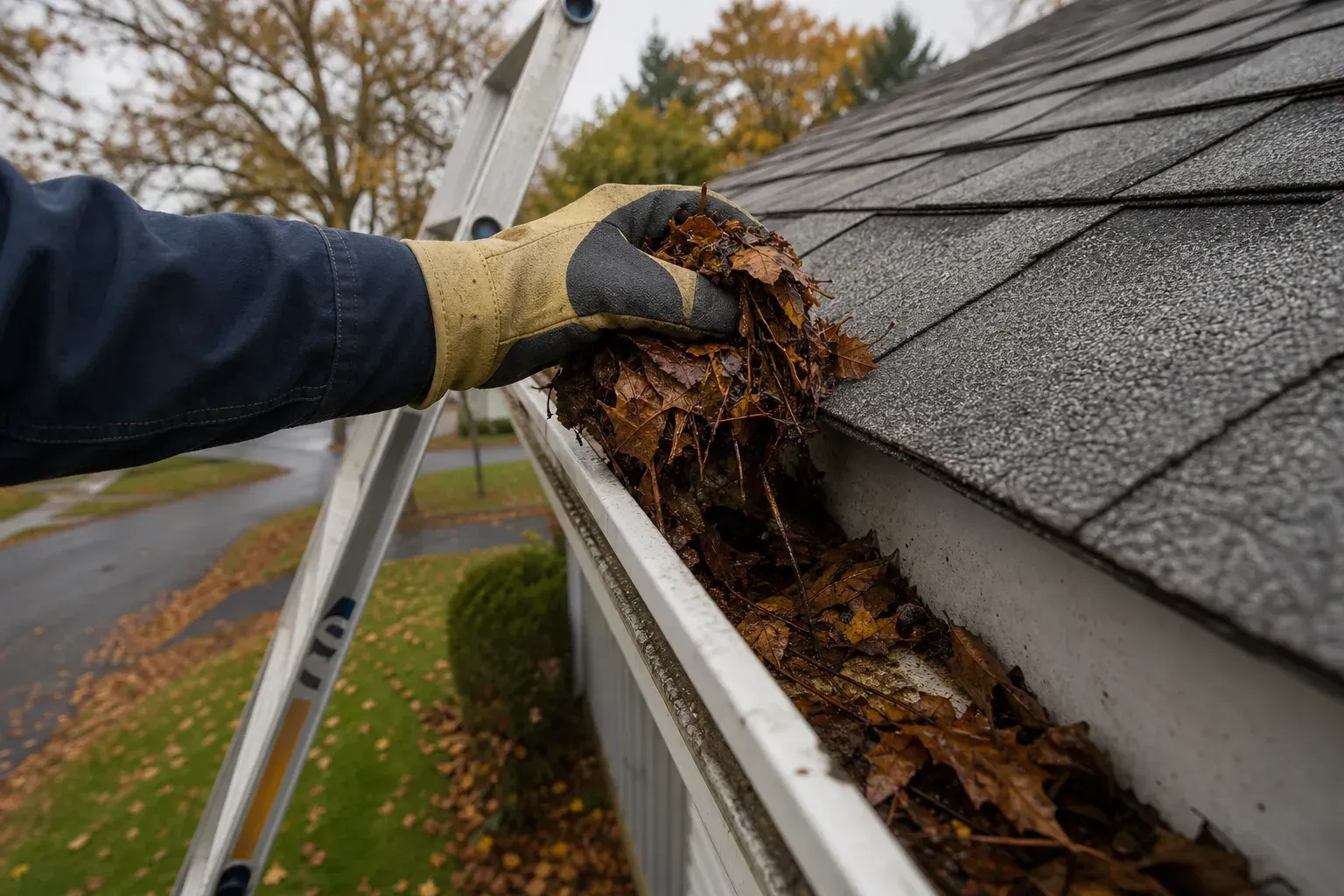
When gutters overflow consistently, the damage happens in predictable places. Water runs down your siding, pools against your foundation, and saturates the soil directly beside your home's footings. Over time, this causes basement seepage, cracked masonry, and rotted wood trim.
It also saturates the ground near landscape beds and undermines any grading you've had done to direct water away.
In the Rochester area, late spring and early fall can bring intense, fast-moving storms. A gutter system sized for a mild climate won't cut it here. Overflow isn't just messy; it's structurally damaging in ways that compound over years.
The relationship between roof area, rainfall, and gutter capacity
The core of any rain gutter sizing calculation is the concept of drainage area, measured in square feet. This isn't just the footprint of your home; it's the horizontal projection of each roof section that channels water into a single gutter run. A steeply pitched roof has a larger surface area than its footprint suggests, which means more water volume during a storm.
Local rainfall intensity, measured in inches per hour at peak storm events, multiplies that drainage area to produce the total flow your gutters must handle. The SMACNA Downspout and Gutter Sizing Calculator uses exactly this kind of engineering data to help determine minimum sizes for residential and commercial drainage systems.
Standard Rain Gutter Widths and Capacities
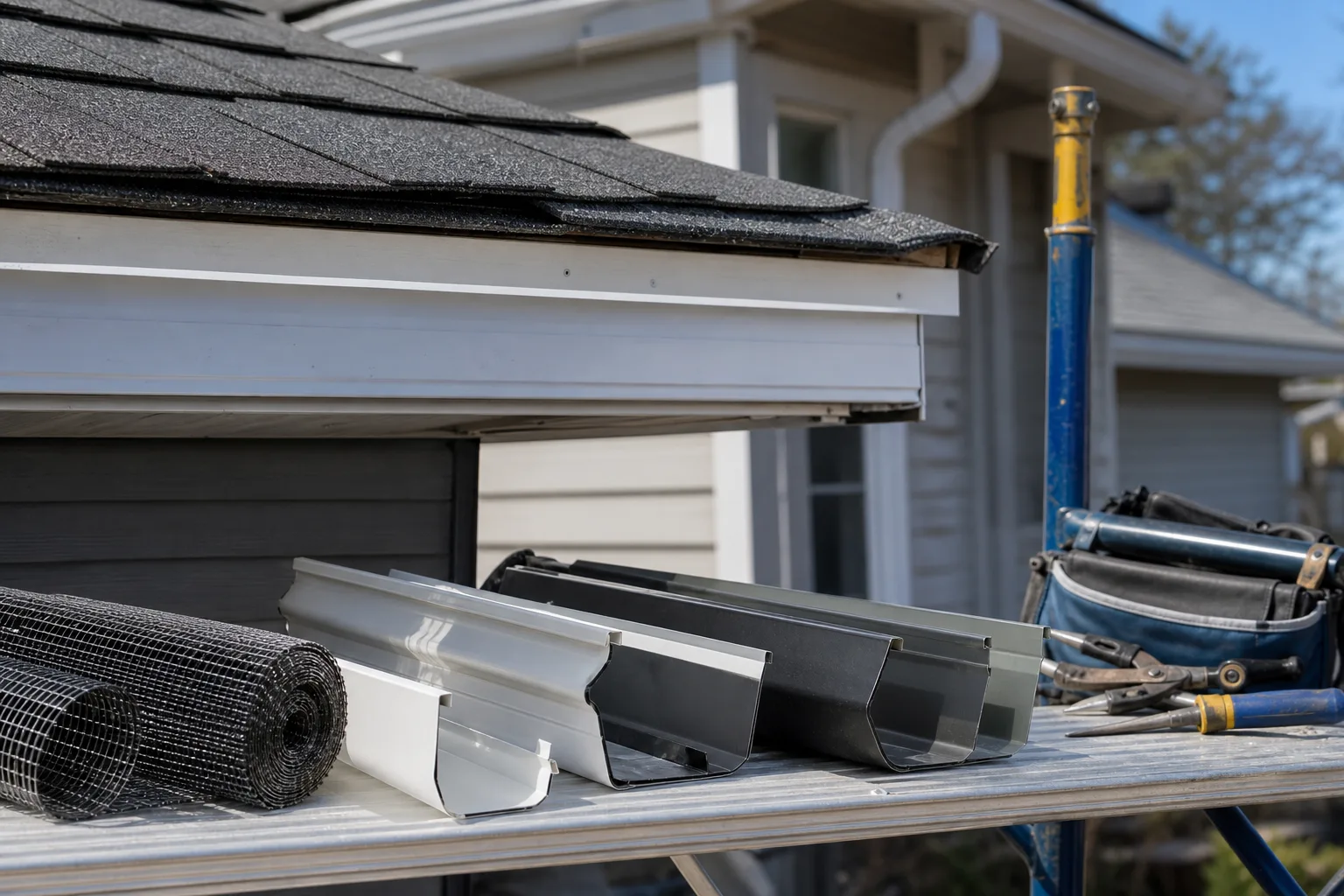
Most residential gutters in the United States come in two primary widths. Understanding what each size handles, and why that matters for your specific roof, will help you have a much more informed conversation with any contractor you hire.
5-inch gutters: best for small to medium roofs
5-inch K-style gutters are the standard choice for the majority of American homes. They handle drainage areas up to roughly 5,500 square feet when properly sloped and paired with adequately sized downspouts. For a typical single-story or modest two-story home with standard roof pitch, they perform reliably across most weather conditions.
The trade-off is margin. In heavy rainfall, a 5-inch gutter has less buffer before it reaches capacity. If your roof has a steep pitch or your home is in a zone with high peak rainfall, that margin disappears fast.
6-inch gutters: the high-capacity choice for large homes
For homeowners in Webster, Greece, and Penfield, homes built in the 1970s and 1980s often came with 4-inch or undersized 5-inch gutters that are simply outdated for today's climate expectations. Upgrading to 6-inch during a gutter replacement is a smart long-term move.
Specialty sizes: when and why contractors recommend them
Half-round gutters, common on older or historic homes, come in 5-inch and 6-inch profiles as well, though they carry slightly less volume than a K-style gutter of the same width due to their rounded cross-section. Copper gutters and oversized commercial profiles (7-inch and above) exist for specific architectural or commercial drainage applications. For most Monroe County homeowners, though, the decision comes down to 5-inch or 6-inch K-style aluminum.
How to Use a Gutter Sizing Chart
A rain gutter sizing chart matches drainage area (in square feet) to minimum gutter width, adjusted for local rainfall intensity. Most published charts use a "design rainfall rate" expressed in inches per hour, which corresponds to the most intense storm events your area typically experiences.
Measuring your roof area accurately
Start by measuring each horizontal roof section individually. Multiply the length of each section by its width (using the horizontal projection, not the actual slope length). Add the sections together to get your total drainage area per gutter run.
If you have a complex roofline with valleys, hips, or multiple pitches, each section funnels into a different gutter run, so you'll calculate each run separately.
A pitch correction factor is applied when your roof slope exceeds 6:12. Steeper roofs shed water faster, which effectively increases the load on your gutters even if the footprint is the same. Most sizing charts include a multiplier table for pitch adjustments.
Finding your local rainfall rate on the chart
Rochester, NY sits in a region with a design rainfall intensity of approximately 3.5 to 4 inches per hour for a 5-year storm event, which is the standard design threshold used for residential drainage. You can verify regional rainfall data through engineering references or use tools like the SMACNA sizing calculator that pull location-specific rainfall data directly.
This matters because a home in a low-rainfall region might size just fine with a 5-inch gutter where the identical home in Rochester would need a 6-inch system or closely spaced downspouts to avoid overflow.
Reading the chart to determine minimum gutter size
Cross-reference your adjusted drainage area with the appropriate rainfall intensity column. The chart will indicate the minimum gutter width that prevents overflow at peak flow. This is a minimum , not an ideal.
If you're on the boundary between two sizes, move up. The cost difference between 5-inch and 6-inch gutters is modest; the cost of water damage is not.
Factors Beyond Width That Affect Gutter Performance
Choosing the right width is the foundation, but two other variables can make or break how well your system actually drains.
Downspout size and spacing requirements
Your downspouts are the bottleneck of the entire system. A 6-inch gutter feeding into a single undersized downspout still overflows. As a general rule, one downspout is needed for roughly every 35 to 40 linear feet of gutter run.
Downspout cross-sections should be sized to match gutter width: a 3×4-inch rectangular downspout typically pairs with a 5-inch gutter, while a 4×5-inch downspout is more appropriate for a 6-inch run.
You can read more about downspout installation standards and sizing on the Final Solution Gutter Guards ROC service page, which covers what proper spacing and sizing looks like in practice for Monroe County homes.
Gutter pitch and slope installation
Even a correctly sized gutter will hold standing water and overflow if it isn't installed at the right pitch. The standard slope is 1/4 inch of drop per 10 feet of run, directing water toward the downspout. Too little pitch and debris accumulates; too much and water rushes past the downspout opening.
This is an installation variable that has nothing to do with the gutter you purchase, but it's a common reason correctly sized gutters still underperform.
Common Sizing Mistakes Homeowners Make
Most gutter sizing problems aren't random. They come from a handful of predictable decisions that seem reasonable at the time but lead to persistent drainage issues.
Choosing gutters based on neighbor recommendations instead of roof specs
Your neighbor's 5-inch gutters might work perfectly for them because their roof pitch is lower, their drainage areais smaller, or their downspouts are more generously spaced. Your roof may be completely different. Copying a neighbor's setup without running the numbers is one of the most common reasons homeowners end up with gutters that overflow during every significant storm.
The right sizing decision starts with your roof's actual drainage area and your local rainfall data, not what looks similar from the street.
Ignoring regional rainfall intensity when sizing
Rochester's rainfall patterns aren't mild. The region sees intense late-spring and early-fall storms that can dump significant rainfall in a short window. When homeowners or even contractors size gutters using a national average rainfall figure instead of the actual regional design rate, the resulting system is undersized for the worst storms, which are exactly when you need it to perform.
The Gutter Sizes Guide at American Standard Roofing notes that matching gutter capacity to local climate conditions is one of the most overlooked steps in residential gutter selection. For Monroe County homeowners, that means accounting for the higher-end rainfall intensities the area regularly experiences, not planning for a median storm.
Next Steps: Getting the Right Gutter Size for Your Home
Here is a practical summary of how the key sizing variables interact. Use this as a quick reference when you're talking to a contractor or reviewing a quote.
| Variable | 5-Inch Gutter | 6-Inch Gutter |
|---|---|---|
| Typical drainage area | Up to approx. 5,500 sq ft | Above 5,500 sq ft |
| Roof pitch suitability | Up to 6:12 pitch | Steep pitch (above 6:12) |
| Rainfall intensity fit | Lower to moderate regional rates | Higher regional rates (like Rochester) |
| Downspout pairing | 3×4-inch rectangular downspout | 4×5-inch rectangular downspout |
| Common application | Single-story, smaller two-story homes | Large two-story, complex rooflines |
| Recommended spacing | One downspout per 35, 40 linear feet | One downspout per 35, 40 linear feet |
If you're in Irondequoit, Penfield, Chili, or any other Monroe County community, the conversation with your contractor should start with a site measurement, not a width recommendation based on what "most houses" use.
For homeowners already dealing with overflow, rotted fascia, or pooling near the foundation, the problem is almost always traceable to a sizing or installation issue. A professional gutter assessment will confirm whether you need a full gutter replacement or whether targeted repairs and downspout adjustments can correct the performance.
If you're in the Rochester area and want professional installation done right the first time, our gutter installation service page outlines what the process looks like and what to expect from a properly sized seamless system.
Frequently Asked Questions
What is the most common residential gutter size?
5-inch K-style gutters are the most widely installed size in the United States for residential homes. They handle the drainage needs of most single-story and modest two-story houses with standard roof pitches. That said, many contractors in higher-rainfall regions, including the Rochester area, recommend stepping up to 6-inch gutters for any home larger than about 1,500 to 2,000 square feet of roof drainage area.
What size gutters do I need for a metal roof?
For what size gutters for a metal roof, the calculation follows the same drainage-area and rainfall-rate method as any other roof type. However, metal roofs shed water faster than asphalt shingles because they are smoother and steeper. This higher velocity increases the effective load on your gutters during peak flow.
As a result, many contractors recommend 6-inch gutters for metal roofs regardless of home size, particularly in regions like Monroe County where storm intensity is significant. The pitch correction factor also matters more with metal roofing, so make sure any sizing estimate accounts for actual slope.
How do I calculate my roof's drainage area?
Measure the horizontal projection of each roof section draining into a single gutter run. Multiply length by width for each section and add them together. If your roof pitch is steeper than 6:12, apply a pitch multiplier (typically 1.05 to 1.15 depending on the slope) to account for the additional water velocity.
Each independent gutter run gets its own calculation. For complex rooflines with multiple valleys, hips, or dormers, a professional measurement is the most accurate approach.
How many downspouts do I need?
The general rule is one downspout for every 35 to 40 linear feet of gutter run. Longer runs, higher rainfall areas, or 6-inch gutter systems may benefit from tighter spacing. Downspout placement also matters: positioning them at the lowest point of each gutter run ensures water doesn't have to travel uphill to exit.
Undersized or too-widely-spaced downspouts are a leading cause of overflow even when the gutter width itself is correct.
Can I install larger gutters on my existing fascia?
In most cases, yes. 6-inch gutters are slightly deeper and wider than 5-inch systems, but they attach to fascia boards in the same basic way. However, if your fascia is damaged, rotted, or undersized, it should be repaired or replaced before new gutters go up. Installing wider gutters on compromised fascia defeats the purpose.
A professional installer will assess fascia condition as part of the installation process and flag any issues before the work begins.
How does gutter pitch affect water flow?
Gutter pitch determines how quickly water moves toward the downspout during and after rainfall. The standard is a 1/4-inch drop for every 10 feet of horizontal run. Too little slope and water sits in the gutter, promoting rust, mold, and mosquito breeding.
Too much slope and water rushes past the downspout opening too quickly or causes the gutter to appear visually uneven from the street. Pitch is set during installation and corrected by re-hanging the gutter if it was done incorrectly the first time.
 Contact Us for a Free Estimate! Share a few details with Final Solution Gutter Guards ROC, we'll help you choose the right next step. Get a free estimate |