Key Takeaways
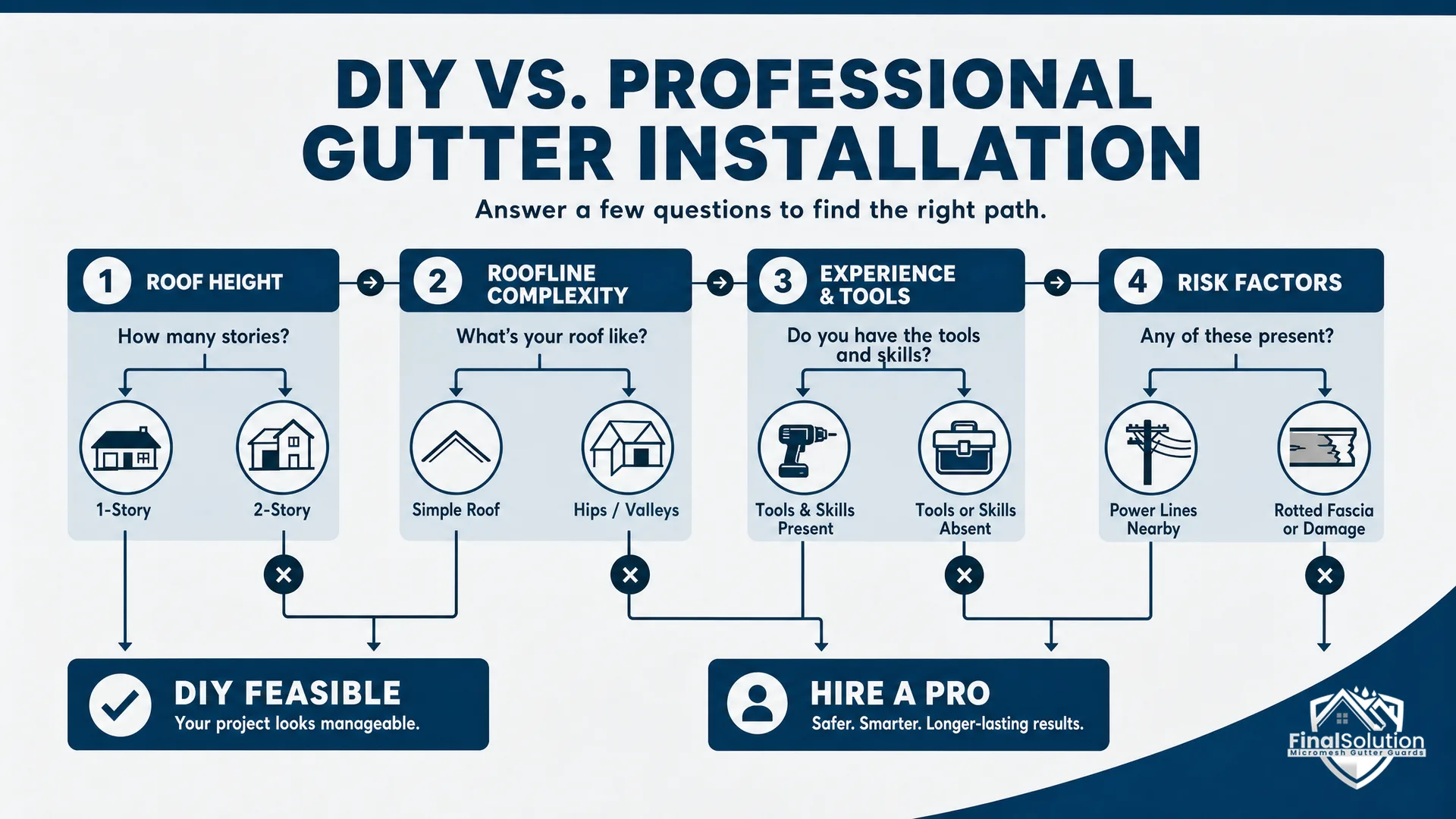
- DIY gutter work makes sense for minor repairs and single-story homes with simple rooflines, but has real limits beyond that.
- Fall hazards, slope miscalculations, and poor sealing are the top reasons DIY gutter projects fail.
- Professional gutter installation typically includes warranties and liability coverage that protect your home long-term.
- Hidden DIY costs (wasted materials, repeat fixes, foundation repairs) can easily exceed what a professional would have charged.
- Getting a free estimate from a local contractor costs nothing and gives you a concrete comparison point before committing to either path.
When DIY Gutter Installation Makes Sense
DIY gutter work is reasonable for small repairs and single-story homes with straightforward rooflines, but the window narrows fast as complexity, height, or water damage risk increases.
Not every gutter job needs a professional. Knowing where the reasonable boundary sits saves you money and frustration.
Simple repairs and maintenance tasks you can handle alone
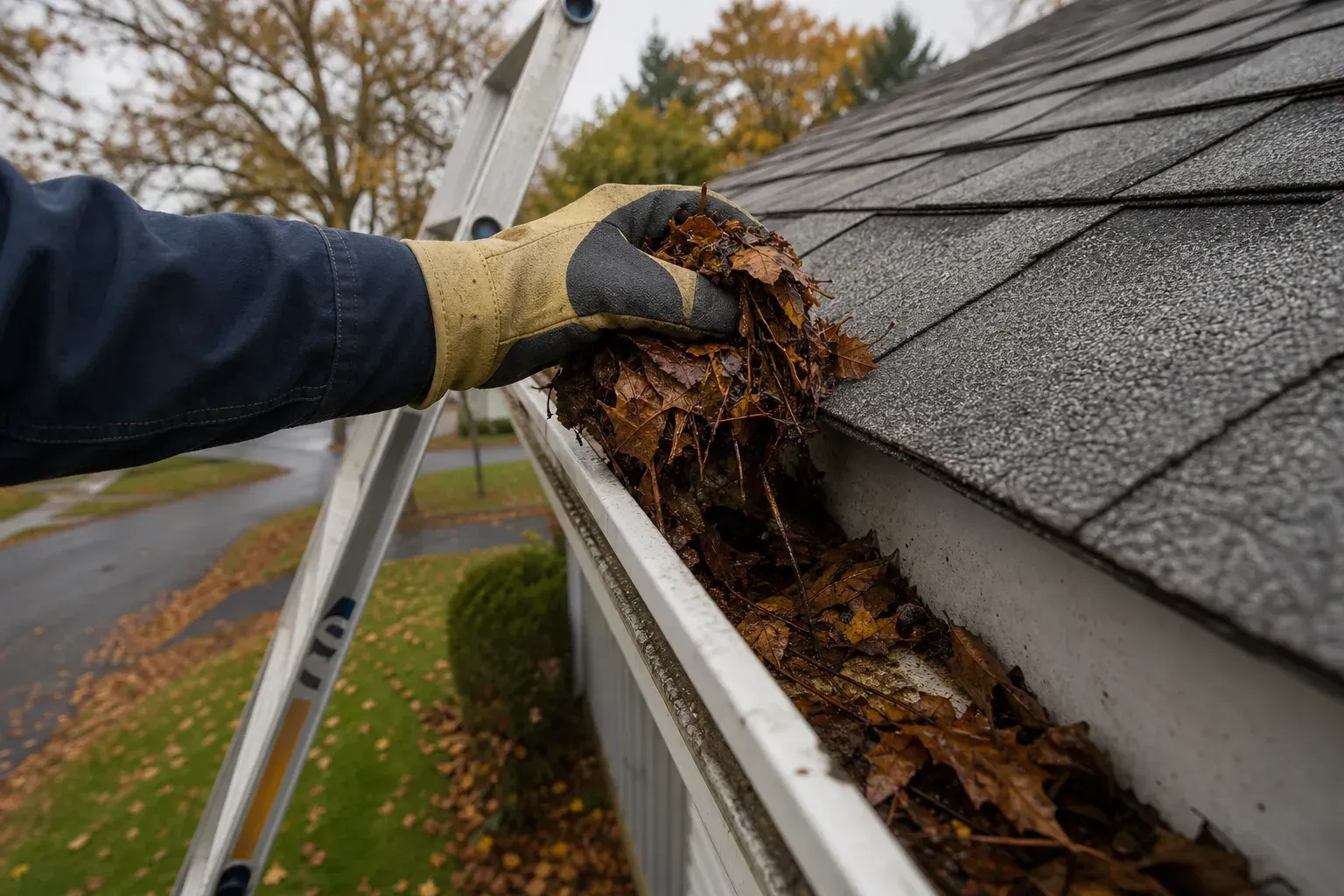
Gutter cleaning is the most common DIY task, and it's one most homeowners can do safely on a single-story home with a stable ladder and the right technique. Reattaching a single loose hanger, patching a small hole with gutter sealant, or replacing one short section of sectional gutter are also within reach if you're comfortable at height and have basic tools.
These tasks share one thing: they're low-stakes, reversible, and don't require getting the slope or alignment perfect across a long run of gutter. When something goes slightly wrong, the fix is quick.
Single-story homes with low-slope roofs
A single-story ranch or bungalow in Webster or Penfield is a very different job than a two-story colonial in Pittsford. On a single-story home with a gentle roofline, ladder work is safer, material runs are shorter, and mistakes are easier to spot and correct before they cause damage.
If your home fits this profile and you have a helper, a full gutter replacement on one section is a realistic weekend project, provided you already own or can rent the right tools. For homeowners in more complex situations, our professional gutter installation service exists precisely for the jobs that require more than a ladder and an afternoon.
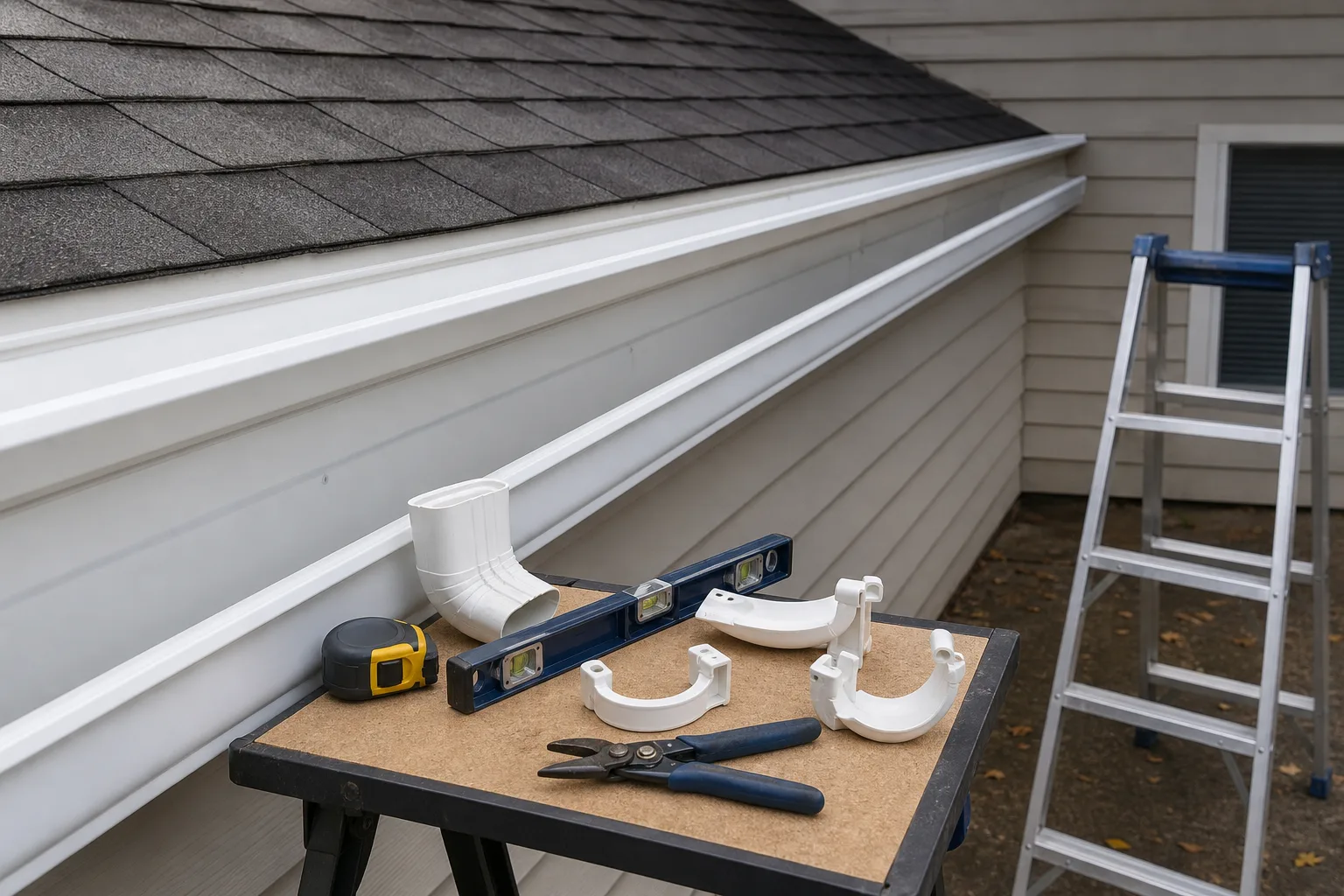
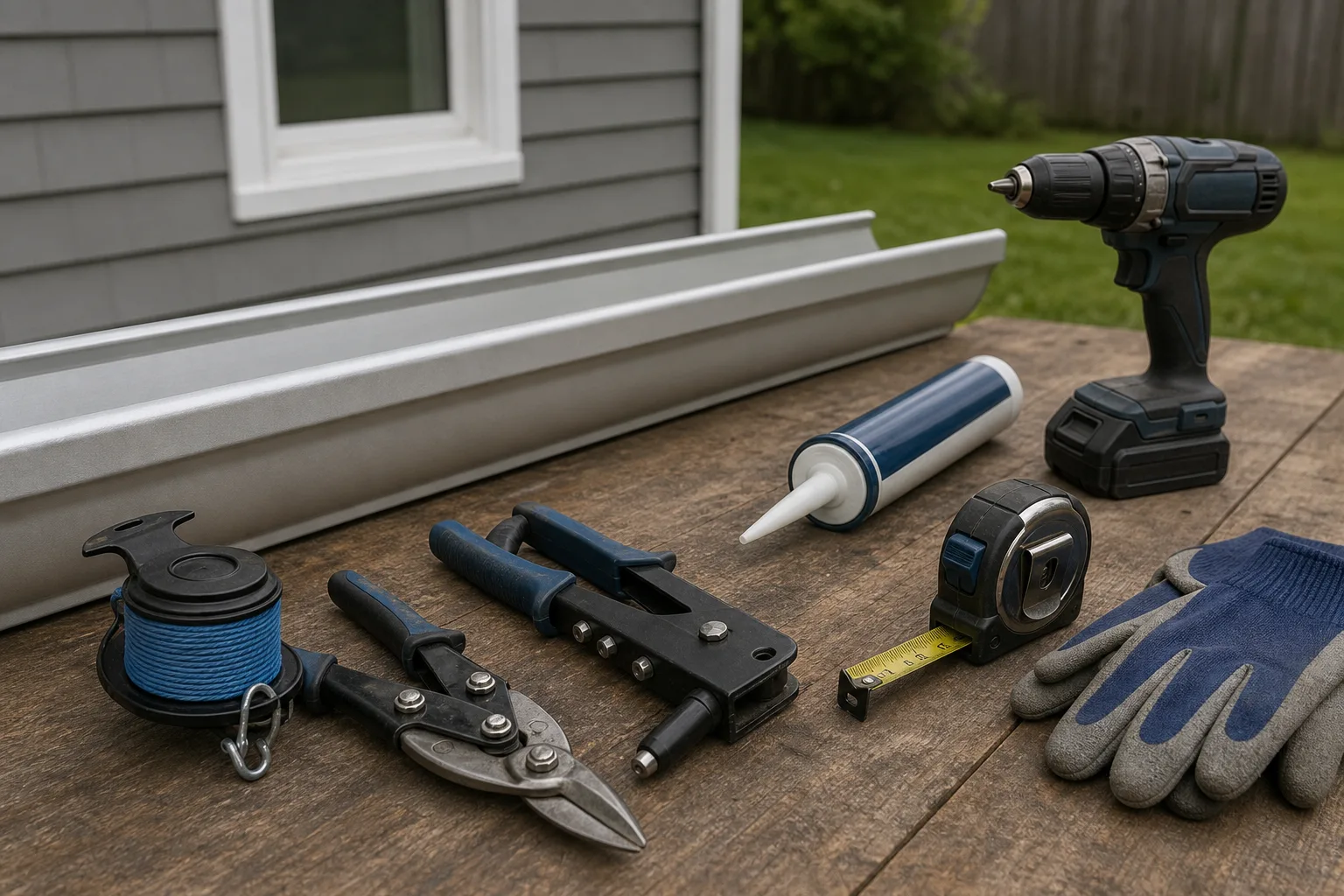
Required skills and tools before you start
If that list feels unfamiliar, that's useful information. Missing even one of those skills tends to show up later as a leak, a sag, or water pooling where you least want it.
Real Safety Risks That Stop Most DIY Projects
The physical risk of gutter work is real and underestimated. It's not just about climbing a ladder, it's about doing precise, two-handed work at height for an extended stretch of time.
Fall hazards and ladder placement mistakes
Falls from ladders are among the most common home improvement injuries. The Consumer Product Safety Commission tracks thousands of ladder-related emergency room visits every year, and gutter work is one of the leading causes. The problem isn't just the height; it's the combination of leaning, reaching sideways, and carrying materials that makes the work unstable.
Proper ladder placement means setting it on firm, level ground, keeping the base one foot out for every four feet of height, and never leaning beyond your belt buckle. On a typical two-story home in Greece or Irondequoit, that ladder may need to reach 20 to 25 feet, which is a different experience than the first rung.
Electrical hazards near power lines
Older neighborhoods throughout Monroe County often have overhead power lines running close to roof edges. Aluminum gutters and aluminum ladders are both conductive. Working near a service entrance or a line that runs parallel to your roofline is a genuine electrical hazard that stops many experienced DIYers cold. If power lines are within reach of your work area, professional involvement is not optional.
Weight and structural concerns on older homes
Fascia boards on homes built in the 1960s through 1980s are sometimes soft, rotted, or undersized in ways that aren't obvious until you're hanging from a ladder trying to drive a screw. A fascia that looks solid from the ground may not hold a new gutter run reliably. Assessing and repairing rotted fascia before gutter installation is work that typically requires a professional eye and often carpentry skills beyond the scope of most DIY projects.
Technical Challenges That Lead to Costly Failures
Getting gutters to look right is easier than getting them to work right. The functional requirements are specific, and small errors compound over time into expensive problems.
Slope and pitch calculations for proper drainage
Gutters need to slope toward downspouts at roughly 1/4 inch of drop per 10 feet of run. Too little slope and water sits and stagnates. Too much and it rushes past the downspout opening, overshoots, and splashes against your foundation.
Getting this right over a 30- or 40-foot run requires careful measurement and a chalk line snapped at the correct height on both ends before a single bracket goes up.
As Elite Guttering and More notes, slope errors are one of the most common reasons DIY gutters fail within the first year. The job looks fine from the driveway, but the water tells a different story during the first heavy rain.
Sealing joints and preventing leaks
Sectional gutters require silicone or gutter-specific sealant at every joint, end cap, and outlet connection. Seams that aren't sealed correctly will drip, usually right above a window or against your siding, causing staining and moisture intrusion over time. The sealant also has to be applied to clean, dry metal, something that's hard to guarantee on a morning with Rochester's unpredictable weather.
Seamless gutters, which are cut on-site from a single continuous roll, eliminate most of these joints. They're a much better long-term solution, but they require specialized equipment that no homeowner keeps in the garage. That's why seamless gutter installation is always a professional job.
Choosing the right materials and fasteners
Aluminum gutters in .027 gauge are the standard for residential use in most of the Northeast. Thicker .032 gauge holds up better in heavy snow and ice load conditions, which matters in Monroe County winters. Using the wrong gauge, incorrect hanger spacing (standard is every 24 to 36 inches), or mismatched fasteners leads to sagging runs within a few seasons.
Common DIY Gutter Installation Mistakes
Even experienced DIYers make these errors. Knowing them ahead of time helps you evaluate honestly whether you're set up to avoid them.
Incorrect measurements and sizing errors
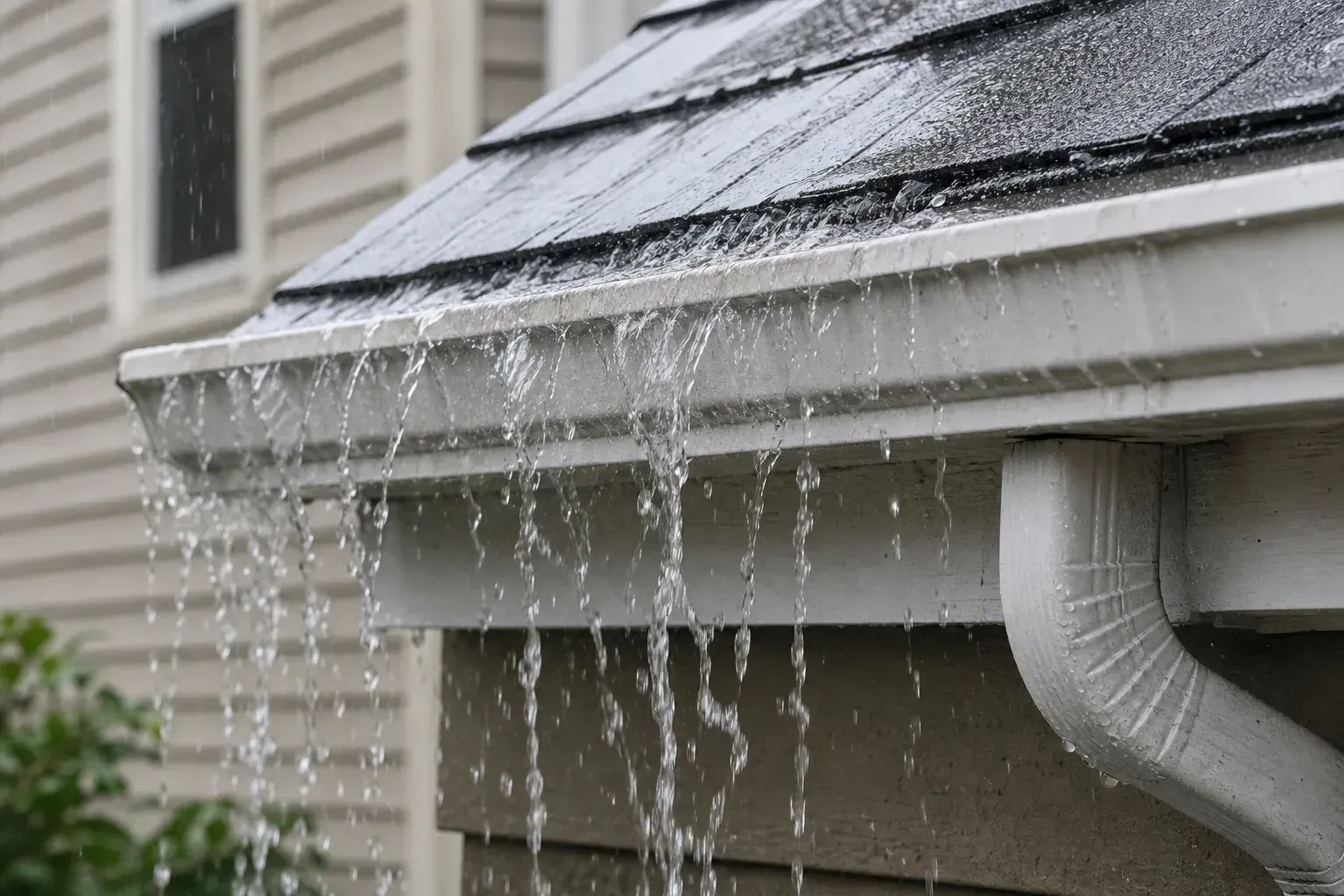
Most residential homes use 5-inch K-style gutters, but high-rainfall areas or homes with steep roofs may need 6-inch gutters to handle the volume. Undersized gutters overflow during heavy rain and send water straight down your siding and foundation. Measuring your roof's drainage area and matching it to the right gutter size is a step many DIY guides skip over quickly.
Poor water runoff that causes foundation damage
Downspout placement matters as much as the gutters themselves. Downspouts that terminate too close to the foundation or without proper splash blocks or underground drainage extensions can saturate the soil and contribute to basement water intrusion. Our downspout installation service addresses exactly this: not just where the spout ends, but where the water goes from there.
Misaligned gutters that look unprofessional
A gutter that tips slightly forward will overflow at the front lip during every rain. One that tips backward traps standing water against the fascia, which accelerates rot. Neither problem is obvious until it rains, and by then you may already be resealing joints or adjusting hangers on a wet ladder.
DIY vs. Professional Installation: What You Need to Know
Here's a practical side-by-side comparison to help you weigh the decision clearly.
| Factor | DIY Installation | Professional Installation |
|---|---|---|
| Upfront cost | Lower material cost, labor is your time | Higher upfront, includes labor and materials |
| Hidden costs | Tool rental, wasted cuts, repeat fixes | Typically none beyond the quoted price |
| Time to complete | Full weekend or longer | Usually one day or less |
| Slope accuracy | Depends on skill and care | Measured and guaranteed |
| Joint sealing | Sectional seams require manual sealing | Seamless option eliminates most joints |
| Warranty | None on labor | Typically included on workmanship |
| Liability | You're responsible for any damage | Contractor carries insurance |
| Best for | Minor repairs, single-story simple rooflines | Full installs, two-story homes, complex layouts |
Cost comparison and hidden expenses of DIY
When people ask how much does gutter installation cost, the DIY figure looks attractive at first. Sectional aluminum gutter materials typically run between $1 and $3 per linear foot. But add in tool rental, sealant, hangers, end caps, and downspout hardware, plus the time cost of a full weekend, and the gap narrows quickly.
If something has to be redone, you're buying materials twice.
Professional installation costs more per linear foot, but the price includes correct slope, proper sealing, and workmanship that doesn't require a return visit. For a free, no-pressure comparison specific to your home, contact us for a free estimate.
Time investment and project duration
A complete gutter run
Warranty and liability differences
This is where the math often tips toward hiring a professional. DIY installations carry no workmanship warranty. If the slope is off or a joint fails, every repair comes out of your pocket. A licensed contractor carries general liability insurance, meaning damage caused during installation is covered. Workmanship warranties vary by contractor, so ask specifically what's covered and for how long before you sign anything.
How to Move Forward: Your Next Steps
You've weighed the risks and realities. Here's how to take the next step, whether that's a DIY attempt or bringing in a pro.
Questions to ask before hiring a gutter contractor
Not all gutter contractors operate the same way. Before you commit, ask these questions:
- Are you licensed and insured in New York State?
- Do you install seamless gutters on-site or use pre-cut sections?
- What gauge aluminum do you use, and why?
- Does your quote include downspout placement and extensions?
- What does your workmanship warranty cover, and for how long?
- Can I see examples of recent work in my area?
A contractor who answers these questions clearly and without hesitation is one worth trusting. Vague answers or pressure to sign the same day are red flags worth taking seriously.
What to expect during professional installation
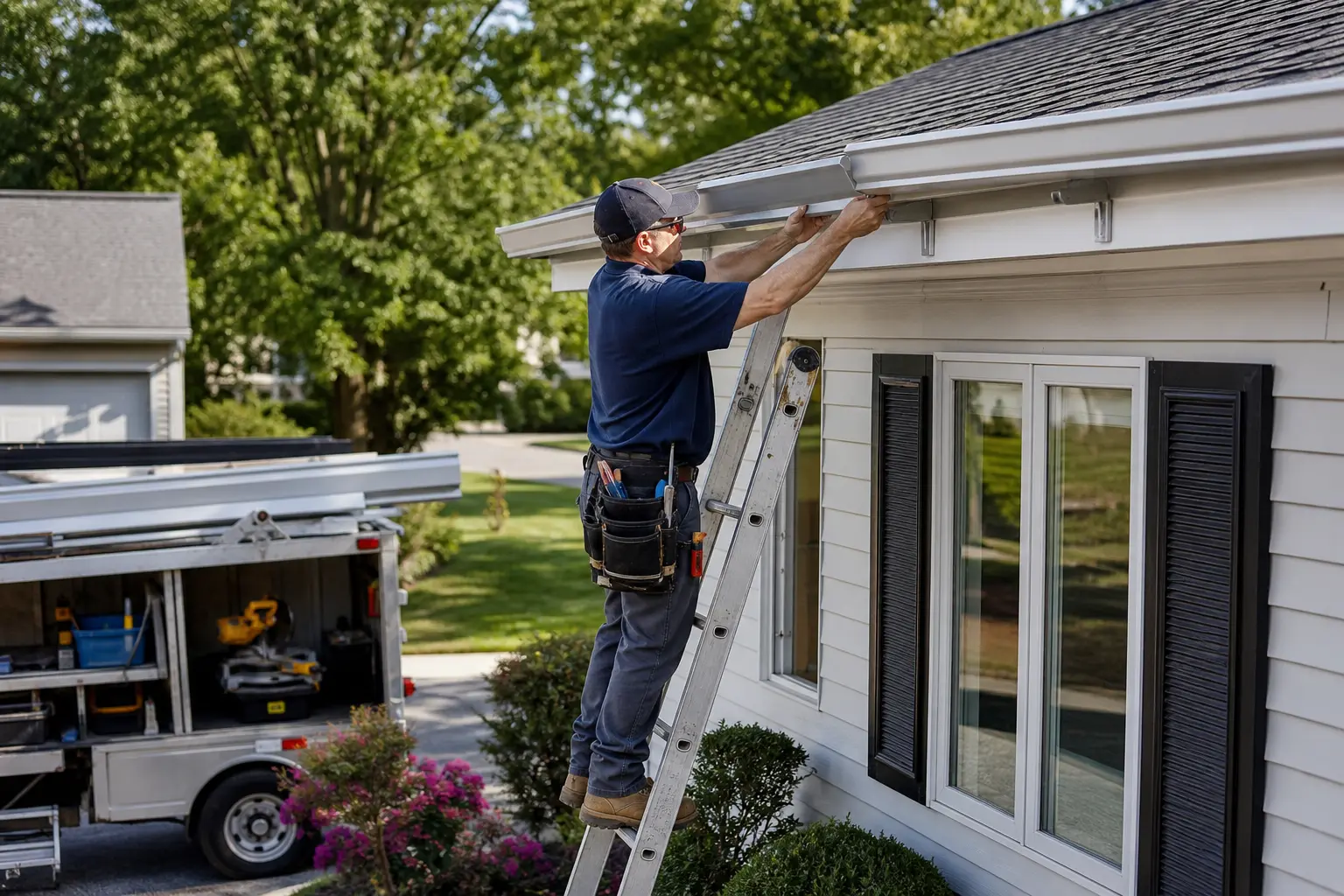
A professional gutter installation visit typically starts with a walkthrough of your home's roofline. The contractor will note drainage areas, downspout locations, fascia condition, and any existing gutter problems. If fascia repair is needed, that's usually flagged and quoted separately.
On installation day, a seamless gutter machine forms continuous runs to the exact length of each section. Hangers go in at the correct spacing, slope is verified with a level, and downspouts are cut and positioned to move water away from the foundation. Most crews clean up and leave the site tidy the same day.
For homeowners in Webster, Greece, Gates, and surrounding Monroe County communities, our team at Final Solution Gutter Guards ROC follows this same process on every job. If you're near Irondequoit or Penfield, you can learn more about gutter installations and repairs in your area before reaching out.
Frequently Asked Questions
Can you install gutters yourself on a two-story home?
Technically yes, but it's rarely advisable. Working at 20 feet or higher with long sections of aluminum gutter requires a stable scaffold or extension ladder, a helper, and significant comfort with height. The slope calculations also become more critical over longer runs.
Most homeowners with two-story homes find that the time, tool investment, and safety risk make professional installation the more practical choice.
How much does gutter installation cost when done professionally?
Professional gutter installation pricing varies based on linear footage, gutter style, material gauge, and the number of downspouts. Sectional aluminum gutter materials alone run roughly $1 to $3 per linear foot at retail, but professional quotes bundle labor, seamless fabrication, hangers, sealant, and downspout hardware into a single price. The best way to get an accurate number for your specific home is to request a free estimate from a local contractor who can measure in person.
You can also review guidance on what drives installation costs to understand what goes into a professional quote.
What gutter installation best practices do professionals follow that DIYers miss?
The most important gutter installation best practices are slope accuracy, hanger spacing, and seamless fabrication. Professionals snap a chalk line at the correct pitch before any hardware goes up, set hangers every 24 to 36 inches, and use seamless gutters to eliminate the joints that DIY sectional systems rely on. They also inspect fascia condition before installing, a step that's easy to skip when you're trying to get the job done in a weekend.
What are the signs that gutters were installed incorrectly?
The most common signs include water overflowing at the front lip during rain, standing water visible inside the gutter after a storm, sections sagging or pulling away from the fascia, and staining or erosion at the base of the home near downspout exits. According to documented installation failure patterns, most of these problems trace back to slope errors, insufficient hanger spacing, or poorly sealed joints, all issues that a professional installation prevents from the start.
Do I need a permit to install gutters in New York?
In most Monroe County municipalities, gutter replacement or installation does not require a building permit as long as it's part of routine maintenance and not a structural change. That said, requirements vary by town, so it's worth a quick call to your local building department before starting any project. Your contractor should also know the local rules and can advise you during the estimate.
Are gutter guards worth adding during a new installation?
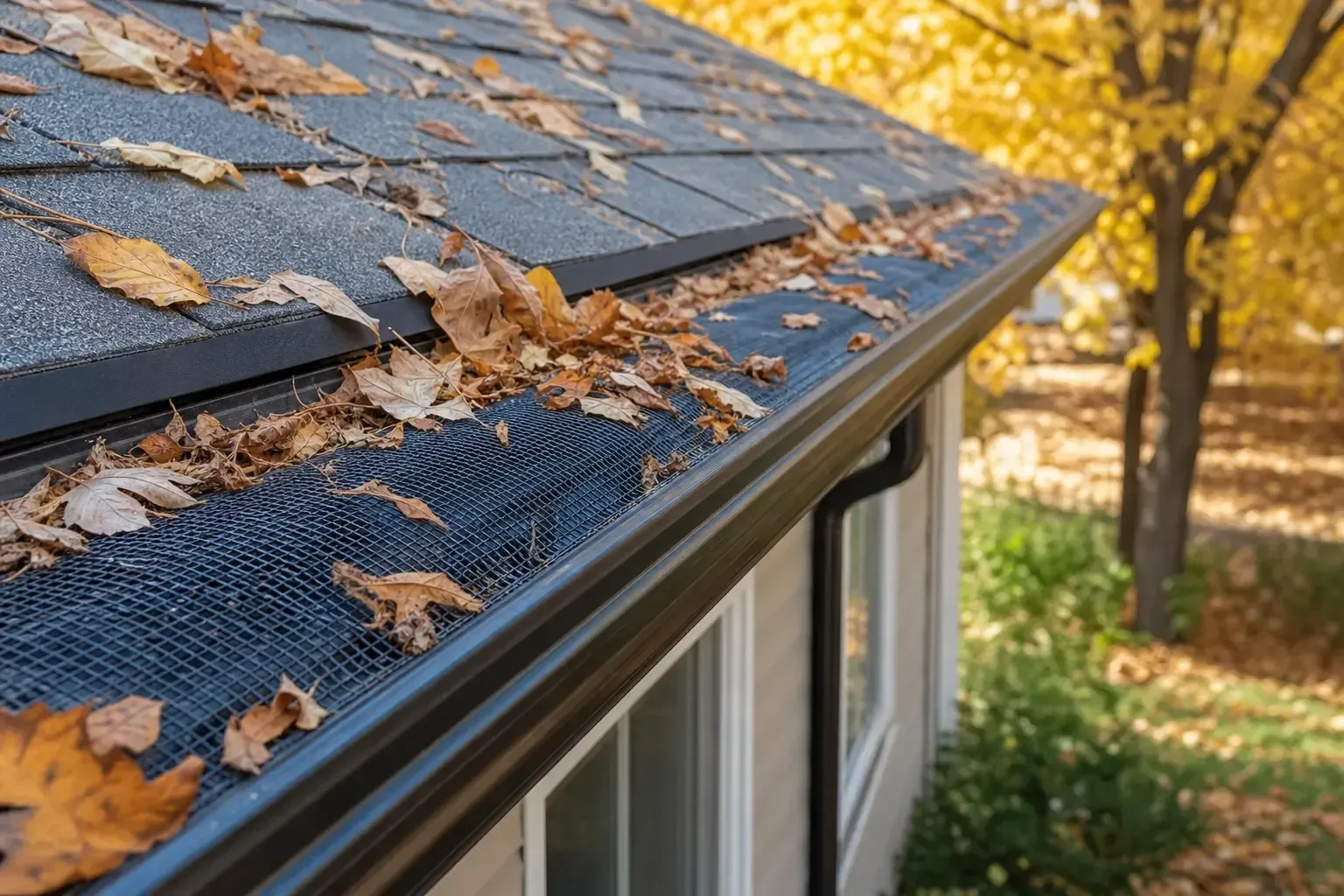
Adding gutter guards at the time of installation is almost always more cost-effective than retrofitting them later. Guards reduce cleaning frequency significantly, which matters in Monroe County where maple and oak trees drop heavy leaf loads every fall. If you're already replacing gutters, it's a natural time to evaluate the right guard system for your roofline.
You can explore gutter guard options to see what works best for different home types and tree coverage situations.
Can I mix sectional and seamless gutters on the same home?
You can, but it's not recommended. Sectional and seamless systems use different hanger styles and connection methods, and mixing them creates inconsistent appearance and more potential leak points at the transitions. If you're replacing a partial run, it's usually worth doing the full side of the house in one material for a cleaner result and fewer maintenance headaches down the road.
 Contact Us for a Free Estimate! Share a few details with Final Solution Gutter Guards ROC, we'll help you choose the right next step. Get a free estimate |