Key Takeaways
- Most aluminum seamless gutters last 20 or more years with proper installation and routine maintenance.
- The single biggest cause of premature gutter failure is poor installation, not material quality.
- Rochester's freeze-thaw cycle puts unusual stress on sectional gutters, making seamless systems a smarter long-term choice.
- Neglecting gutter cleaning even one season can lead to fascia rot, foundation erosion, and mold issues that cost far more than a new gutter system.
- Gutter guards extend the functional life of your gutters by reducing debris buildup and overflow.
- If you're like most homeowners in Rochester or Webster, you probably don't think about your gutters until something goes wrong.
- gutter system gutter system
Why Gutters Fail Before Their Time
Most homeowners never think about their gutters until something goes wrong. Understanding how long seamless gutters last versus sectional systems, and what cuts that lifespan short, is the foundation of good gutter stewardship, typically representing 15, 25% of overall project budgets. Seamless gutters last 20 years or more when properly installed and maintained, while sectional alternatives in harsh climates often show joint failures within 10 to 15 years, according to common industry estimates from 2024. The gap comes down to three root causes: installation quality, maintenance habits, and how well the system matches your local climate.
Installation Errors That Shorten Lifespan
Improper pitch is the most common installation mistake we see. Gutters need a consistent slope toward the downspout, roughly a quarter inch of drop for every ten feet of run. If that angle is off even slightly, water sits in the channel rather than draining, and standing water accelerates corrosion, wood rot behind the fascia, and freeze damage through winter.
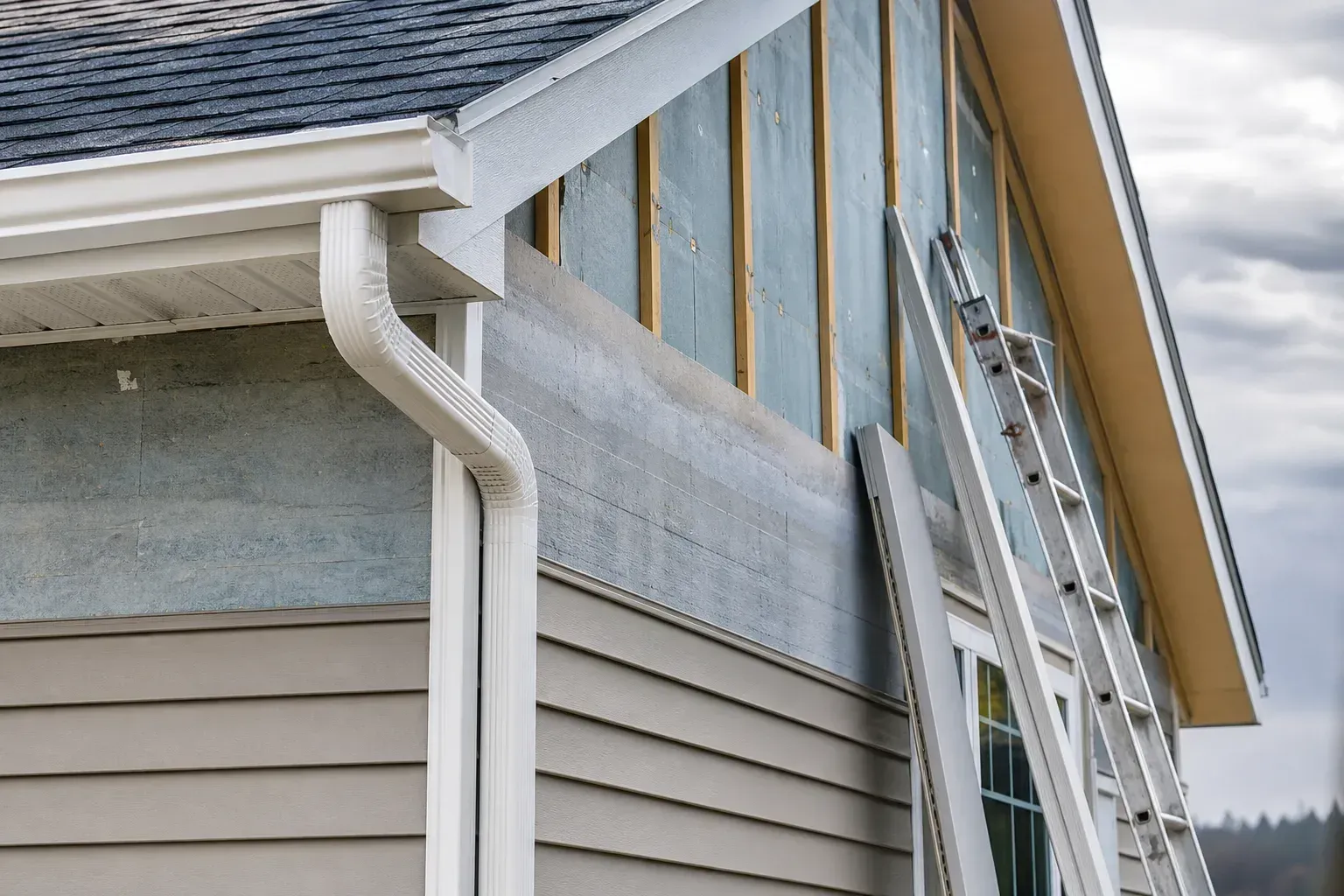
Fastener spacing matters too. Gutters hung with spikes too far apart will sag under the weight of water, ice, or debris. Modern hidden hanger systems spaced every 24 to 36 inches hold gutters flush and level through Rochester's heavy snowfall seasons.
Choosing an experienced local contractor like Final Solution Gutter Guards ROC makes this difference tangible from the first winter.
Neglect and Clogged Debris as Silent Killers
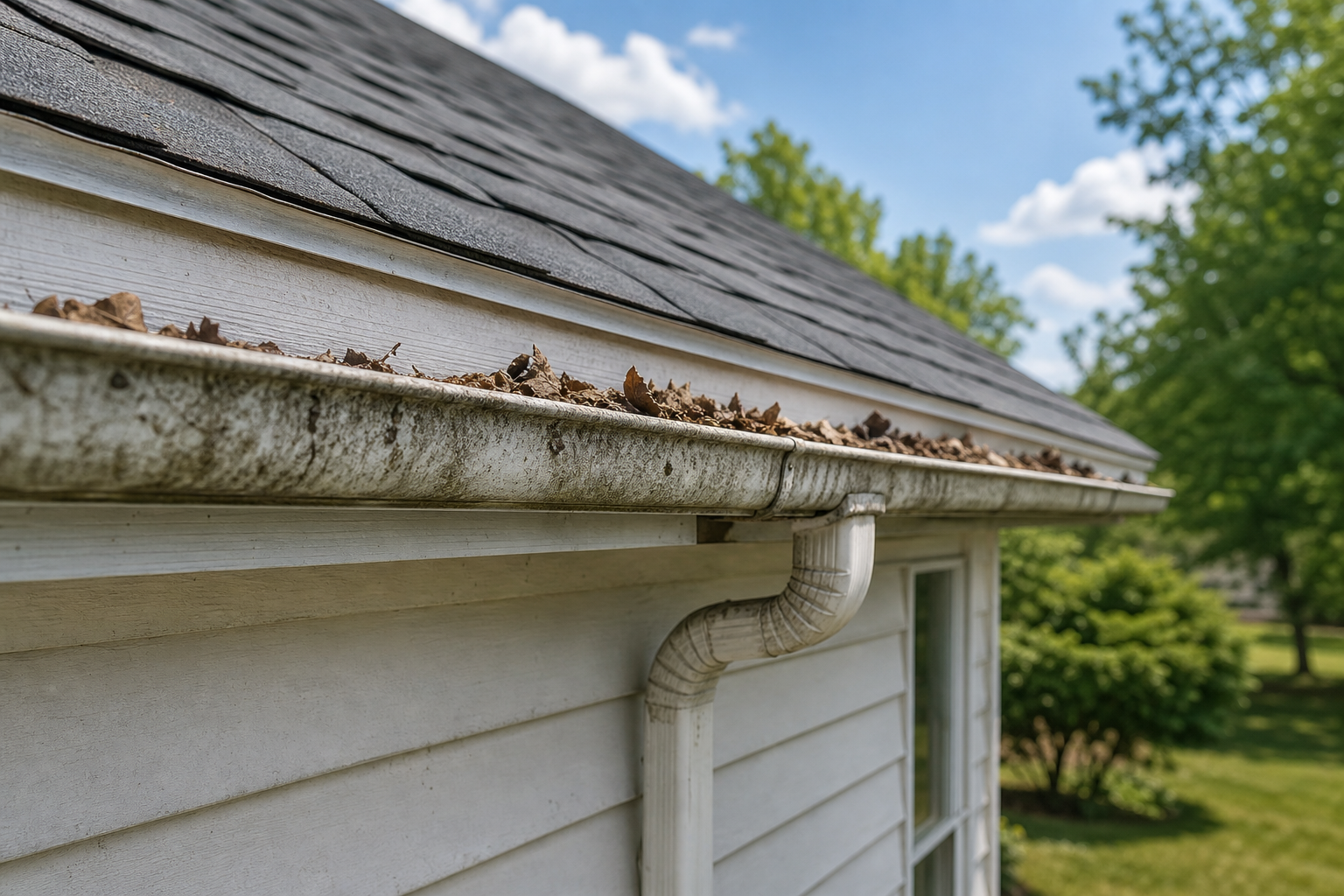
A clogged gutter isn't just inconvenient. It's actively rotting your home. When leaves, pine needles, and shingle grit pack into the channel, water overflows behind the gutter and soaks your fascia boards, soffit, and eventually the structural framing beneath.
Monroe County's tree canopy means gutters fill faster than most homeowners expect. In our experience, twice-yearly cleaning is the minimum standard in this region. Spring clears the debris that accumulated over winter, while fall cleaning before the first hard freeze is non-negotiable.
Skipping even one fall season can set up an ice dam situation that causes joint failures, sagging, and moisture intrusion into your walls.
Climate and Weather Damage Patterns
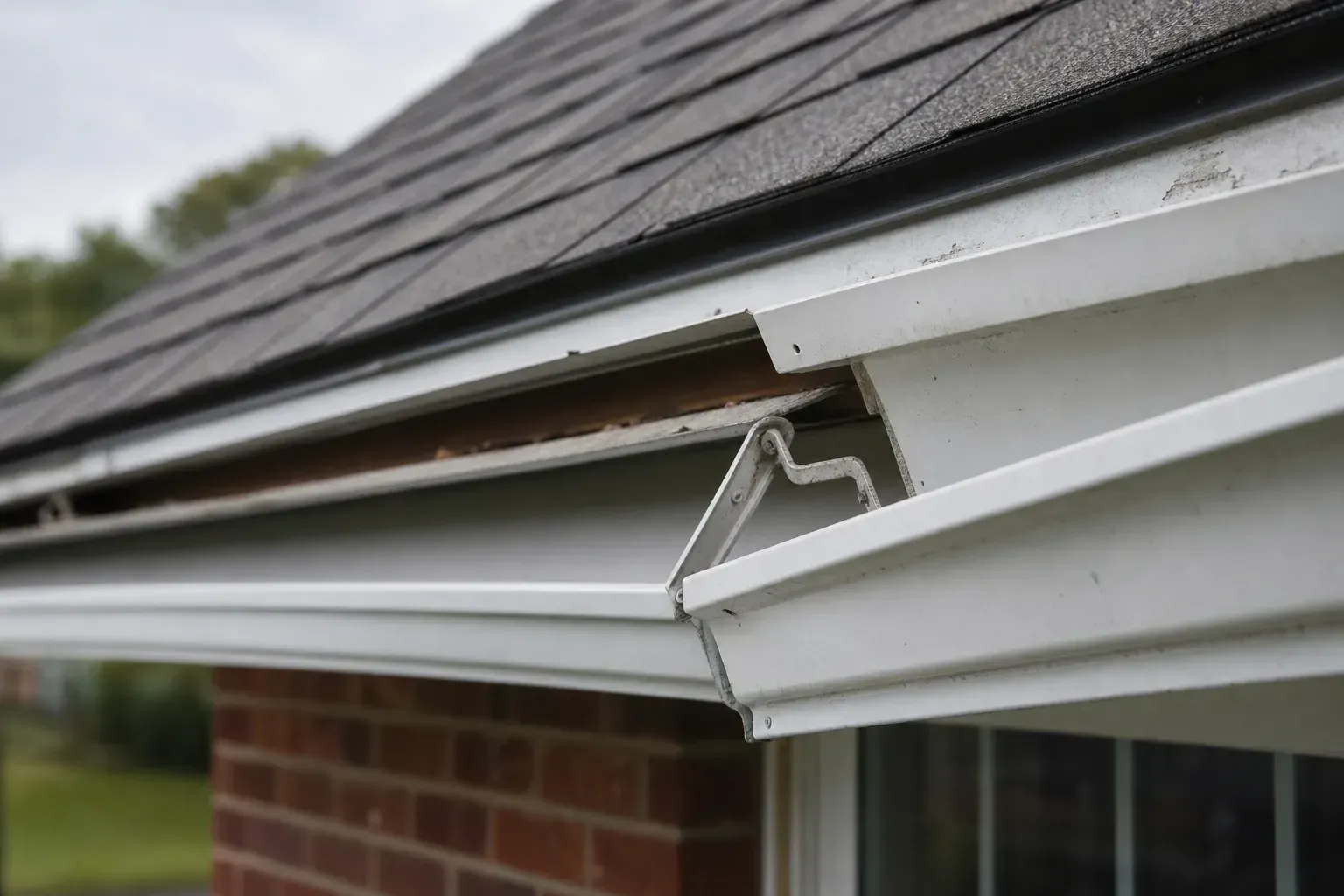
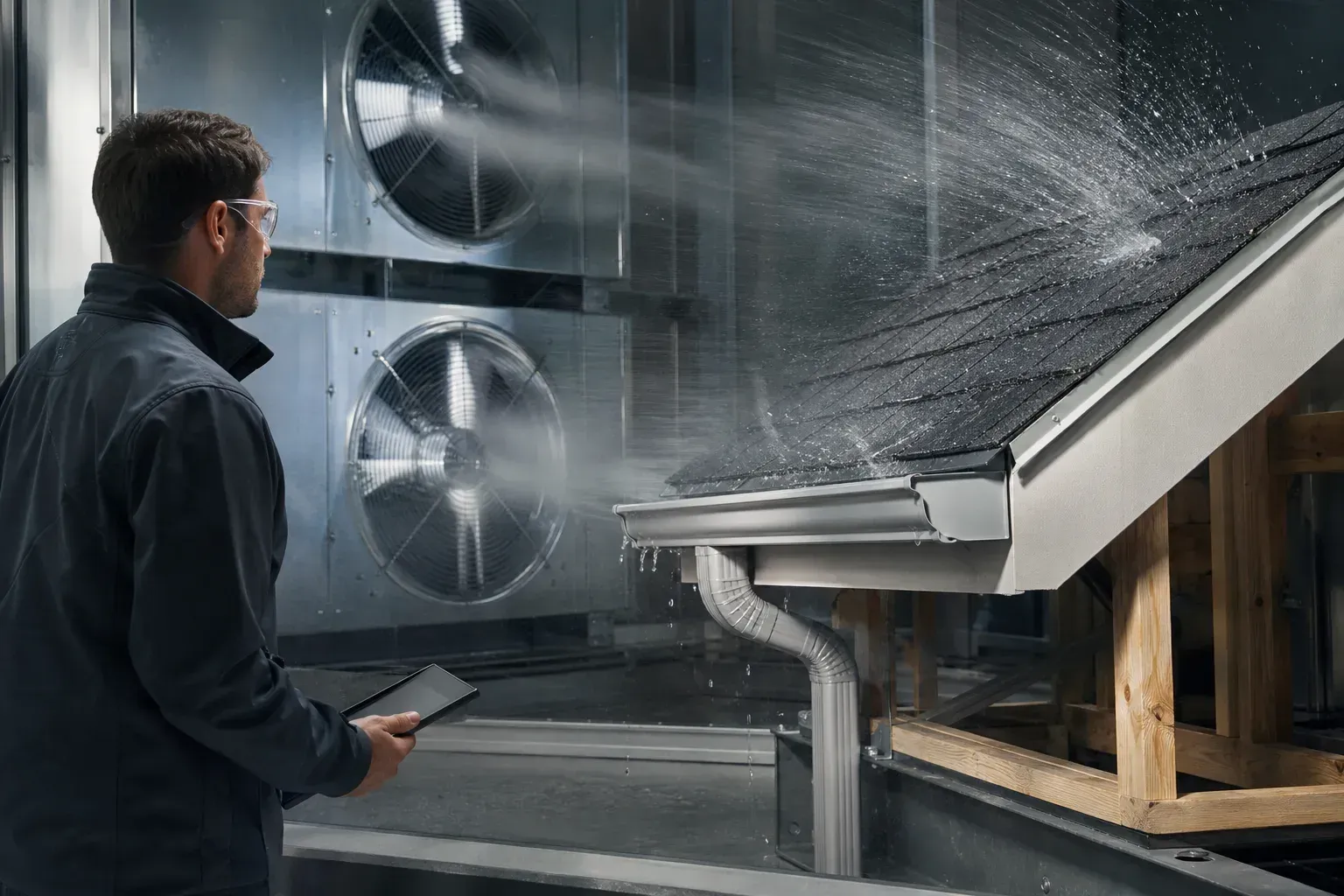
Webster and Rochester sit in a climate zone that cycles through hard freezes, heavy snowfall, ice storms, and sudden spring thaws. That freeze-thaw cycle is particularly punishing for older jointed systems because water seeps into the connections, freezes, expands, and cracks the seal. Over several winters, every joint becomes a potential leak point.
Seamless systems eliminate most of those joints, which is why they consistently outlast jointed alternatives in upstate New York. According to research on seamless gutter lifespan comparisons, properly installed seamless gutters made from aluminum routinely reach 20 years or more, while jointed systems in comparable climates often begin failing within 10 to 15 years.
Gutter Material Matters: Expected Lifespans Compared
Not all gutter materials age the same way. Your choice of material directly affects how long your gutters last, how much maintenance they require, and how well they hold up through Monroe County winters.
Seamless vs. Sectional Performance Over Time
Pre-cut sections are snapped together on-site, and every joint is a future leak waiting to happen. Seamless gutters are fabricated from a single continuous piece of metal measured and cut to your exact roofline at the job site, eliminating nearly all joint-related failures. The performance gap becomes clearest after year five.
Sectional joints begin to separate, caulk breaks down, and leak frequency climbs. A comparison of seamless and sectional gutter performance notes that seamless systems typically outlast their jointed counterparts by five to ten years in regions with significant freeze-thaw cycling. For full details on options available locally, see the seamless gutter installation page.
Aluminum, Steel, Copper, and Vinyl: Which Lasts Longest
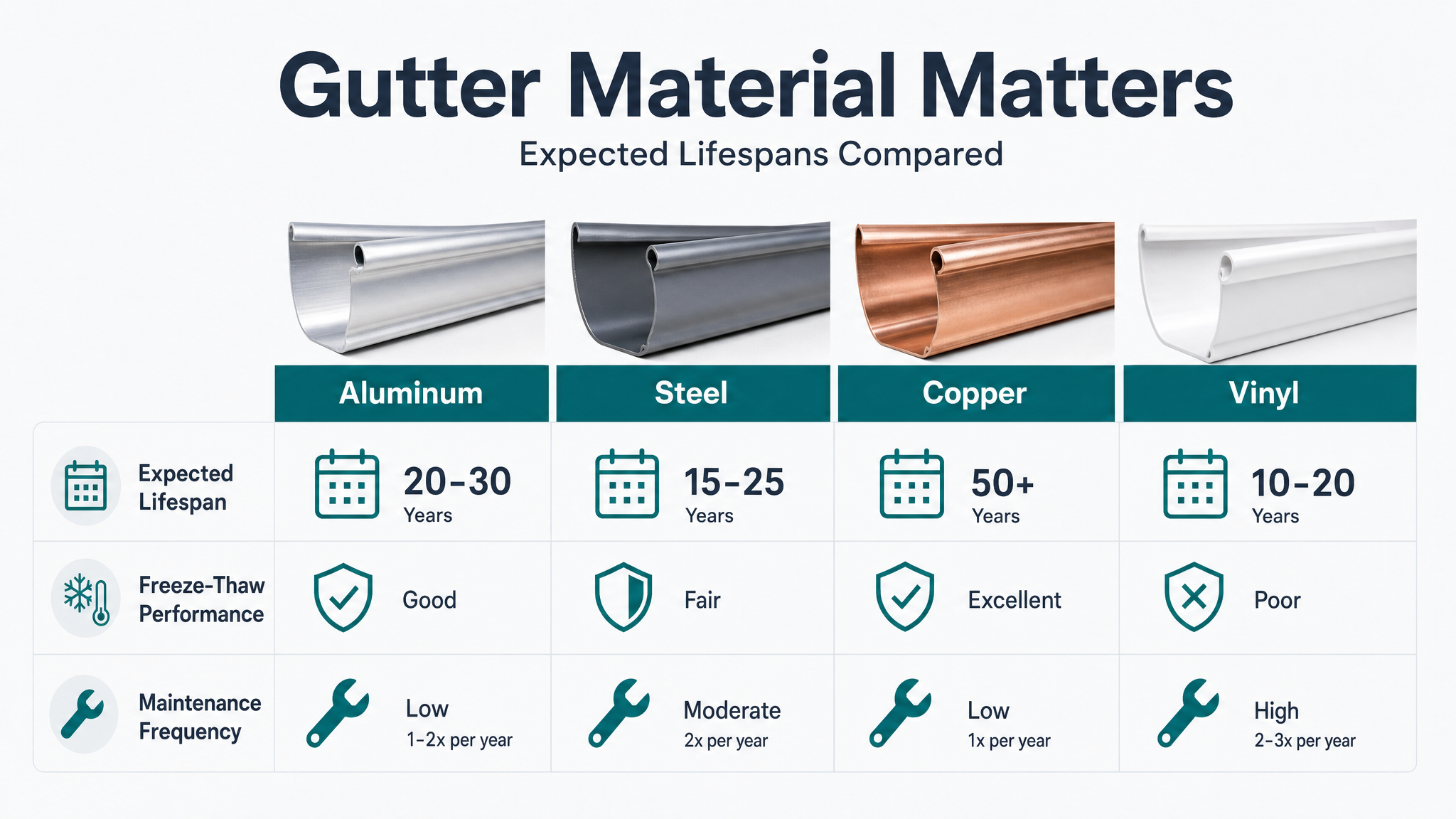
Aluminum is the dominant choice in the Rochester area for good reason. It doesn't rust, holds paint well, is lightweight enough to spare your fascia, and handles freeze-thaw cycles without warping. Vinyl sounds appealing on price, but it becomes brittle in cold temperatures and often cracks or pulls apart within a decade in upstate New York winters.
The Real Cost of Waiting vs. Investing in Quality Gutters
Structural and Foundation Repair Costs
Delaying Gutter Replacement feels like saving money. In practice, it shifts costs from a predictable project to unpredictable structural repairs. Water that bypasses a failing gutter channels directly toward your foundation, where hydrostatic pressure over multiple seasons leads to cracking, moisture intrusion, and basement flooding.
Foundation repairs in the Rochester area routinely run $5,000 to $15,000 or more, compared to $1,500 to $3,500 for a full seamless aluminum system. Fascia board replacement, soffit repairs, landscaping erosion, and basement waterproofing all carry costs that dwarf a new gutter system. If you're seeing signs of roofline deterioration, the gutter repair page is a practical starting point for assessing what's salvageable versus what needs full replacement.
Seamless Gutter Investment vs. Budget Alternatives
Pre-cut sections cost less upfront. The gap narrows quickly when you factor in joint sealant, more frequent Gutter Repair visits, and earlier full replacement. Seamless aluminum gutters installed by a qualified contractor typically cost more initially but deliver a lower cost-per-year of service life, especially in a climate that stresses every joint.
The 260 Roofing comparison of seamless vs. sectional gutter value puts it plainly: the long-term savings from fewer repairs and a longer service life make seamless systems the better investment for homeowners who plan to stay in their home five or more years.
Maintenance Strategies That Extend Gutter Life by 10+ Years
Seasonal Cleaning and Debris Management
Cleaning gutters twice a year is the baseline, but Monroe County homeowners often benefit from a third pass after major fall windstorms. The goal is to keep the channel clear so water flows freely to the downspout without pooling or spilling over the back edge. When cleaning, also check and clear your downspout system for blockages, Downspout Installation and maintenance are just as critical as the gutter channel itself.
A spotless gutter with a clogged downspout still overflows. Flush the downspouts from the top with a garden hose and watch for slow drainage or backup near the elbow joints.
Gutter Guards and Protection Systems
Gutter Guard Installation reduces how often you need to clean and how much debris reaches the channel in the first place. Micro-mesh and solid-cover systems are both well-suited to this region's mix of large maple leaves and fine pine needles. Well-installed guards also reduce ice dam formation by keeping water flowing rather than pooling in frozen debris.
Guards are not a maintenance-free solution, but they meaningfully cut cleaning frequency and protect the gutter channel from direct debris impact. Learn more about options on the gutter guards page. For homes with recurring overflow problems, guards paired with a properly pitched seamless system solve most issues at the root.
Signs Your Gutters Are Failing and Need Replacement
Visible Damage, Rust, Separation, and Sagging
Walk your roofline after a rain and look for these clear failure signals:
- Sagging sections that pull away from the fascia or dip in the middle
- Visible rust streaks or orange staining on the gutter exterior
- Separated joints with daylight or gaps between sections
- Peeling paint on the fascia directly behind the gutter
- Nail or screw pops where hangers have pulled loose
Any one of these signals warrants a professional inspection. Multiple signals together usually mean replacement beats repair on a cost-per-year basis.
Interior and Exterior Signs of Overflow
We've seen gutter failure show up inside the home long before homeowners notice anything outside. Basement moisture after heavy rain, efflorescence on foundation walls, and mold smell in crawlspaces all point to water bypassing a compromised system. Outside, look for soil erosion in flower beds directly below the roofline, window well flooding, or paint bubbling on your siding near the roofline. If any of these match what you're seeing, a professional assessment helps you understand the full scope quickly.
The when to repair, replace, or add gutter guards guide is a helpful resource for Rochester area homeowners trying to make that call.
Making the Investment Decision: Is It Worth It for Your Home?
When to Repair vs. Replace Your Gutters
If your gutters are under 15 years old with isolated damage, repair is usually the right call. If they're beyond 15 to 20 years, show widespread sagging or joint failure, or have caused deterioration to your fascia or foundation, full replacement delivers better value and lasting protection.
Single-section damage, loose hangers, or minor leaks at joints are all repairable. Widespread sagging, corrosion across multiple sections, or gutters that repeatedly pull away from the fascia indicate that patchwork repairs are throwing good money at a system past its useful life. The gutter replacement page outlines what a full system upgrade looks like and what homeowners in Webster and Rochester can expect from the process.
Long-Term ROI and Resale Value
New gutters, especially a Seamless Gutter Installation, consistently rank among the exterior upgrades that buyers notice and appraisers value. A functional, well-maintained system signals that the home has been cared for. Failing or visibly damaged gutters do the opposite, raising questions about what else may have been neglected.
The financial case is straightforward. A new seamless system protects your foundation, fascia, siding, and landscaping from compounding deterioration. When working with clients who avoided even one major foundation repair or basement waterproofing project, the gutter upgrade had already paid for itself many times over.
According to LeafFilter's overview of seamless gutter value, seamless aluminum gutters last 20 or more years with proper maintenance, reinforcing why the upfront investment outperforms budget alternatives over time.
Frequently Asked Questions
How long do gutters last on average?
How long gutters last depends heavily on the material and installation quality. Aluminum seamless gutters typically last 20 or more years. Jointed aluminum systems average 10 to 15 years in climates like Rochester's, where freeze-thaw cycles stress every connection point.
Vinyl gutters often fall short of 15 years in cold-weather regions. Copper can last 50 years or longer but comes at a significantly higher cost. Routine maintenance stretches any gutter's lifespan.
A system that gets cleaned twice a year and inspected after major storms will consistently outlast a neglected one of the same material.
How long do seamless gutters last compared to sectional gutters?
Seamless gutters last roughly 5 to 10 years longer than pre-cut sectional systems in most upstate New York climates. The reason is straightforward: they are fabricated from a single continuous piece of metal with no mid-run joints, so there are far fewer places for water to seep in, freeze, and crack the seal. Jointed gutters develop connection failures over time regardless of how well they were initially installed.
In a region that cycles through hard freezes and rapid thaws every winter, that failure timeline accelerates noticeably compared to milder climates. Understanding what is how long do gutters last in your specific climate helps you plan replacements before damage compounds.
What causes gutters to fail early?
The three most common causes of premature failure are improper installation pitch, inadequate hanger spacing, and lack of seasonal maintenance. When gutters are hung without the correct slope toward the downspout, water pools in the channel and accelerates corrosion, wood rot, and freeze damage. Clogged gutters are also a leading cause of early failure.
Debris holds moisture against the gutter material and forces overflow behind the channel, soaking the fascia and soffit. In Monroe County, where heavy tree canopy drops significant leaf and needle volume, gutters can fill faster than most homeowners expect.
When should I replace my gutters instead of repairing them?
Repair makes sense for isolated damage: a single loose hanger, a leaking joint in one section, or minor rust on a small area. Replacement becomes the smarter investment when you see widespread sagging, corrosion across multiple sections, repeated joint separation, or evidence that water has been reaching your fascia, foundation, or basement. As a general guideline, gutters older than 15 to 20 years showing multiple failure points are rarely worth patching.
The repair costs stack up quickly, and the underlying system is already past its reliable service life. The when to repair, replace, or add gutter guards guide walks through this decision in detail for Rochester area homeowners.
Do gutter guards actually extend gutter life?
Yes, and in two meaningful ways. First, gutter guards reduce the volume of debris that reaches the channel, which means less standing water, less corrosion, and less weight stress on the hangers. Second, they reduce how often you need to climb a ladder to clean, which means fewer opportunities for accidental damage during maintenance.
Micro-mesh guards are particularly effective in this region because they block both large maple leaves and fine pine needles. Guards are not entirely maintenance-free, but they cut cleaning frequency significantly and protect the gutter channel from direct debris impact through the heaviest fall and winter seasons. See the gutter guards page for options suited to Monroe County homes.
How does Rochester's climate affect gutter lifespan?
Rochester and Webster experience some of the most demanding gutter conditions in the northeastern United States. The region averages over 90 inches of snowfall per year, combined with repeated freeze-thaw cycles that stress gutter joints, hangers, and seals throughout the winter months. Ice dams form when heat escaping through the roof melts snow that then refreezes at the cold eave line.
Gutters full of debris are far more prone to ice dam formation because blocked water has nowhere to drain and freezes in place. This is one reason how long do gutters last best practices, regular cleaning, proper pitch, and quality guards, matter more in this climate than in regions with milder winters.
| Material | Typical Lifespan | Rust Risk | Best For | Relative Cost |
|---|---|---|---|---|
| Aluminum | 20+ years | Low | Most homes in Monroe County | Moderate |
| Galvanized Steel | 15, 20 years | Moderate | Heavy snow loads | Moderate |
| Copper | 50+ years | None | High-end, historic homes | High |
| Vinyl/PVC | 10, 15 years | None (but cracks) | Budget installs, mild climates | Low |
Aluminum is the dominant choice in the Rochester area for good reason. It doesn't rust, holds paint well, is lightweight enough to spare your fascia, and handles freeze-thaw cycles without warping. Vinyl sounds appealing on price, but it becomes brittle in cold temperatures and often cracks or pulls apart within a decade in upstate New York winters.
| Failure Factor | Sectional Gutters | Seamless Gutters |
|---|---|---|
| Joint leak risk | High (every seam is a risk) | Very low (no mid-run joints) |
| Freeze-thaw durability | Moderate | Strong |
| Typical lifespan (Rochester area) | 10, 15 years | 20+ years |
| Repair frequency | Higher over time | Lower over time |
| Ice dam vulnerability | Higher (joints trap ice) | Lower |
| Best pairing | Budget installs, short-term | Long-term investment |