
Key Takeaways
- Clogged gutters cause water to overflow against your fascia, soffits, and foundation, creating ideal conditions for mold and rot.
- Mold growth inside walls, attics, and crawl spaces poses real respiratory health risks, especially for children and older adults.
- Rochester-area homeowners should clean gutters at least twice a year, typically in late spring and after peak leaf fall.
- Gutter guards reduce cleaning frequency but still require periodic inspection to stay effective.
- Catching small gutter problems early, such as leaks or sagging sections, prevents expensive structural repairs later.
If you're a homeowner in Rochester, Webster, or anywhere across Monroe County, you already know what Western New York weather throws at a house. Heavy spring rains, summer downpours, and fall leaf drops create the perfect conditions for clogged, overflowing gutters. And when gutters fail, the damage reaches far deeper than a wet driveway.

This article explains exactly how gutter maintenance protects your home from mold, wood rot, and the health problems that follow neglected drainage systems.
How Clogged Gutters Lead to Mold, Rot, and Health Problems
When gutters are clogged and water has nowhere to go, it doesn't disappear, it finds its way into your home's structure, where it quietly causes mold, rot, and costly damage.

Most homeowners think of gutters as a minor feature. They're not. Your gutter system is your home's first line of defense against water damage.
When it stops working, the consequences show up in your attic, your walls, your crawl space, and eventually your family's health.
Water Overflow and Foundation Damage
When a gutter fills with leaves and debris, rainwater spills over the edge rather than flowing through the downspout and away from the house. That overflow lands directly against your siding, foundation, and the soil around your home. Over time, saturated soil shifts and settles, and water that pools against a concrete foundation works its way into basement walls through cracks and porous masonry.
Foundation water intrusion is one of the most expensive repairs a homeowner can face. What starts as a clogged gutter can eventually lead to basement flooding, efflorescence on concrete walls, and structural settling. Keeping your gutters clear is genuinely one of the most cost-effective ways to protect your foundation.
Mold Growth in Attics, Walls, and Crawl Spaces
Overflowing water doesn't only damage what's visible. It soaks into wall cavities, works under siding, and wicks into roof sheathing where ventilation is poor. Mold thrives in exactly these dark, damp spaces.
According to guidance from Servpro on gutter maintenance, moisture from poorly maintained gutters is a common and preventable source of household mold growth.
Mold in a wall cavity or attic often goes undetected for months. You might notice a musty smell, discoloration on drywall, or worsening allergy symptoms before you ever see visible growth. By the time mold appears on a surface, it has usually established itself deep in the material behind it.
Wood Rot in Fascia, Soffits, and Roof Structures
Your fascia boards sit directly behind the gutter and take the brunt of overflow damage. When water repeatedly soaks into unpainted or damaged wood, it softens the fibers and creates a foothold for rot fungi. Soffits, which cover the underside of your roof overhang, are similarly vulnerable.
Once rot sets in, the material loses structural integrity and typically needs full replacement.
As noted by Cola City Roofing's overview of gutters and mold prevention, water that runs behind a gutter rather than through it accelerates wood rot on fascia and can eventually compromise the roof edge itself. Replacing fascia and soffits costs significantly more than a routine gutter cleaning.
The Health Risks of Mold in Your Home
Gutter maintenance is not just about protecting wood and concrete. It directly affects the air quality inside your home. Mold releases microscopic spores that circulate through your HVAC system and settle throughout living spaces.
Respiratory Issues and Allergic Reactions
Mold exposure commonly triggers sneezing, nasal congestion, coughing, and irritated eyes. For people who already manage asthma or seasonal allergies, even moderate mold levels in a home can worsen symptoms noticeably. Some mold species produce mycotoxins, which cause more serious reactions with sustained exposure.
The frustrating part is that many homeowners treat the symptoms without finding the source. If someone in your household experiences persistent respiratory issues, unexplained headaches, or skin irritation, hidden mold from water intrusion is worth investigating.
Vulnerable Populations: Children, Elderly, and Immunocompromised Residents
Children, older adults, and anyone with a weakened immune system face heightened risk from mold exposure. Young children spend more time at floor level where spore concentrations can be higher, and their developing respiratory systems are more sensitive. Elderly residents and those undergoing medical treatment may experience serious complications from prolonged exposure.
This is the part of gutter care that often goes unspoken. Keeping your gutters clear and your drainage system working correctly is, in a real sense, a health decision for your household.
Gutter Maintenance Essentials for 2026
Consistent gutter maintenance, cleaning, inspecting, and repairing your system on a seasonal schedule, prevents the water intrusion that leads to mold and structural damage.
The good news is that staying on top of your gutters doesn't require a major time commitment. A reliable schedule and a quick inspection routine cover most of what a typical Rochester-area home needs.
Cleaning Frequency and Seasonal Timing
Most homes in Monroe County need gutter cleaning at least twice a year: once in late spring after tree seeds and pollen finish falling, and again in late November after the bulk of leaf drop is complete. Homes under heavy tree cover, particularly oaks and maples common across this region, may need a third cleaning in midsummer.
| Season | Task | Why It Matters |
|---|---|---|
| Late Spring (May) | Clear seeds, pollen, and early debris | Prevents clogs during summer rain events |
| Late Summer (Aug) | Check for sagging, leaks, standing water | Catches wear before fall leaf load |
| Late Fall (Nov) | Full cleaning after peak leaf drop | Clears system before freeze-thaw cycles begin |
| Early Spring (Mar) | Inspect for winter damage | Ice and snow can loosen fasteners and seams |
Inspecting Gutters, Downspouts, and Drainage Systems
A gutter inspection goes beyond just scooping out leaves. Walk your home's perimeter after a rain and watch for water spilling over edges, dripping from seams, or pooling at downspout bases. Check that downspouts discharge at least three to four feet from the foundation, and confirm that splash blocks or underground extensions are directing water away.
Inside the gutter channel itself, look for standing water between storms. Water that sits in a gutter means the pitch is off or a downspout is partially blocked. Both are straightforward fixes when caught early.
Repairing Leaks, Sagging, and Separated Seams
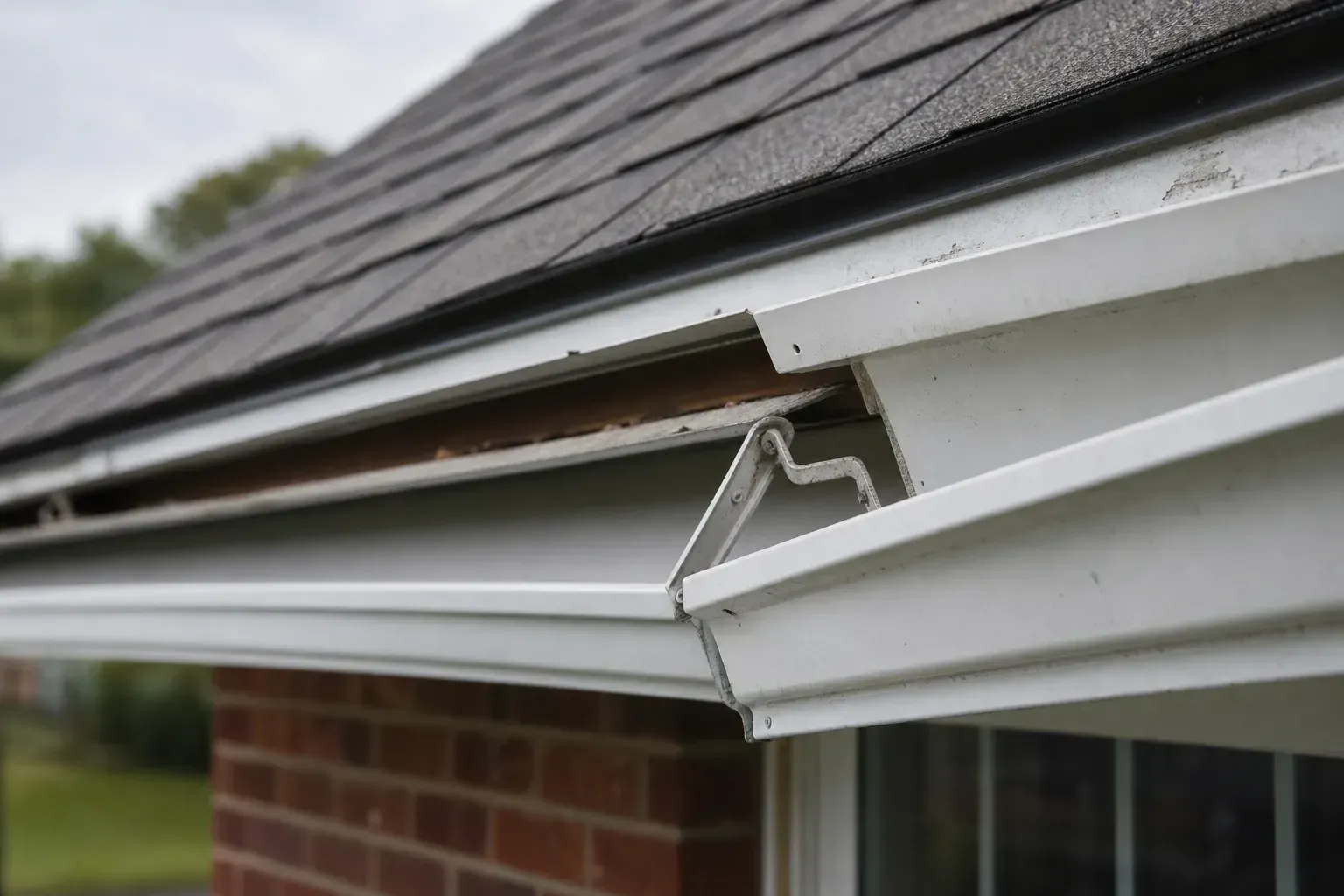
Small leaks at seams or end caps can often be sealed with gutter sealant, a quick repair that costs very little. Sagging sections, where hangers have pulled away from the fascia, need new fasteners re-driven into solid wood. If the fascia itself is soft or rotted, the gutter needs to come down temporarily while the wood is replaced.
For gutter repair in Rochester and the surrounding communities, catching these problems before winter matters a lot. Ice and snow load on a sagging gutter can pull it entirely off the house.
Gutter Guards and Long-Term Prevention Solutions
Gutter guards maintenance is a topic worth understanding before you commit to a system. Guards reduce how often debris enters the channel, but no product eliminates cleaning entirely.

Types of Gutter Guards and How They Work
There are four main gutter guard designs available to Rochester-area homeowners:
- Micro-mesh guards use a fine stainless steel mesh to block small debris including shingle grit and pine needles while allowing water through. They're the most effective option for most homes.
- Reverse-curve (surface tension) guards guide water around a curved surface while debris falls away. They work well in moderate debris conditions but can struggle with heavy leaf loads.
- Foam and brush inserts sit inside the gutter channel and physically block debris from settling. They require more frequent maintenance because debris can accumulate on top.
- Screen and perforated covers offer a basic barrier at a lower price point, though they let in smaller particles and need seasonal clearing.
If you're weighing your options, our guide on when to repair, replace, or add gutter guards covers the decision framework in detail.
Cost-Benefit Analysis of Gutter Protection Systems
| Guard Type | Typical Price Range (per linear foot) | Cleaning Frequency Reduction | Best For |
|---|---|---|---|
| Micro-mesh | $2–$4 installed | High (1x/year or less) | Homes with heavy tree cover |
| Reverse-curve | $3–$5 installed | Moderate | Moderate debris environments |
| Foam/brush inserts | $1–$2 DIY | Low (still needs regular clearing) | Budget-conscious short-term use |
| Screen/perforated | $0.50–$2 installed | Low to moderate | Open areas, light debris |
As Gutter Guards Direct notes about spring cleaning priorities, even well-installed guards benefit from at least one annual inspection to confirm debris isn't bypassing the system or sitting on top.
DIY Gutter Maintenance vs. Professional Services
When to Clean Gutters Yourself and Safety Considerations
Single-story homes with easy ladder access are reasonable candidates for DIY cleaning. You'll need a sturdy extension ladder, work gloves, a gutter scoop or small trowel, and a garden hose to flush the downspouts. Work from the far end of the gutter toward the downspout, and flush each section after clearing it to confirm water moves freely.
Safety is the real limiting factor. Falls from ladders account for a significant share of home improvement injuries each year. Never lean a ladder against the gutter itself, always maintain three points of contact, and avoid working on wet or icy surfaces. Two-story homes, steeply pitched roofs, and gutters near power lines are situations where calling a professional is the smarter call.
Signs You Need a Professional Gutter Inspector
Some problems go beyond what a homeowner can safely or effectively assess from a ladder. Call a professional when you notice any of the following:
- Water stains on interior walls or ceilings near the roofline
- Fascia boards that feel soft or show visible discoloration
- Gutters that have pulled away from the house or are visibly tilted
- Persistent standing water in the gutter channel after several dry days
- Evidence of pest activity, including nests or droppings, inside the gutter
Getting Started: Your Gutter Maintenance Action Plan
Gutter maintenance works best when it's built into a simple, repeatable routine rather than treated as an emergency response. Here's a practical action plan you can start this season:
- Schedule two cleaning appointments per year, late spring and late fall, and add a third if your property has heavy oak or maple coverage.
- Walk your perimeter after every major rainstorm and watch for overflow, drips at seams, or pooling at downspout bases.
- Check your downspout extensions to confirm water discharges well away from the foundation, ideally four or more feet out.
- Inspect fascia and soffits each spring for soft spots, peeling paint, or discoloration that could signal moisture infiltration.
- Consider gutter guards if you find yourself cleaning more than twice a year or if debris buildup is causing recurring overflow.
- Call a professional for any repair that involves soft fascia wood, gutters that have separated from the house, or drainage problems you can't trace to a visible blockage.
If you're not sure where your current system stands, a free estimate is a low-pressure way to get a clear picture. Final Solution Gutter Guards ROC serves homeowners throughout the Rochester area, including Webster, Irondequoit, Fairport, and beyond.

Frequently Asked Questions
How often should I schedule gutter maintenance in the Rochester area?
Most Monroe County homes need gutter cleaning twice a year, once in late spring after seeds and pollen finish falling, and again in late November after peak leaf drop. Homes surrounded by oak, maple, or pine trees often benefit from a third cleaning in midsummer. If your gutters overflow during moderate rain events, that's a reliable sign the cleaning interval needs to be shortened.
Can clogged gutters really cause mold inside my home?
Yes, and this connection is more direct than most homeowners expect. When gutters overflow repeatedly, water saturates the fascia boards and works behind the siding. From there, it enters wall cavities where ventilation is poor and moisture lingers.
According to Servpro's guidance on gutter maintenance, this kind of persistent moisture is a well-documented pathway to mold growth inside the home's structure, often in places you won't see until the problem is well established.
What are the early warning signs that my gutters need attention?
Watch for water spilling over the front edge of the gutter during rain, rust-colored stains on siding below the gutter line, peeling paint on fascia boards, soft or spongy wood around the roofline, and musty odors inside your home near exterior walls. Any one of these warrants a closer look. Multiple signs together mean you should schedule a gutter inspection soon.
Do gutter guards eliminate the need for gutter maintenance entirely?
No. Gutter guards meaningfully reduce how much debris enters the channel, but they don't eliminate maintenance. Micro-mesh systems, which perform best overall, still benefit from at least one annual inspection to clear any debris sitting on top of the mesh or accumulating at the downspout opening. As noted in All American Gutter Protection's seasonal maintenance overview, year-round protection systems work best when combined with periodic professional checks rather than treated as a completely hands-off solution.
How do I know if my fascia boards have water damage from my gutters?
Press lightly on the fascia wood directly behind the gutter. Healthy fascia feels solid and firm. Wood that has absorbed repeated moisture becomes soft, spongy, or crumbles under light pressure. Visible signs include discoloration, peeling paint that doesn't match the rest of the house, and dark staining at the gutter attachment points.
If the fascia is compromised, the gutter needs to come down so the wood can be replaced before reinstallation, a job best handled by an experienced gutter contractor.
Is gutter maintenance something I can do myself, or should I hire a professional?
Single-story homes with good ladder access are manageable for a confident DIYer with the right equipment. However, professional gutter cleaning and inspection is the safer and more thorough choice for two-story homes, homes with complex rooflines, or any situation where you're not comfortable on a ladder. A professional can also spot issues you'd easily miss from the ground, including subtle pitch problems, hairline cracks in sealant joints, and early-stage fascia rot.
 Contact Us for a Free Estimate! Share a few details with Final Solution Gutter Guards ROC, we'll help you choose the right next step. Get a free estimate |