Key Takeaways
- Gutter warranties come in two main types: manufacturer warranties on materials and contractor workmanship warranties on installation quality.
- Most material warranties cover 10–50 years, but labor warranties average just 1–5 years.
- Common mistakes like improper maintenance or using an unlicensed installer can void your warranty entirely.
- Seamless gutter systems often carry stronger manufacturer backing than sectional gutters.
- Always get warranty terms in writing before work begins, and keep your documentation filed safely.
Why Gutter Warranties Explained What Matters Now
Gutter warranties are more relevant than ever. Material prices have climbed, labor costs have risen, and homeowners are rightfully looking to protect their investment for as long as possible. Understanding gutter warranty coverage best practices upfront is far less painful than discovering an exclusion after a water damage claim.
A gutter warranty is only as strong as your understanding of its terms. Knowing what triggers a void before installation begins is the single most effective way to protect your investment.
What Has Changed Recently
Manufacturers have updated their warranty language in recent years. Many now include more specific exclusions around storm damage, improper slope, and installer qualifications. Some national brands also require installation by a certified dealer to honor the warranty at all, which affects who you hire and how you document the job.
Seamless gutter systems in particular have seen warranty improvements. Because seamless gutters have fewer joints, they're less prone to leaks over time, and several manufacturers back that with longer coverage periods than they offer on traditional sectional systems.
What Readers Need to Understand First
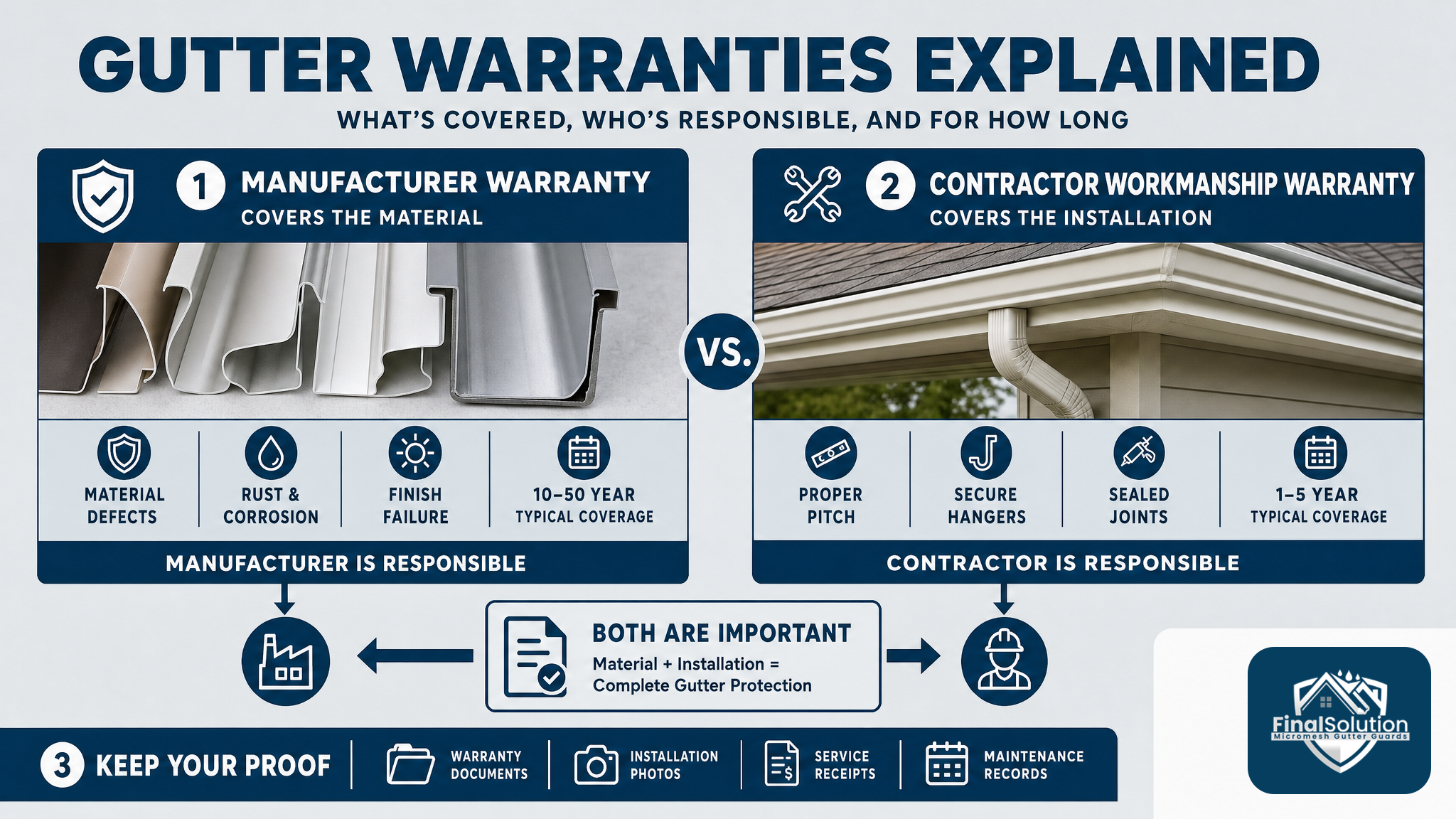
There are two completely separate warranties involved in any gutter project. The manufacturer warranty covers the gutter material itself against defects, rust, peeling, or premature failure. The contractor workmanship warranty covers the quality of the installation, such as improper pitch, loose hangers, or poor sealing at corners and end caps.
These two warranties come from different parties and operate independently. If your gutter sags after six months because it was hung incorrectly, that's a workmanship issue, not a material defect. If the aluminum coating fails prematurely, that's a manufacturer claim.
Knowing the difference helps you contact the right party immediately instead of losing time in back-and-forth disputes.
Common Gutter Warranties Explained What Mistakes to Avoid
Most warranty problems aren't caused by the product failing. They're caused by homeowners or installers doing something that technically voids the coverage. The most common mistakes are surprisingly easy to make.
Mistake 1 and How It Hurts Results
The most damaging mistake is skipping regular gutter cleaning. Many manufacturer warranties include maintenance requirements in the fine print. If your gutters overflow or hold standing water because they haven't been cleaned, and that water causes the fascia, soffit, or gutter seams to deteriorate, the manufacturer may deny your claim on the grounds that the damage resulted from neglect.
In Rochester and the surrounding Monroe County area, fall debris from mature trees is a real issue. Leaves and seed pods pack gutters quickly. Cleaning at least twice a year, typically in late spring and early November, keeps you in compliance with most maintenance clauses and protects your home from the foundation damage that clogged gutters cause.
Mistake 2 and How to Spot It Early
The second major mistake is hiring an unqualified installer or doing DIY repairs on a system that's still under warranty. Some manufacturers require installation by a licensed contractor. If work is done by an unlicensed person or if you patch a section yourself without authorization, you may unknowingly invalidate the coverage on the entire system.
Watch for these red flags early: a contractor who can't produce proof of insurance, vague oral promises about "lifetime coverage" with nothing in writing, or a bid that doesn't mention warranty terms at all. These are signs that the warranty backing may be weaker than advertised.
How to Fix Each Mistake Quickly
Getting back on solid warranty ground is straightforward once you know what to look for. Schedule a professional gutter cleaning and inspection to document the current condition of your system. Ask your contractor for written warranty documentation before the job starts, and confirm whether the manufacturer requires certified installation.
If you're unsure whether your current gutters are properly installed or still under coverage, a repair and assessment visit can clarify your options before a small problem becomes an expensive one.

Practical Gutter Warranties Explained What Improvements
Understanding your warranty is step one. Actively protecting it is step two. Here's how to build a simple maintenance and documentation routine that keeps your coverage intact.
Audit Your Current Approach
Start by pulling out any warranty paperwork from your gutter installation. Look for three things: the coverage period, the list of exclusions, and any maintenance requirements. If you can't find the paperwork, contact your installer.
A reputable contractor will have records on file.
If your gutters are older and you're unsure who installed them, a professional inspection can at least tell you what shape they're in and whether replacement makes more financial sense than repair.
Implement the Highest-Impact Fixes
The highest-return habit is consistent cleaning paired with a visual inspection every season. Look for sagging sections, separated joints, rust spots, or water stains on the fascia board. Catching these early keeps small issues from becoming warranty-voiding damage.
Adding gutter guards is another practical step. A quality gutter guard system reduces debris accumulation significantly, which means less risk of overflow damage and fewer maintenance visits. Many guard products also come with their own separate performance warranty worth reviewing.
Track and Refine Over Time
Keep a simple home file with your warranty documents, installation photos, and any service receipts. If you ever file a claim, having dated records of maintenance and contractor visits is your strongest evidence. Some homeowners find it helpful to photograph their gutters each spring and fall, just a quick phone photo of each elevation, to show the system's condition over time.
Tools, Examples, and Proof Points
Recommended Tools or Workflows
You don't need complicated software to protect your warranty. A labeled folder (physical or digital) with three documents is enough: the warranty certificate, the installation invoice showing contractor name and license number, and a maintenance log. Free apps like Google Keep or Apple Notes work fine for logging inspection dates.
For Monroe County homeowners considering seamless gutter installation, ask your contractor specifically about the manufacturer's coverage on the gutter coil material and what the workmanship warranty includes. Get both in writing before the job starts.
Real-World Examples
Consider a homeowner in Webster who notices rust streaking along the bottom of their aluminum gutters three years after installation. If the manufacturer warranty covers finish failure for 20 years and the gutters were installed by a licensed contractor, that's a valid claim. But if the homeowner had the gutters repainted by a handyman without manufacturer approval, the coating warranty may be voided.
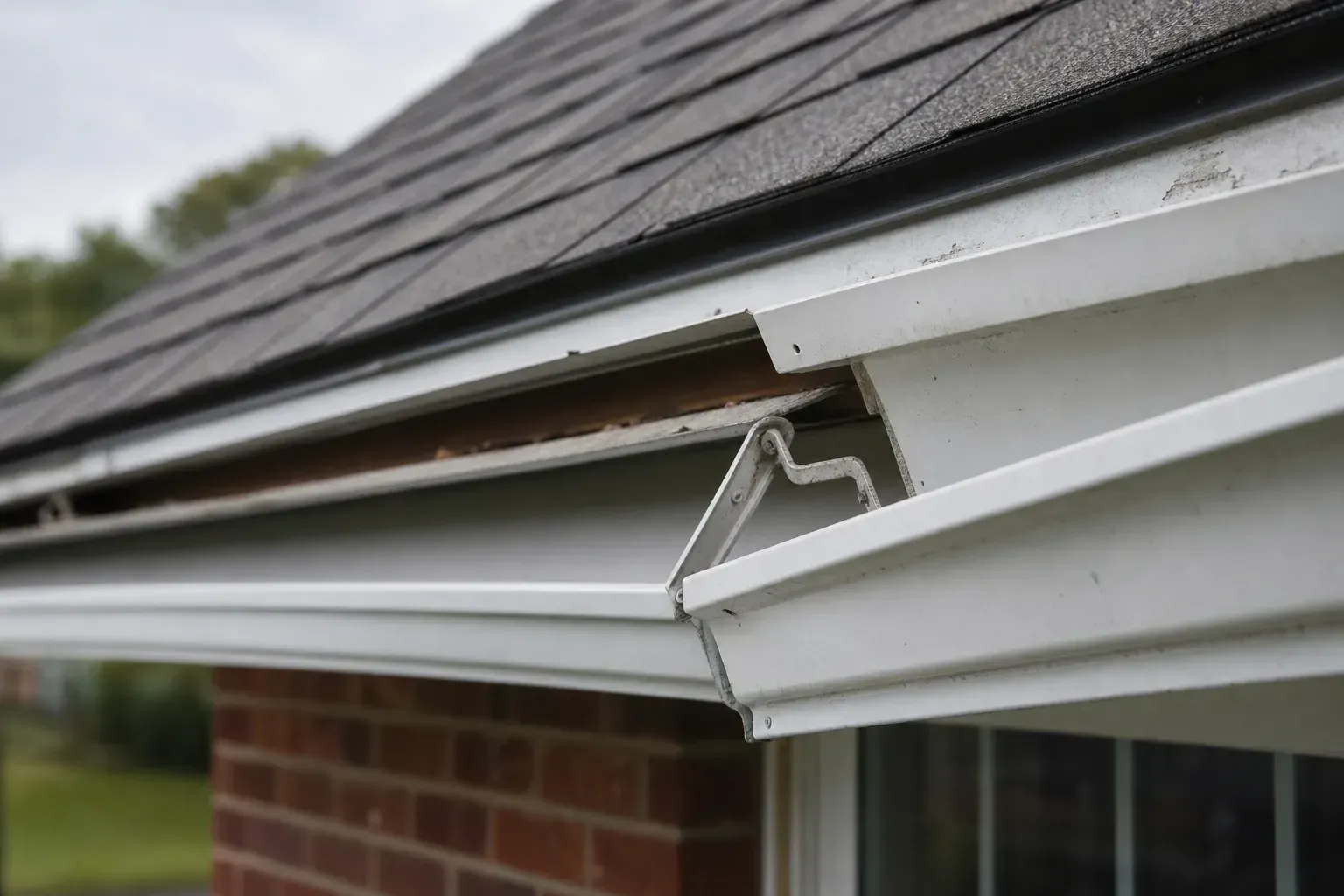
A similar scenario plays out with downspouts. A poorly anchored downspout that pulls away from the wall after a winter storm may be a workmanship issue if it separates within the contractor's warranty period. If the contractor's warranty has expired and no manufacturer defect is involved, the homeowner pays out of pocket.
Proper downspout installation from the start avoids this entirely.
Comparison and Decision Guide
When to Choose Each Approach
| Warranty Type | What It Covers | Typical Duration | Who Handles Claims |
|---|---|---|---|
| Manufacturer Material Warranty | Rust, finish failure, material defects | 10–50 years (varies by product) | Manufacturer directly |
| Contractor Workmanship Warranty | Installation errors, improper pitch, loose hangers | 1–5 years (varies by contractor) | Your installer |
| Gutter Guard Product Warranty | Guard panel performance, clog-free guarantees | 5 years to lifetime (varies) | Guard manufacturer |
Cost, Effort, and Timeline Tradeoffs
| Factor | Strong Warranty Path | Weak Warranty Path |
|---|---|---|
| Installer qualifications | Licensed, insured, certified | Unlicensed or unverified |
| Documentation | Written, signed, filed | Verbal or missing |
| Maintenance | Scheduled, documented | Skipped or inconsistent |
| Repair approach | Authorized contractor only | DIY or uncertified |
| Long-term cost | Lower (covered repairs) | Higher (out-of-pocket) |
The extra effort of choosing a vetted contractor and keeping records is genuinely worth it. Gutter replacement costs for an average home in the Rochester area run into thousands of dollars. A warranty that holds up protects that investment directly.
Conclusion and Next Steps

Main Points to Remember
Gutter warranties explained what most homeowners find out too late: coverage is conditional. Material warranties and workmanship warranties are separate, each with its own terms. Maintenance requirements, installer qualifications, and documentation all affect whether a claim gets honored.
The good news is that protecting your coverage isn't complicated. It just requires a little attention upfront and consistent care over time.
What to Do Next
Contact us for a Free Estimate and get the honest warranty conversation most contractors skip.
Frequently Asked Questions
How long does a typical gutter warranty last?
Material warranties from manufacturers commonly range from 10–50 years, depending on the product and material type. Aluminum and copper systems tend to carry longer coverage periods. Contractor workmanship warranties are shorter, typically 1–5 years, and cover installation quality rather than the material itself.
Always ask for both documents separately before signing any contract.
Does a seamless gutter warranty differ from a sectional gutter warranty?
Yes, and the difference matters. A seamless gutter warranty often provides stronger material backing because seamless systems have fewer joints, which reduces the likelihood of seam failure or leaking over time. Some manufacturers offer extended finish warranties specifically on seamless gutter coil products.
Sectional gutter warranties may have shorter terms or more exclusions related to joint sealant degradation.
What voids a gutter warranty?
Several actions can void coverage. The most common include skipping required maintenance like cleaning, making unauthorized repairs with non-approved materials, having work done by an unlicensed or uncertified installer, and failing to document the original installation properly. Physical damage from falling branches or ladder impacts is also typically excluded from both material and workmanship warranties.
Is gutter guard installation covered under my existing gutter warranty?
Not automatically. Gutter guards are usually a separate product with their own warranty terms. Adding guards to an existing system does not extend or modify your original gutter warranty.
In some cases, improperly installed guards can actually create conditions (trapped debris, water backup) that void the gutter warranty below them. Always confirm with both the guard manufacturer and your gutter contractor before adding a guard system to an existing installation.
What should I do if a contractor refuses to provide a written warranty?
Walk away. A reputable gutter contractor will always provide written warranty documentation for both materials and workmanship before the job begins. Verbal promises are unenforceable.
If a contractor hesitates or offers vague terms like "we stand behind our work" without specifics, that's a clear signal to look elsewhere. In Monroe County and the greater Rochester area, licensed contractors are expected to document their warranty terms clearly as part of any professional estimate.
Can I transfer my gutter warranty if I sell my home?
It depends on the manufacturer and contractor. Some manufacturer warranties are transferable to a new homeowner, which can actually increase the resale value of your home. Others are non-transferable and expire the moment the property changes hands.
Workmanship warranties from contractors are generally tied to the original homeowner and do not transfer. Check your warranty documents specifically for a transferability clause, and disclose warranty status to buyers as part of your home sale paperwork.
 Contact Us for a Free Estimate! Share a few details with Final Solution Gutter Guards ROC, we'll help you choose the right next step. Get a free estimate |